


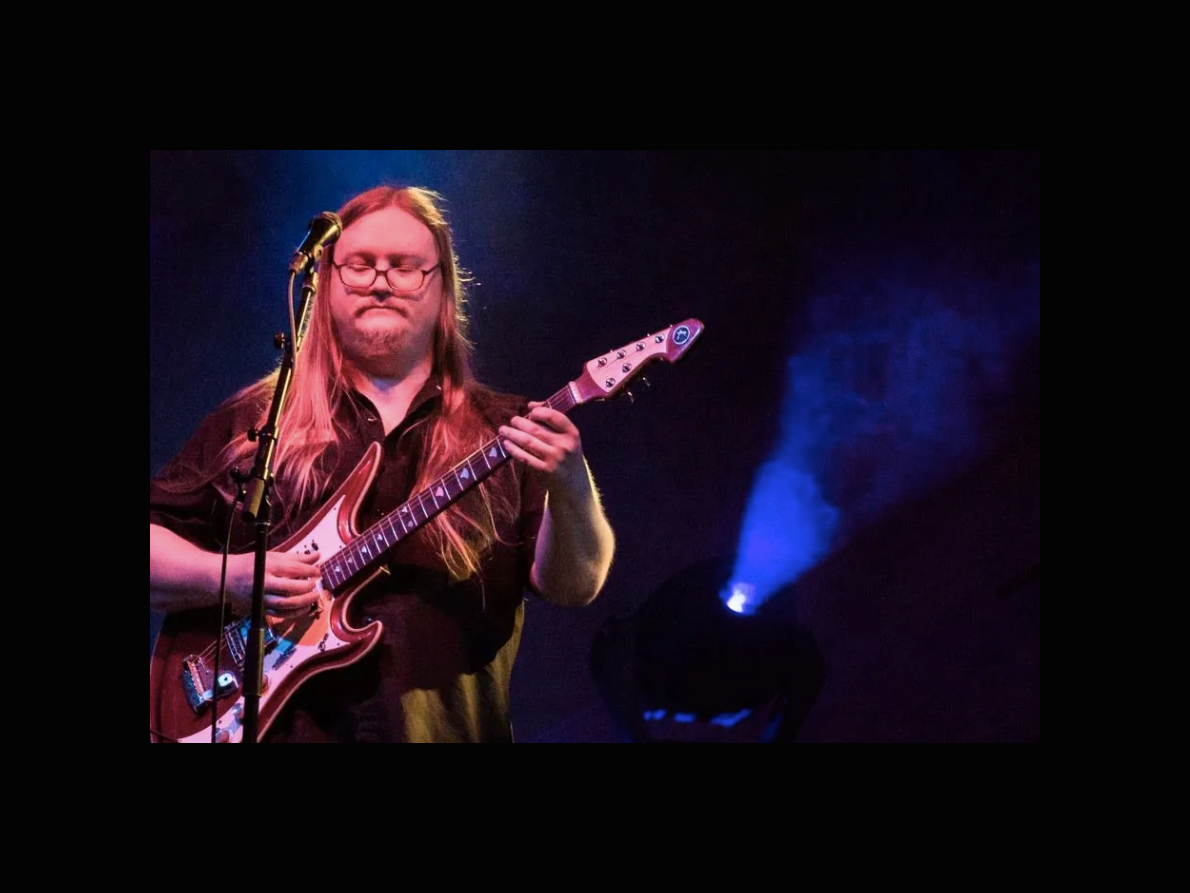
Eric Deaton is a Grammy-nominated steward of North Mississippi Hill Country blues, apprenticed directly under legends Junior Kimbrough and R.L. Burnside at the juke joints where the music was born. What drew him in wasn’t mythology—it was the sound.
“It blew me away,” he said of first seeing the PBS documentary The Land Where the Blues Began as a teenager. “It was the first time I saw and heard RL Burnside and Napoleon Strickland. I just decided right then and there that when I got done with high school, I was moving to Mississippi to go hang out with these guys… and see if they put up with me and let me play with them.”
At 18, in 1994, Deaton did exactly that. He moved from North Carolina to Mississippi and began attending Junior Kimbrough’s juke joint every Sunday night. Before long, he found himself on stage.
“Junior was without a bass player,” Deaton recalled. “I said, ‘Well, Junior, I play bass.’ I sat down and basically took over Gary Burnside’s role for several months. It was the experience of a lifetime. I was just really in awe of him and lucky to call him a friend and a mentor.”
The Trance — and the Teachers
Being immersed in Junior’s music changed Deaton profoundly.
“Junior’s groove is such a deep, powerful thing,” he said. “He would easily play a song for 10, 15, 20 minutes—even more than 30. People talk about it being hypnotic and trance-inducing, and it really was. There’s nothing like being in that room when he’s in the pocket; it’s visceral. And that’s the kind of feeling I try to bring into my own music now.”
He absorbed lessons from both Kimbrough and Burnside. “RL showed me how to play his open G stuff, which I knew I was not doing right. Just getting to soak those guys’ music up—sitting behind them, watching their hands, feeling the rhythms—absolutely made me the musician I am today. You can’t learn that out of a book or a video; you have to be there.”
The Oldest Strain of the Blues
Deaton believes Hill Country blues represents the oldest strain of the blues, predating the commercialized forms most people know.
“It goes back to what African music became in America,” he said. “You’ve got a lot of one-chord stuff, very pentatonic. It tends to drone on the one—like hypnosis. Everybody’s got their own style and sound, but there’s a thread tying the region together.”
The region’s relative isolation helped preserve the tradition. “It wasn’t part of the record business. It really wasn’t dialed into the commercial blues market. It evolved outside those pressures. That’s part of why it feels so raw and authentic; it grew naturally in juke joints, house parties, and the backrooms of local communities.”
Funk, India, and a Personal Sound
Deaton’s music stretches Hill Country in new directions. Growing up in North Carolina’s multicultural Triangle—Raleigh, Durham, Chapel Hill—exposed him to a wide variety of musical influences. Later, trips to India and his wife’s cultural background introduced him to Indian music, including the sitar, and led him to study under Carnatic musician Sudha Iyer.
“I like to blend those Indian sounds with Hill Country blues,” he said. “Junior’s music is very droning, taking me to a similar place as Indian music, as much as Muddy Waters does. The combination feels natural to me, almost like a continuation of the trance-like quality that drew me to the music in the first place.”
Funk, he notes, was already in the DNA of the Hill Country scene. “A lot of people wouldn’t know this, but funk was heavy at Junior’s,” Deaton said. “Those younger guys—David Kimbrough, Duwayne Burnside, Pernell Davis—were playing James Brown, Earth, Wind & Fire, Kool & the Gang every Sunday night. To me, when I listen to Junior and RL, I hear funk—funky polyrhythms everywhere. Funk tends not to have a lot of chord changes and tends to be very pentatonic just like Hill Country blues. It all connects.”
Race, Audiences, and Change
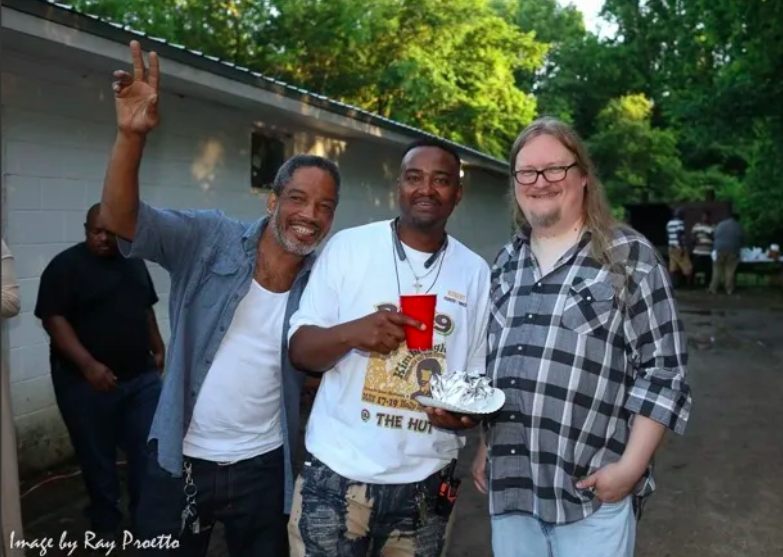
When Deaton first arrived, he was often one of few white musicians at Junior’s. “It was Black music for the Black community,” he said.
After elders like Kimbrough and Burnside passed, audiences shifted. “As the older guys died off, a lot of the audience disappeared with them. Unfortunately, the younger Black crowd hasn’t really stuck with it. The audience tends to be mostly white now. But when everybody comes together at a show, it’s a party; no bad vibes. That’s what keeps the music alive: its ability to bring people together, across age and race.”
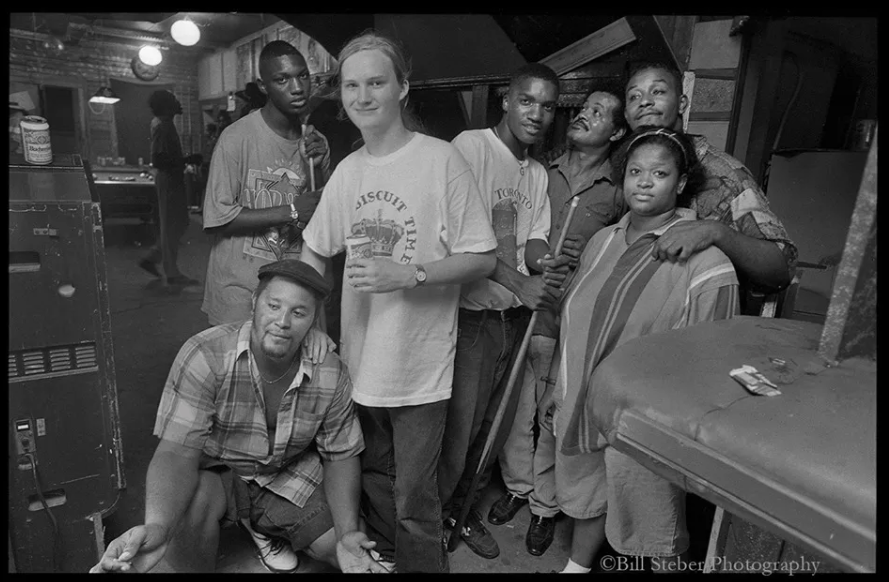
Also pictured L-to-R: Kent Kimbrough, Cedric Burnside, Garry Burnside, David Kimbrough
From Obscurity to Rolling Stone
For decades, Hill Country blues survived largely through folklorists like Alan Lomax and George Mitchell. “Nobody else in high school was buying those records,” Deaton laughed. “I was buying the hell out of them. That was how I found Junior and RL in the first place.”
Everything changed when Rolling Stone critic Robert Palmer gave Junior Kimbrough and R.L. Burnside four-star reviews. “Those reviews were huge,” Deaton said. “All of a sudden, you had the mainstream music world paying attention. That’s when Jon Spencer took RL on tour, Iggy Pop took Junior on the road, and Fat Possum started collaborating with younger artists. And that’s how me and Kenny Brown ended up working with them.”
Tours eventually led to collaborations with The Black Keys, including the live-in-the-studio recording Delta Kream. “It was recorded in two days—relaxed, natural. I’d been playing that music my whole life, so it felt like home. I never would’ve dreamed I’d be on arena tours because of this music. Back then, it was just a backwoods, localized thing.”
Cotton Patch Blues — Junior’s Own Genre
Junior Kimbrough called his style “cotton patch.” “He meant his music came from the cotton fields,” Deaton said. “It sounds more like field hollers than commercial blues. I think Junior really did create his own genre.”
A Family Tree That Keeps Playing
The descendants of Kimbrough and Burnside—along with musicians like Deaton and Kenny Brown—now form a living network sustaining the music. “It’s just one big family,” he said. “Half of them are descended from RL and half from Junior. We all play with each other in various bands and projects. The Hill Country Picnic is like our homecoming every year.”
Passing the Torch
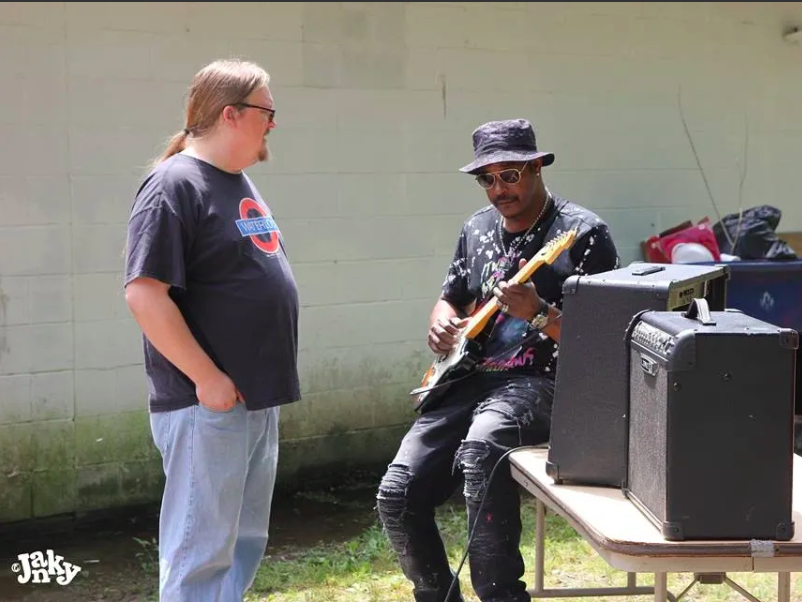
Deaton mentors younger musicians like bassist Kody Harrell and teaches at blues workshops. “It’s not going anywhere,” he said. “All of us guys who have dedicated our lives to it are not going to stop dedicating our lives to it. Robert Kimbrough, Kent Kimbrough, Duwayne Burnside, Gary Burnside, Kent Burnside, Kenny Brown—we’re not going to stop playing this music. The North Mississippi Allstars are going to keep doing this music. All of us who are part of this are going to keep doing it for the rest of our lives.”
As for his own sound, Deaton said it remains rooted in Hill Country while continuing to evolve. “The music continues to evolve. Everybody’s got their own twist on it, their own take on it. My music absolutely comes from the tradition, but it’s going in its own direction, being influenced by the things that I hear.”
Eric playing bass with Junior Kimbrough
