


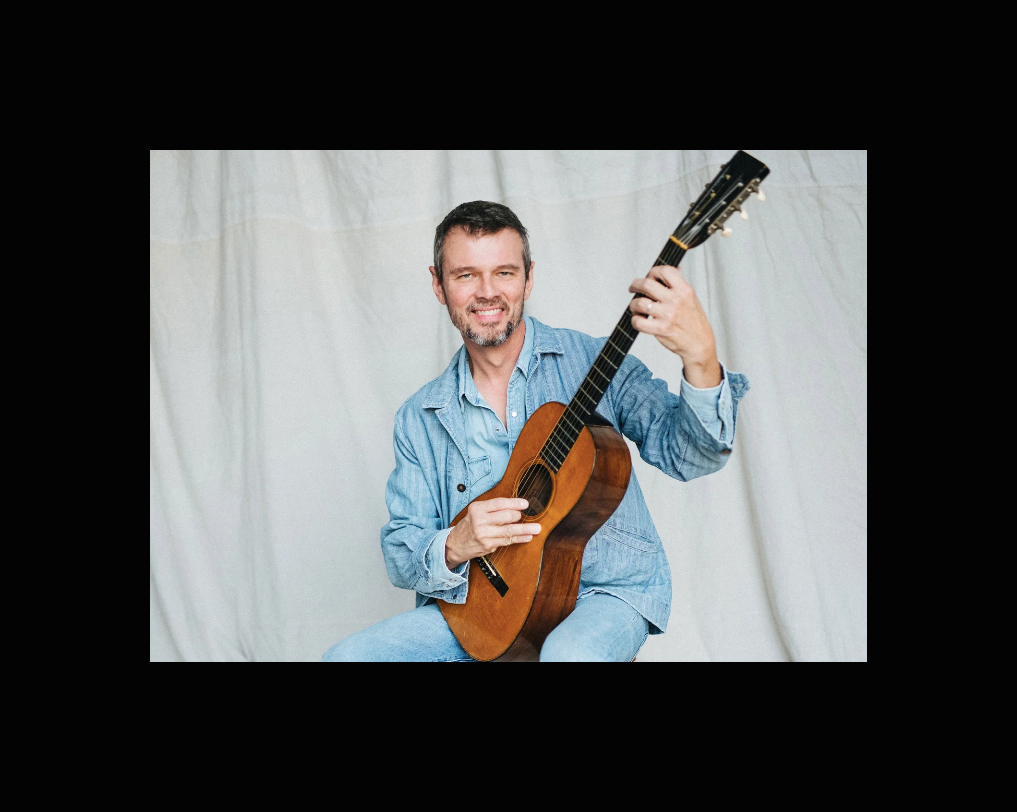
Luther Dickinson, the pioneering guitarist and singer/songwriter at the helm of the North Mississippi Allstars, plays what he calls “weirdo music for weirdo people” — a hybrid take on Hill Country blues that fuses rock, soul, gospel, and funk into a highly electrified sound. Dickinson says he never aspired to MTV fame or celebrity status.
“Hill Country is a subgenre of a subgenre — weirdo music for weirdo people. I’m not trying to make music for everybody,” he said.
“I would never claim to be a blues man,” Dickinson added. “My father knew real blues men. I grew up around real blues, but I know what a real blues man is, and I’m not. I’m a folk rocker, a psychedelic folk rocker.” That perspective underscores Dickinson’s lifelong connection to the North Mississippi sound: rooted in tradition, yet always reaching beyond it.
Roots and Resonance
Dickinson grew up in a deeply musical family. “Our dad was like a first‑generation Memphis rock and roll kid. He sang on the last Sun single, ‘Cadillac Man,’” he said, referring to Jim Dickinson’s early career. Raised outside of Memphis in a “total muse, alternative musician, art, community—artists and freaks and musicians and stuff,” Luther and his brother Cody were steeped in music from the start. “He just loved all types of roots music. He taught us all that stuff,” Dickinson said.
Early on, a Fred McDowell record sparked something in him.
“I found this Fred McDowell record in my dad’s collection early on as a child, I was like, ‘Oh, this guy’s from my hometown. That’s really cool,’” an impression that would lead him towards the Hill Country sound.
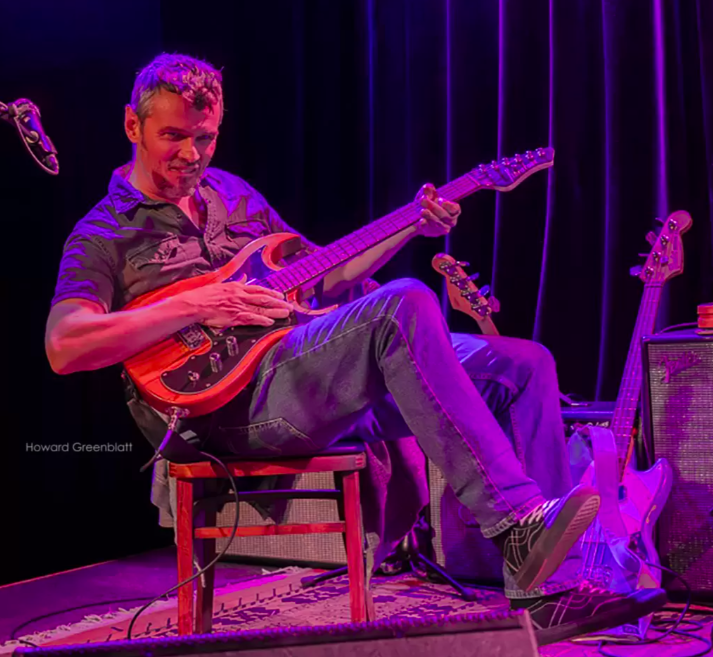
Hill Country Blues: Rhythm, Melody, and Trance
According to Dickinson, the essence of Hill Country music lies not in chord progressions but in rhythmic drive and melodic focus.
“Hill Country music is all about rhythm and melody. It’s not about harmony and chords,” he explains. “Having the harmony be more simple makes it sound more modern in a weird way.”
Dickinson has a theory about the trance-like quality of Hill Country music.
What is it about the trance vibe of North Mississippi music? It’s the moonshine. You drink enough of that crazy home brew and play, you get that. That’s the feeling. These guys were making music that reflected the way they felt.
He pointed to legends like Otha Turner and Junior Kimbrough, who once ran bootleg corn liquor routes with horse and buggy, guiding patrons into juke joints with flashlights and a drink in hand. “It was an underground Speakeasy. The corn liquor just had a different type of vibe and the music really reflected that.
“Hill Country is like a moonshine trance; you get hypnotized by the rhythm and riff, by the melody. When I found Hill Country, I was like, ‘God, damn, there’s a modern day electrified, multi‑generational hill country blues in my backyard.’ It blew my mind. And I think that’s why Iggy Pop is drawn to Junior Kimbrough. That’s why John Spencer was drawn to RL Burnside. The style was way hipper than what traditional blues turned into.”
The Hill Country Community and Oral Tradition
Family musical dynasties existed in the Hill Country like little elsewhere. At 15, Dickinson met Othar Turner and his family while playing gigs in Memphis.
“What was so crazy about the Hill Country was it was all musical families, just like ours,” he said. “Junior and his kids had a juke joint. RL and his kids were always there, hanging and playing out. Once we hooked up with Dave and Kent Kimbrough, Gary, Duwayne and Cedric Burnside, shit was so much fun.”
Music, for Dickinson, is a communal, shared repertoire — songs like “Po Black Maddie” and “All Night Long” getting personalized by each performer, even within the same family. Generations learn directly from elders, preserving and evolving the tradition. “When an elder teaches you the repertoire, it’s your responsibility to carry it on and teach it to the next generation,” he said.
“Hill Country music is still regional; some musicians just hold it down at home, which is beautiful. If you want to see it, you got to come to it,” Dickinson said. “The young blues musicians are killing the game. It’s cool to see them take the art form and make it their own.”
Evolution and Finding a Voice
In the 1990s, when Dickinson first formed The North Mississippi Allstars, the group aimed to play strictly traditional Hill Country blues. But during a residency on Beale Street, they began stretching the music with psychedelic rock improvisations and soul and funk influences. Dickinson recalled the shift: “I wanted to orchestrate Fred McDowell’s style and RL Burnside acoustic style with a rock and roll trio where the bass was playing unison with the riffs. I heard ‘Someday Baby’ and I wanted to hear the bass.”
One of Dickinson’s proudest moments was playing for R.L. Burnside’s wife at her birthday party. Set up in a concrete open garage with extension cords running out of the windows, the band played while family lounged in lawn chairs.
“RL would request that we play and we play his music, and he would just laugh at us. He thought it was so funny,” Dickinson said. “So we started jamming, and RL just started laughing harder. That was a proud moment, to play his music for him and have him enjoy it.”
Another formative experience came early on with Othar Turner.
“I was friends with Othar Turner for many, many years before I ever took my guitar to his house. I played some Fred McDowell for him, and he freaked out. He said, ‘I never heard anybody play like Fred since Fred died.’ Our relationship totally evolved at that point.”
Influences and Musical Philosophy
Dickinson’s influences stretch wide, shaped by his father’s record collection and later explorations. “Our dad’s record collection was amazing, a wealth of knowledge. Everything I ever wanted I could find there,” he said. Among his biggest influences were Jimi Hendrix, the Allman Brothers, Furry Lewis, Ry Cooder (who worked with Jim Dickinson), RL Burnside, and Fred McDowell.
“I like music that makes you dance. RL would sing the saddest lyric with the biggest smile on his face,” Dickinson said. “And I like music that just spreads joy and I like improvisation, be it Kingfish or Garcia or whoever.” He also noted the evolving nature of the Hill Country sound: “If you don’t evolve and adapt, you can’t survive; you don’t evolve, you don’t have the ability to survive.”
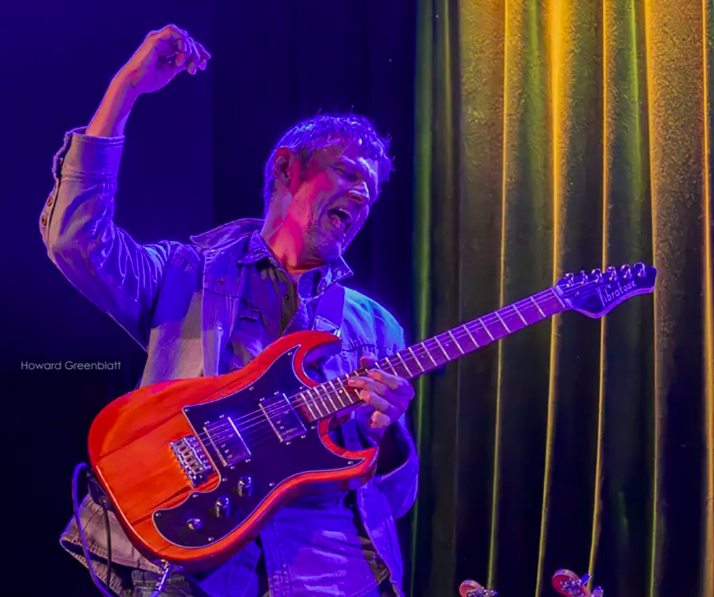
Industry, Experiments, and Innovation
Dickinson is realistic about the music business.
“You have to accept that the music business is completely exploitative. Step right up to be exploited, and we’ve got just the industry for you,” he said, echoing a sentiment his father once shared. Still, he credits labels like Fat Possum for shining a spotlight on Hill Country artists. “Fat Possum Records had the foresight to put these guys on the punk rock circuit, not the blues circuit. That was genius, man, because it was appealing to kids.”
Hill Country music has even flirted with hip hop. Dickinson produced Philadelphia Mississippi (2022), a blues‑rap hybrid featuring local artists. “You have to be willing to collaborate, not just play. That’s how we made a hip hop record with G. Love, and it worked,” he said.
Looking Forward
Now 52, Dickinson feels a responsibility to teach what he’s learned.
“I just love the community of musicians of all ages. I really look forward to trying to pass on what I’ve learned,” he said. “I try to conjure up a real feeling in the music, in the moment. And I think that’s a human experience that is important.”
“I’m proud to represent the underground,” he added. “I’m not trying to make music for everybody. But I love the community, I love that feeling, and I want to continue it.”
