


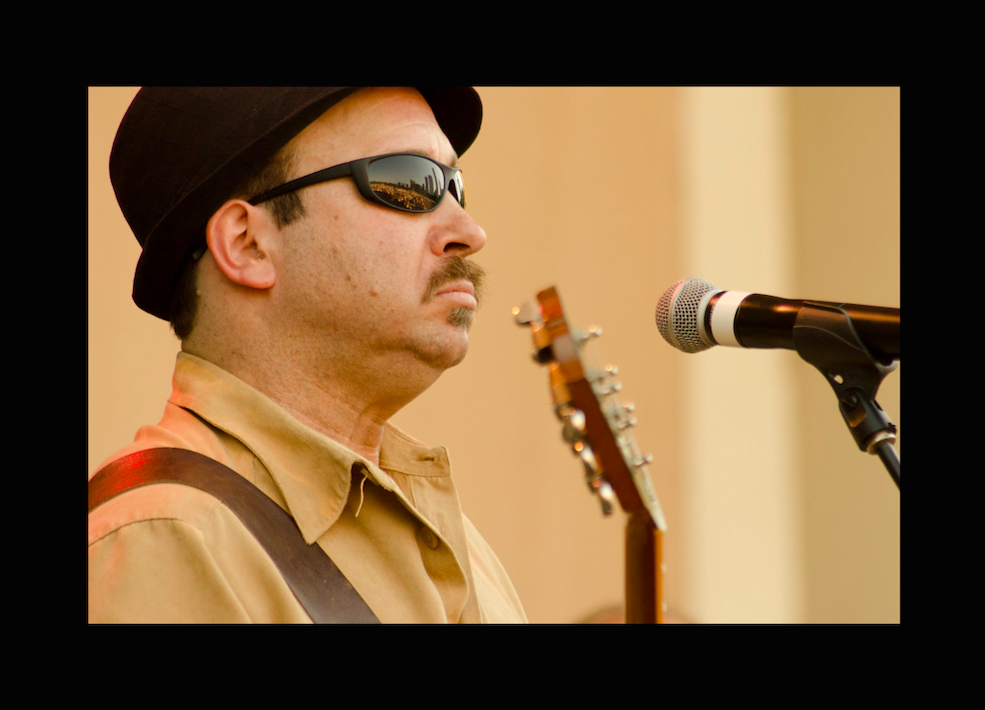
Paul Kaye didn’t just want to play guitar; he needed to.
By the time he was a teenager, that need had already begun to override everything else. At 15, he was skipping school, staying home not out of rebellion, but obsession—hours alone with the instrument, chasing a sound he could hear but not yet fully reach. “I would literally cut school and stay home and practice,” Kaye said. “Because I thought, well, this is more important than my class.”
That conviction came early. Long before he ever held a real guitar, Kaye was already performing, of a sort. He calls himself “one of the original air guitar players,” staging imaginary concerts in his house with a plastic toy guitar, assigning his friends roles in a make-believe band. The impulse was there from the beginning: playing music wasn’t enough; he needed to fully inhabit it.
But there was a problem—one that, for a time, made him question whether he could play at all.
Kaye is left-handed.
As a kid, no one quite knew how to teach him. He practiced chords upside down, unknowingly reversing their structure. The more he practiced, the worse he sounded. His first real guitar didn’t help. It was, as he puts it, “unplayable.” For a while, it seemed like the mechanics of the instrument itself were working against him.
“I wasn’t sure if you could even play guitar if you’re left-handed,” he said.
What made those early years frustrating wasn’t a lack of effort; it was misalignment between instinct and instruction. Kaye practiced constantly, but no one had shown him how to translate a left-handed body into a right-handed instrument. Chords were technically correct, but sonically wrong. “The better I got at playing them,” he said, “the worse they sounded.”
Then came a revelation: Jimi Hendrix. Hendrix didn’t just play left-handed, he re-strung right-handed guitars and made them his own. For Kaye, it proved it could be done at the highest level. “Okay,” he remembered thinking. “It can be done, and it can be done better than anyone else in the world.”
That realization didn’t only solve a technical problem. It set a direction. Hendrix taught Kaye that a left-handed guitarist could succeed, and in doing so, revealed what the instrument could become. More than the notes, it was about density, making one guitar feel like an entire band. That same revelation resurfaced when Kaye discovered acoustic country blues. Different era, different tools, but the same idea: bass lines, melody, and rhythm unfolding at once.
“You’ve got the bassline, the chords, the melody all happening together,” he said. “That’s what blew my mind.”
Kaye’s early influences ran through the sounds of the 1960s—The Beatles, soul groups like The Temptations, and the blues-rock explosion that followed. But his musical identity took shape when he discovered traditional country blues.
Artists like Mississippi John Hurt, Blind Blake, and Reverend Gary Davis became his models for both what they played and how they played. What drew him in was something deeper than style. It was structure. “They made it sound like there were two or three guitars going at once,” Kaye said.
This was the “big sound”—a way of playing where a single guitarist carries rhythm, bass, and melody simultaneously. It’s a demanding style, rooted in independence and control, where the thumb keeps time and the fingers build layers on top. “With a band, you don’t have as much responsibility,” he said. “But solo players really have to work to get the big sound.”
Kaye has spent decades doing exactly that.
Eventually, that pursuit led him to Chicago – a city he still considers the center of the blues world. “Chicago is where it’s at,” he said. “If you want to be around the best players in the world, this is where you need to be.”
And he was.
Kaye came up playing alongside some of the city’s most respected musicians—names like Buddy Guy and Magic Slim—absorbing both technique and the unwritten rules of the Chicago sound. In small clubs, where audiences came to talk, drink, and dance as much as listen, volume wasn’t the goal.
“You learn how to play hard and driving, but not loud,” Kaye said. “That’s the biggest challenge.”
At the legendary Checkerboard Lounge, he held down a regular Monday night gig, sharing stages with veterans who had direct ties to the music’s origins. There, the blues was living memory, carried through stories as much as songs. It was also a tight-knit community.
“Once you’re in, you’re kind of family,” Kaye said. “They take care of their own.”
One night, that sense of trust turned into opportunity. As Kaye was packing up after a set, he was told—almost casually—not to take his gear off the stage. Moments later, he found himself playing alongside Magic Slim, stepping into a role he had studied but never expected to inhabit.
“I was basically trying to do my best impression,” he said. “But it must have worked—I stayed up there the whole night.”
Kaye’s closest link to the roots of the blues came through his long partnership with David “Honeyboy” Edwards.
For nearly two decades, Kaye toured, recorded, and performed alongside Edwards—one of the last living musicians to have known and played with Robert Johnson.
“Playing with Honeyboy was a life’s ambition realized,” Kaye said. “But it became more than that.”
What began as collaboration evolved into something closer to stewardship. Playing with Edwards meant direct access to the roots of the blues—stories, phrasing, and traditions carried forward from the earliest days of the music.
For Kaye, that required more than technical skill. It meant listening closely: to how songs were shaped, where they came from, and what they meant to the people who first played them.
“I feel an obligation—not just to the music, but to Honeyboy,” he said. “To present the stories about the old players, and how they actually played the tunes.”
That connection to the tradition is preserved not only in performance, but in recordings. Kaye appears on Roamin’ and Ramblin’, the final album by David Honeyboy Edwards—a closing chapter in a lineage that stretches back to Robert Johnson. His own 2023 release, Ham Hound Crave, continues that thread in his own voice.
Edwards once told Kaye that he was one of the best guitarists in the genre—a comment that carries weight in a tradition built on lineage and peer respect.
Kaye’s career has taken many forms. He recorded two albums with the Chicago roots band Devil in a Woodpile, blending country blues with ragtime, jazz, and a rough-edged roots sound. He has taught extensively, passing on techniques that are as much physical as they are philosophical.
Because for Kaye, the blues is not just about sound—it’s about feeling. Kaye said the blues is really about endurance, rather than sadness.
“When you hear me laughing, I’m laughing just to keep from crying,” he said. “That’s the blues.”
It’s a paradox he returns to often: that the music, rooted in hardship, is meant to lift people up. In the tradition of BB King and Buddy Guy, Kaye constantly reminds himself to keep smiling on stage.
Kaye added that music doesn’t deny hardship, but absorbs and reshapes it, transforming it into a livable experience.
“It’s not about making people sad,” he said. “It’s about letting them know life is tough—but it’s all right. You’ll get by. If you’re doing it right, people are smiling. They’re laughing, they’re dancing. That’s the whole point.”
Now, as he looks back on decades in music, Kaye finds himself in a different position—not the young player trying to prove himself, but a veteran watching the next generation come up.
And, increasingly, helping them along.
“I like teaching more as I get older,” he said. “Because I can see how I’m helping to pass the music on.”
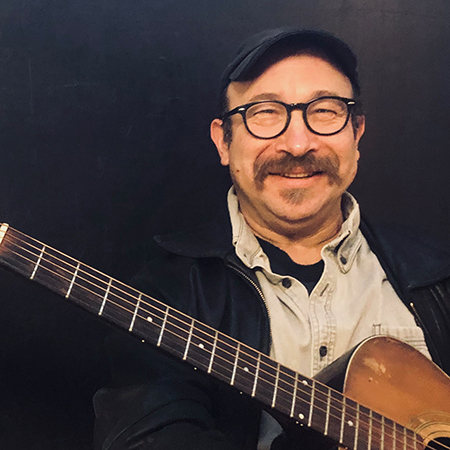
Some of Kaye’s students have gone on to build careers of their own, carrying fragments of his style into new contexts. Among the younger generation inspired by Kaye are Donna Herula, Thaddeus Crow Lickey, and Steve Hall. Kaye doesn’t claim ownership of that influence, but he recognizes it.
“You hear things,” he said. “Certain licks, certain approaches—you know where they came from.”
That may be his most lasting contribution, preserving a tradition while also taking it in bold new directions. Even now, after decades of playing, Kaye still returns to the same simple act: picking up the guitar. It remains, as it always was, both discipline and release.
“I could be way down,” he said. “Pick up the guitar—and it brings me back.”
In that sense, the pursuit never really ends. The “big sound” is never really a final destination; it’s something you keep reaching for, one note at a time. The “big sound” Kaye has spent his life chasing isn’t about being louder or more intricate. It’s about making a single instrument feel complete, capable of carrying more than just one voice, and something of the music’s history with it.
In that sense, he’s not really playing alone, even when he is playing alone.
