


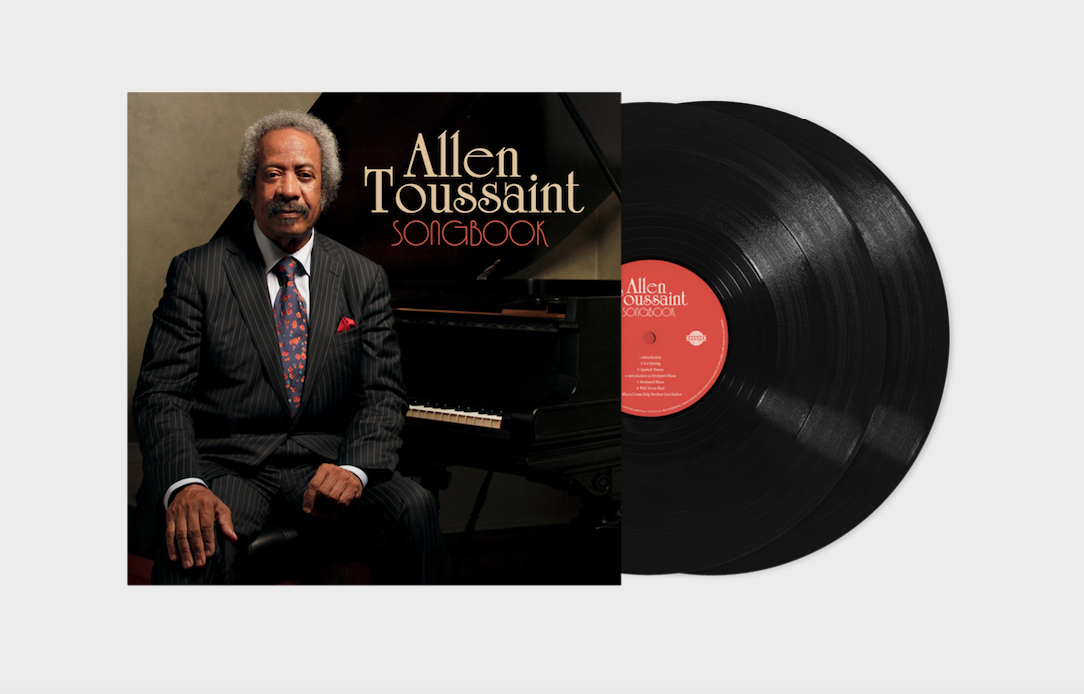
Allen Toussaint (1938–2015) was a New Orleans treasure whose songs and productions defined the city’s sound for decades. His first live album, Songbook (2013), bottled that energy, recorded during two intimate 2009 New York shows where Toussaint wove stories between career-spanning performances of “Lipstick Traces (On a Cigarette),” “Holy Cow,” and “Get Out of My Life, Woman.”
Now, the GRAMMY®-nominated album returns via Craft Recordings with 20 previously unreleased tracks, including a cover of Steve Goodman’s “City Of New Orleans,” plus live versions of “What Do You Want The Girl To Do” and Toussaint’s tribute to Jerry Garcia’s “Hi Lee Hi.” Also included is a portion of an interview with Toussaint as he reflects on his early influences.
Arriving May 29th, the deluxe 2-CD reissue includes Songbook’s original essay and track notes from GRAMMY Award–winning writer and producer Ashley Kahn, plus updated liner notes from the album’s producer, Paul Siegel. The expanded set will also be available across hi-res and standard digital platforms, while the original 25-track album makes its vinyl debut as a 2-LP gatefold.
In 2005, after Hurricane Katrina forced him from New Orleans, Allen Toussaint relocated to New York City and rebuilt his life amid the upheaval. Music became his refuge, and he soon became a weekly presence at Joe’s Pub, an intimate East Village venue. For an artist who rarely performed solo, these shows ignited a late-career revival.
An instrumental force in ’60s and ’70s New Orleans R&B, Toussaint embarked on his musical path half a century earlier. Behind the scenes, he found enormous success as a writer, penning songs like “Fortune Teller” (made famous by Robert Plant & Alison Krauss, The Rolling Stones, and The Who), “Lipstick Traces (On a Cigarette)” (The O’Jays, Ringo Starr), “Get Out of My Life, Woman” (Lee Dorsey, The Jerry Garcia Band), and “Working in a Coal Mine,” another hit for Dorsey.
He was also an in-demand producer and arranger, with credits that included Dr. John’s “Right Place, Wrong Time” and Labelle’s “Lady Marmalade,” as well as songs by The Neville Brothers, The Meters, Solomon Burke, Glen Campbell, Boz Scaggs, and many others. His Sea-Saint studio, meanwhile, was the place to record in New Orleans, with Paul McCartney and Wings, Paul Simon, and Joe Cocker among its clientele.
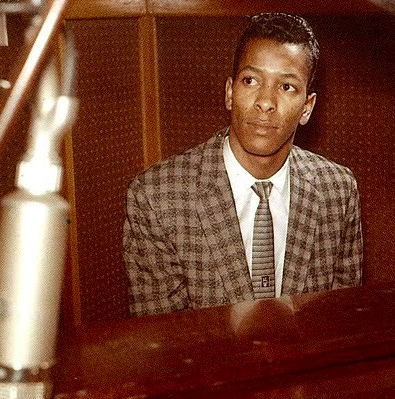
In between studio projects, Toussaint launched a solo career with 1958’s The Wild Sounds of New Orleans. Over the next two decades, he released a string of albums, including Toussaint (1970), Life, Love and Faith (1972), and Southern Nights (1977) – all showcasing his orchestral blues-jazz signature sound.
Toussaint revisited this vast catalog of work during his weekly Joe’s Pub gigs. Along the way, Ashley Kahn writes, “he worked at something that years of success in the studio had allowed him to avoid: getting truly comfortable on the stage by himself, laying claim to his own songs.” He continues, “Toussaint developed his act—resurrecting material he hadn’t touched in years, taking chances and improvising on established melodies, weaving personal anecdotes into his stage patter. He laced his music with memories of street characters and soul sisters, funky clubs, and big-time successes.”
One of Toussaint’s regular audience members was video producer and longtime fan Paul Siegel, who was inspired by the show’s stripped-down format. “Alone at the piano, and in a setting like this one, he was able to stretch out and explore the far reaches of his seemingly endless songbook,” writes Siegel. “I realized that this was the perfect chance to record Allen at his most relaxed.” And so, in 2009, Siegel did just that, capturing Toussaint in his element at two Joe’s Pub concerts.
Songbook is the breadth of Toussaint’s five-decade career, including many of his signature songs. Included are “Freedom for the Stallion,” “Southern Nights,” “Yes We Can,” and “Sweet Touch of Love” (which, at the time, had gained traction through a high-profile commercial placement). Also featured is one of the artist’s concert staples: a four-song medley of his best-known ’60s hits, featuring “A Certain Girl,” “Mother-in-Law,” “Fortune Teller,” and “Working in the Coal Mine.” Throughout the set, Toussaint pays homage to his beloved hometown through originals such as “I Could Eat Crawfish Everyday,” “It’s a New Orleans Thing,” and “Shrimp Po-Boy, Dressed,” plus a rendition of the jazz standard “St. James Infirmary.”
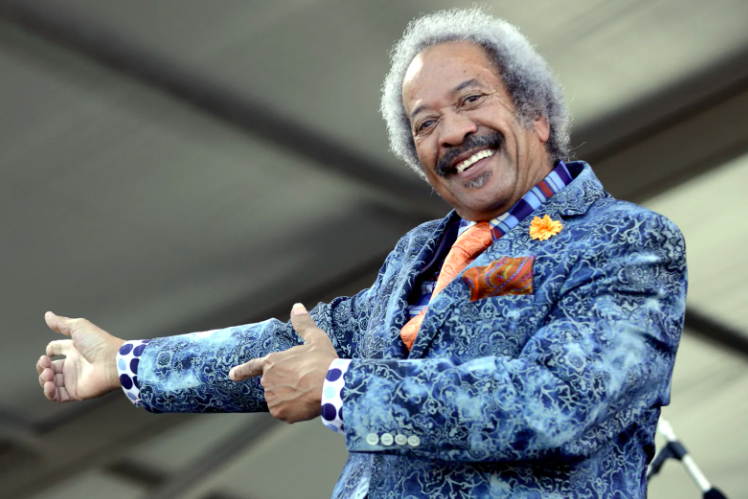
Songbook closed a pivotal chapter for Toussaint, celebrating his return to the spotlight and long-overdue recognition for a career that shaped New Orleans music. In his final years, he continued to tour internationally, appear at major festivals, and collaborate on high-profile projects – including 2006’s The River in Reverse with Elvis Costello and a ballet for Twyla Tharp.
“Allen Toussaint’s contribution to American music, as musician, composer, arranger, and record producer cannot be overstated,” notes producer Paul Siegel while reflecting on this new edition of the album. “It has been the honor of a lifetime for me to have been granted the opportunity to document his creative genius in Songbook.”
