


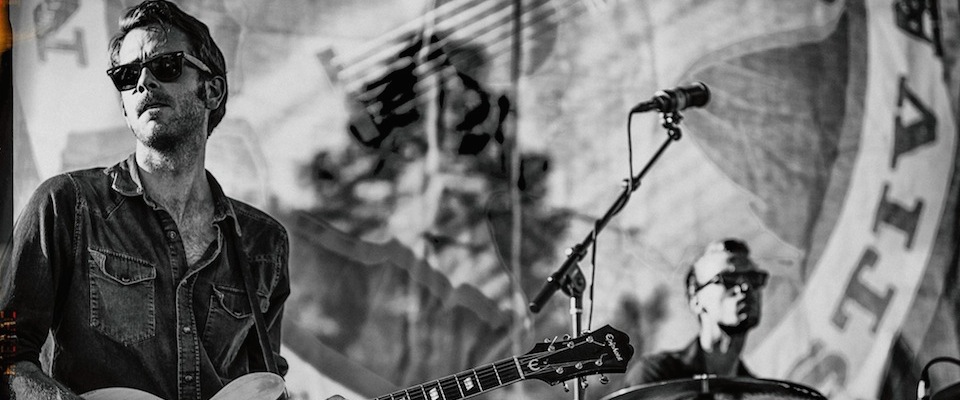
When Antone’s brought its 50th anniversary show to AmericanaFest in Nashville, it wasn’t just a celebration, it was a statement. The legendary Austin venue that helped launch the careers of Stevie and Jimmie Vaughan, The Fabulous Thunderbirds, and countless others, brought together a potent mix of seasoned veterans and rising stars. Performances by Rosie Flores, Yates McKendree, Kam Franklin, Lurrie Bell, and more set the crowd buzzing, while renowned music figures like “Do Right Woman, Do Right Man” songwriter Dan Penn and blues legend Bobby Rush watched from the sidelines, soaking it all in.
At the heart of the event was guitarist and music obsessive Zach Ernst, the driving force behind keeping Clifford Antone’s legacy alive. After stepping off the road with The Waterboys, Ernst took on the role of curator, creative director, and bandleader, ensuring the club’s history lives on while pushing the blues into the future. Now with The Last Real Texas Blues Album, Ernst is proving that Antone’s and the blues it represents are far from fading into the background.
American Blues Scene caught up with Zach at the show to talk about The Last Real Texas Blues Album, his journey to Antone’s, the museum in the works, and the rich history the club already has within its walls.
How did you come to be a part of the Antone’s family?
I grew up in College Station, Texas which is a couple hours from Austin. I have family in Austin, and I went to Antone’s for the first time in 2002; I saw Double Trouble and that was my first experience with it. Then when I was a freshman in college I was able to take a course that Clifford Antone was teaching at The University of Texas. Getting to know him when I was about 18 or 19 at the time – that was when I really got into all this music.
I played with different bands and always did stuff that was in the world of R&B, blues, and soul. Then a big opportunity came. Antone’s has moved around a few times, and there was a period from 2013 to 2015 where it was closed. So during that time my friend Will and a group of investors including Gary Clark Jr, ended up buying the right to bring Antone’s back. I knew Will through the music scene and at that time I was already a talent buyer at another venue in town, The Paramount Theatre, so I approached Will and said, “Hey, I know this music and Clifford really well and I feel I could do a good job booking Antone’s!” So 2015 was when I started working for the venue.
You’re carrying a huge legacy. What does that responsibility mean for you?
It is an immense challenge, but what’s really special is there are a lot of friends and musicians who have played all the versions of the club and who go all the way back to the beginning. That’s really important to me, and now they’re all my friends. Whether I was working for Antone’s or not, I love seeing them play and hearing their stories. To have their blessing to keep the thing going and to make sure I can check in with them about various things because they were there and saw it firsthand, that helps!
I have a large network of people I can talk to and make sure we’re doing it right, but I know the music and the history really well and I’m always thinking of artists who would be great to play at the club. It’s kind of an obsession, work life takes over everything. But we get to do things like this where I get to play with incredible musicians. It’s an honor, and really fun.
What do you look for in the artists you want to play Antone’s?
Well, there is a lot of stuff that comes in that isn’t necessarily blues. It’s an important-sized venue for touring bands, so there are a lot of shows that play that I’m not intimately involved with. But it’s just a feeling. A talent in terms of singing or playing: Mckinley James is a good example. When I was putting together The Last Real Texas Blues Album, I really wanted to touch on the cross-generational playing, and I had seen videos of Mckinley playing online and knew he could play. Just by the kind of guitars he plays, and the way he wears his hair and dresses I knew he liked Jimmie Vaughan, so I know he and I share that language. And I knew I could throw him on a live-to-tape session with Derek O’Brien and really killer people and know he’s going to live up to the challenge.
It’s just a feeling thing; it was the same with Kam Franklin. Lavelle White and Barbara Lynn are a big part of Antone’s story, but they’re more or less retired so I wanted to find a female singer to pay tribute to them. We ended up getting Lavelle to be a part of the album, but then I met Kam and knew she was amazing. I can just tell within five seconds of someone playing or singing if we have a shared language. If you do it long enough you can tell. It’s kind of sink or swim once you give them the opportunity.
Tell us the story of how The Last Real Texas Blues Album came to be?
Well last summer I started ringing the alarm bells to my boss Will about doing something special for Antone’s 50th. I had some ideas. New West Records own the Antone’s catalogue, so part of the box set we put out is vintage recordings they had in their catalogue. We mastered and resequenced them, and I made a couple compilations of the classic stuff. Once I got together with Jacob, who’s the head engineer at Arlyn Studios which was once Willie Nelson’s studio in Austin, I told him the vision. He put together the idea of doing it live to tape, putting everyone in a room. I was sharing my favorite recordings of early R&B, Muddy Waters, and Johnny Winter records from the ‘70s.
Jacob totally led the sound, and I helped pick a lot of the songs and helped pair everybody up. I knew who was still playing from the club calendar; I knew who still had chops. It expanded into a double record that’s almost 70 minutes long. The goal was to let me get everybody I know in Antone’s family, old and young, pair people up, and do songs that are an important part of Antone’s canon. Some artists came in with stuff they wanted to do, and I didn’t really change that. We got together over a few days in October, and then we went up to Chicago and met a couple people in December.
From then on we got Kim Wilson to come, and Doyle Bramhall II, but most of it was one big session in Chicago and two big days in October. We were just blown away by how good everybody was and how quickly it was going. There are a lot of photos from the session in the packaging, and some of the artists have known each other their entire lives, and it was a really powerful thing to get them together. It just became a puzzle to put together and make a good presentation.
What do you hope people get out of listening to the record?
A lot of contemporary blues has a lot of isolation to the recording, and a lot of modern sounds. I was telling my friend last night I can tell how much people are listening to each other: the bassist does one thing, the guitar responds, the keyboardist responds, and everyone is so good at playing off of each other.
The goal going into it was “I want to make the best blues album of the last 50 years!” and use what I know by not only listening to the stuff but also liking different music – and having a broad perspective to do a little bit of Fat Possum, a little bit of the Antone’s glory days, and just capture all of these people that I know are amazing without any studio tricks. A lot of drum sound is coming through the vocal mic and it was just – let me present the scene that is Antone’s 2025!
The liner notes state. “Everybody says blues is dead now, but everybody also said that in 1975 when the club opened.” So I just wanted to show people who I like, who I know Clifford would like, and people who have played the club, and give a big snapshot of what we’re doing right now.
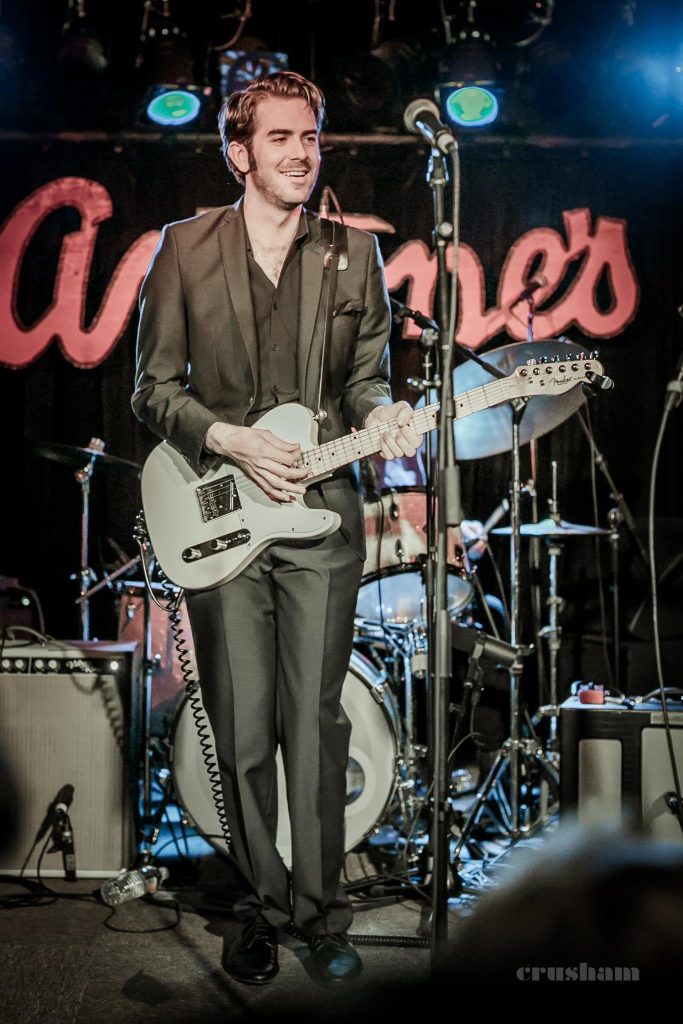
In all your years working for and attending the club is there a moment that really stands out to you as something special to have witnessed?
There’s a lot! The most recent one was Carla Thomas. We got her to play in June, and she played the club in the ’80s, but I’d never seen her live before. I just worship her and Stax records, so that was major. And very early on when we opened our version of the club, we had Buddy Guy come and play, and he of course is a big part of the history. James Cotton came and sat in, and Carl Weathersby, too. So we had Carl, James, and Buddy all playing at the time in 2016.
There have been some folks that have passed away in the interim, but I was like, “Wow, we’re at this new club and we’re already making memories!” I got obsessed! I got Henry Gray, Billy Boy Arnold, Eddie Shaw, Betty Harris, and Dr John. As we kind of ticked along various people, it became a badge of honor for me that these people didn’t play the club way in the past and that we have such a rich history at our current place even though it’s only been around for ten years. There’s a lot of history in the walls already!
Everyone I know who goes to the club comes home bragging about it, so I’d say you’re nailing it! What’s next for Antone’s? Where do you hope to take things in the next 50?
Great final question. One thing we’re working on is a museum that will be in our upstairs event space. We have access to a lot of amazing artifacts that have been given to us or loaned to us, and so making Antone’s a destination during the day for people to come and visit the museum and learn more is a big deal! We’re also approaching year four of our Austin Blues Festival, and that’s something we’ll continue to grow. I’ve been so in the thick of the 50th that it’s hard to imagine what we’re going to do for Antone’s 51st, but I’m hoping that by doing trips like this we’re reminding people of who we are and that Antone’s is not a relic of the past.
There are older and younger musicians who are great and who are still doing this thing, and it’s all really to continue to celebrate Clifford’s legacy because he was a huge part of blues maintaining relevance in a time where it had fallen out of fashion. Young people like Stevie and Jimmie Vaughan and Lou Ann Barton, and people who were tied to the club, helped to blow it up again in the ’80s, and in a small way we want to keep it going!
