


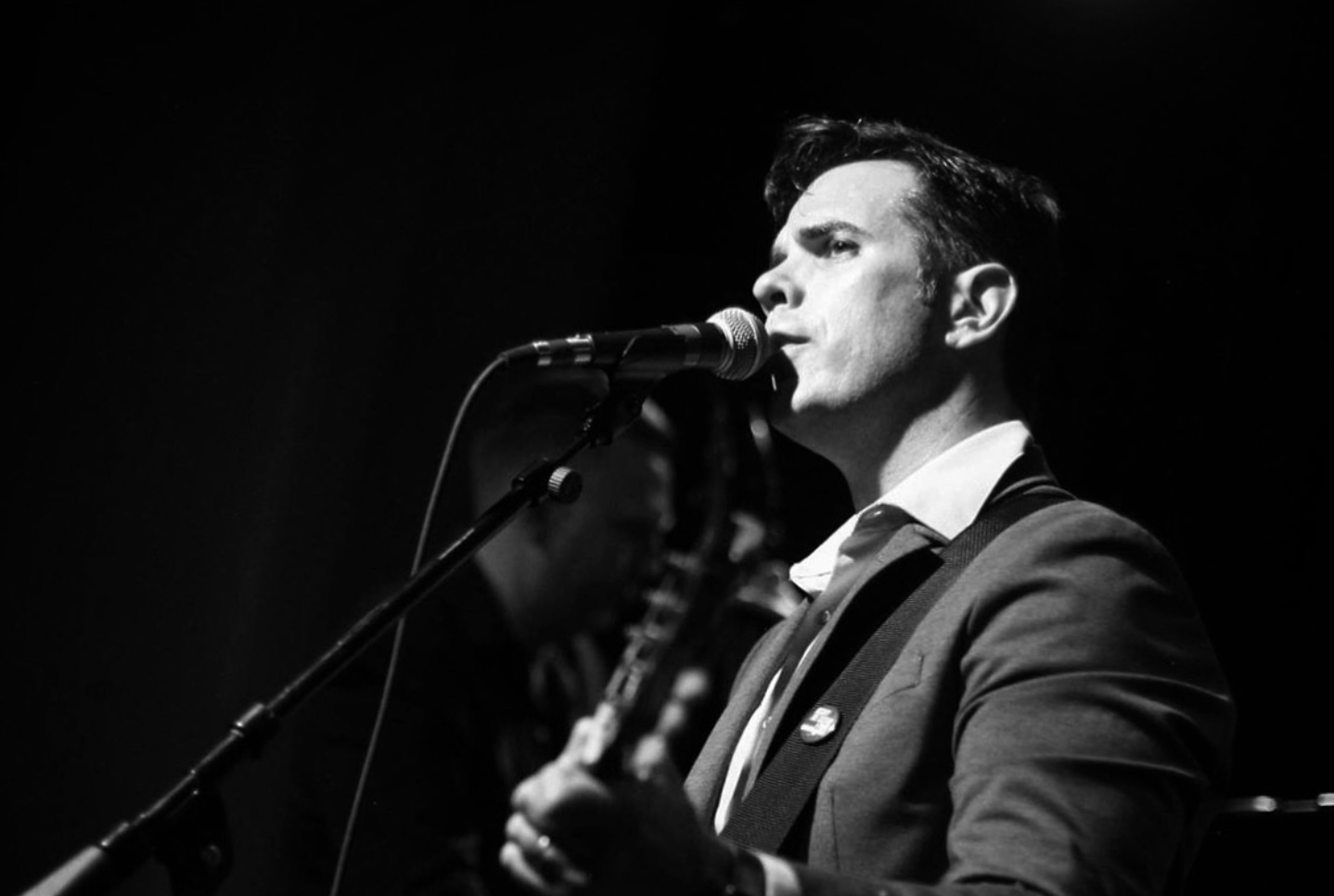
It can be said that a record holds the moment an artist inhabits, time pressed in vinyl. Mighty Joe Castro and the Gravamen’s 2020 album, Come On Angels!, crackled with Buddy Holly–inflected rockabilly jolts, shadow-soaked melodies, and guitar fits recalling the inventive spark and whimsy of Les Paul’s recordings – all threaded through wistful doo-wop daydreams. That same magic happens on their new album, Between the Lightning and the Thunder, opening a wide cinematic frame where shimmering textures and layered instrumentation give the Gravamen’s rockabilly roots room to stretch.
“Come On Angels! was a true representation of where we were at that point, as a band,” frontman Joe Castro explains to me. “We were just starting out and needed songs to play live, so those tunes were road-ready. We pretty much recorded it live in the studio, no click tracks with minimal overdubs and edits. And it was a really enjoyable, easy experience. But for Between the Lightning and the Thunder I want to expand the sound, take us out of our comfort zone and go widescreen, incorporating additional instruments and sonic textures without worrying about whether or not we could replicate it live. ‘Cinematic’ was a word that came up a lot during the sessions.”
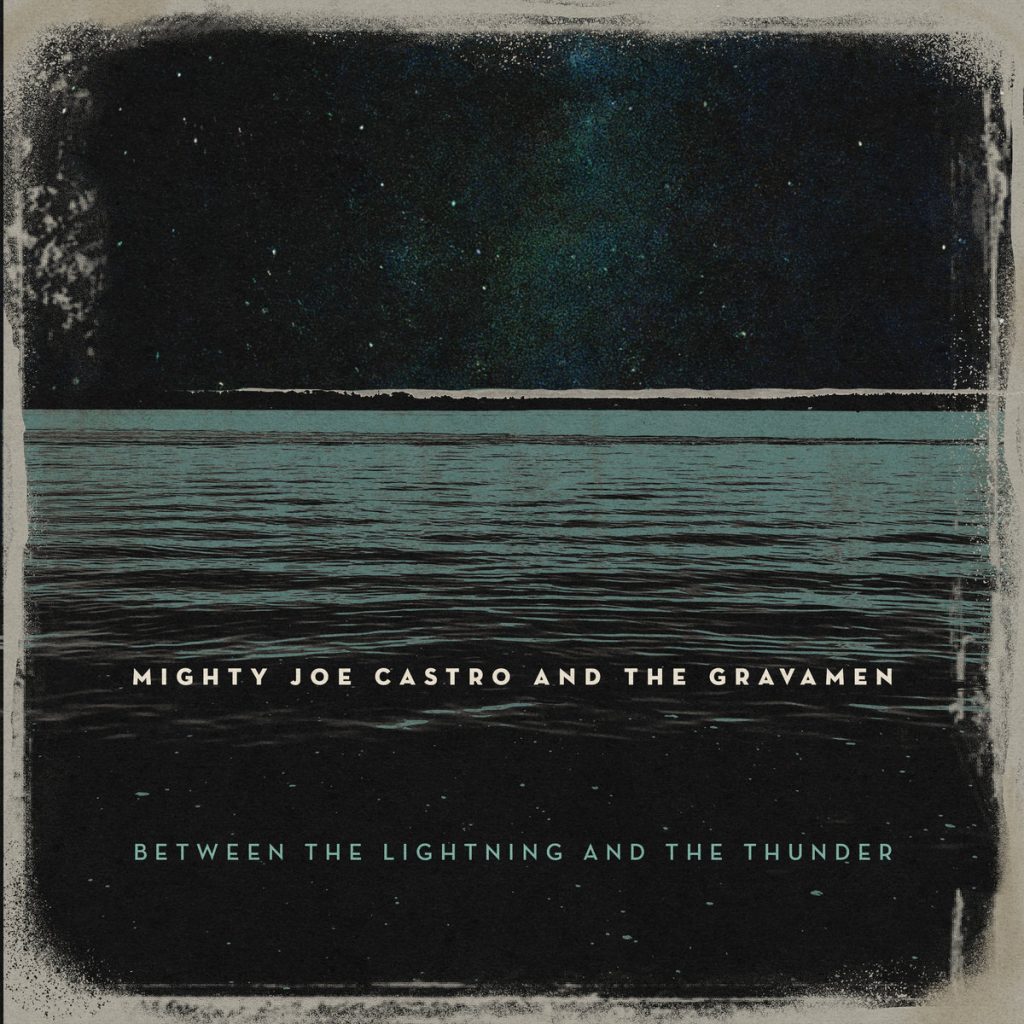
“Can’t We Just Start Again” feels like counting seconds between lightning and thunder: deliberate, almost ritualistic. “Recording that song was a real puzzle. I felt it needed sonically to be dream-like, almost weightless, like a memory. But whenever we tried it live with the band, it felt heavy. So Brian McTear (who produced the record) and I built that one from the ground up, starting with just my acoustic guitar and vocal over a simple drum loop. We tried different sounds and had Dallas experiment with various drum patterns. We talked a lot about taking the listener on a journey, with each section being a different scene in a film.
“I was deep in a Scott Walker rabbit hole at the time. But we kept hitting walls and I wasn’t completely sure if it was ever going to come together but then Brian suggested a radical idea for Mike’s guitar sound, and then – bang – somehow the pieces magically began falling into place. And then Max Datner came in that same day and improvised that accordion drone throughout the whole song and somehow the fog lifted and everything suddenly came into focus and we knew what to do. Brian McTear deserves a lot of credit for bringing that one to shore.”
As The Gravamen continue to stretch into new sonic spaces, Castro remains focused on what matters most: the songwriting, particularly the lyrics. Putting everything in service of the song is the approach the band has carried through from album to album. Nowhere is this more apparent than on “Embers in the Ash,” which Castro says “was a little more ‘folky’ than some of our previous tracks, and with all the references to the weather and water, I wanted it to have a slight sea shanty feel, like something by The Pogues or Tom Waits. Almost timeless.”
“Dominoes” is the emotional core of the record: grief, gratitude, maybe a little personal mythology. “I’ll just say that ‘Dominoes’ is arguably the most personal song on the record, almost a state of the union for a specific moment in time. So it means a lot to me. I hope people connect with it.” An outlaw country swing with a rockabilly backbone, “Gone When the Morning Comes” proves that DNA is still there. “That was the first song I wrote for this record, coming quickly off the back of Come on Angels! so timing might have had something to do with it.”
The push-pull of “Look of Eagles”—with its melodic classic country guitar lines, surges of driving rock energy, and drums picking up pace—gives the song a vibrant, propulsive motion. “Within the lyrics, there are multiple references to horse racing and I wanted to capture that kind of excitement and energy. That recording is a good representation of The Gravamen as a live band. Mike, Matt and Dallas all instinctively knew what to play here. That’s the sound of that band doing what they do best.”
The line “The future gets put away when the present is too much to answer” (from the song “The Future Gets Put Away” lands like a proverb. Castro often writes songs from a personal need to process what the mind can’t. “Yeah, I would say that’s probably true. I think most art can be broken down to a desire to express something that you can’t fully explain or put into words. The meaning of life (or death) is a mystery and I think the most meaningful art mirrors that mystery without trying to expose it.”
The band’s take on Billy Joe Shaver’s ‘I’m Just an Old Chunk of Coal’ struts out as if from a dusty transistor radio. “I first heard that tune years ago on Willie’s Roadhouse and I immediately connected with its self-deprecating lyrics of redemption, its underdog spirit. I wanted to end the album on a positive note, and that song is almost like a mission statement for us moving forward. I’m in the gutter now but I’m gonna make it to those stars one day! I brought it to the band and thankfully, they weren’t familiar with the original so they had no idea what it “should” sound like. It came together pretty quickly and is another one we recorded pretty much live. And it’s become a crowd favorite of ours for sure.”
Asked whether there was a turning-point moment in the studio that defined the record’s direction, Castro pushed back on the idea of mapping things out too neatly. “I find that trying to force a specific style or sound onto a song can be really limiting and you run the risk of it sounding contrived. I just listen and follow my instincts. Let the song take you on its journey. When it’s all said and done, if we’re honest and sincere about how we approach the music, don’t over think it and just follow that feeling, then regardless of whatever style or genre we attempt, it’s still going to end up sounding like the Gravamen. Sincerity is the key for me.”
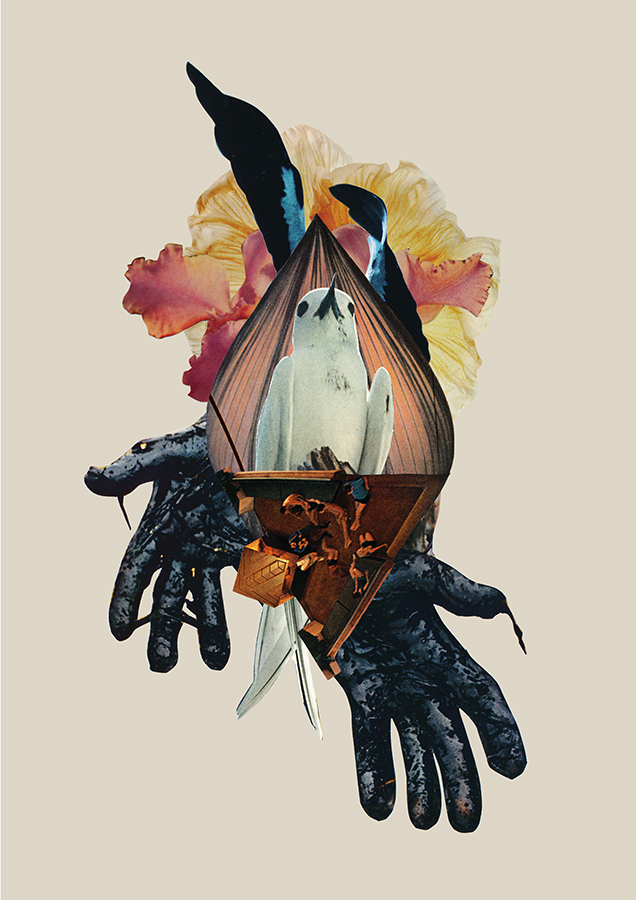
After discovering Mighty Joe Castro and the Gravamen’s music five years ago, it didn’t take long for me to notice another dimension of his creativity. Castro is also a visual artist, and his collages, paintings, flyers, and album art feel like they spring from the same creative world: a vintage aesthetic with a present-day pulse.
“All sides of the same coin. For a long time, I really thought of art and music as two completely separate things but as I’ve gotten older, looking back on my work, I do see a common thread: this heavy influence of mid-20th century culture, which permeates my music, collage art and design aesthetic. Again, not a conscious thing. It’s always been there and I can’t really explain it. I didn’t live through the 1950s or early 60s, so it’s not a personal nostalgic thing. I’ve just always connected with the styles and sounds of that time period. Art, music, film, design – each was feeding off and pushing the other. Everything was stylishly playful and rebellious. I try to tap into that as much as I can.”
If Come On Angels! is the restless older sibling, then Between the Lightning and the Thunder is the reflective, occasionally moody sibling. When I asked how he sees the albums speaking to each other, Castro, clever as ever since I’ve known him, quips, “When you look close, you can see the family resemblance – similar nose, maybe the same kind of gait – but they have distinct personalities. Each took their own path in life. I mean, they get along. Sometimes. When they have to, for mom’s sake.”
