


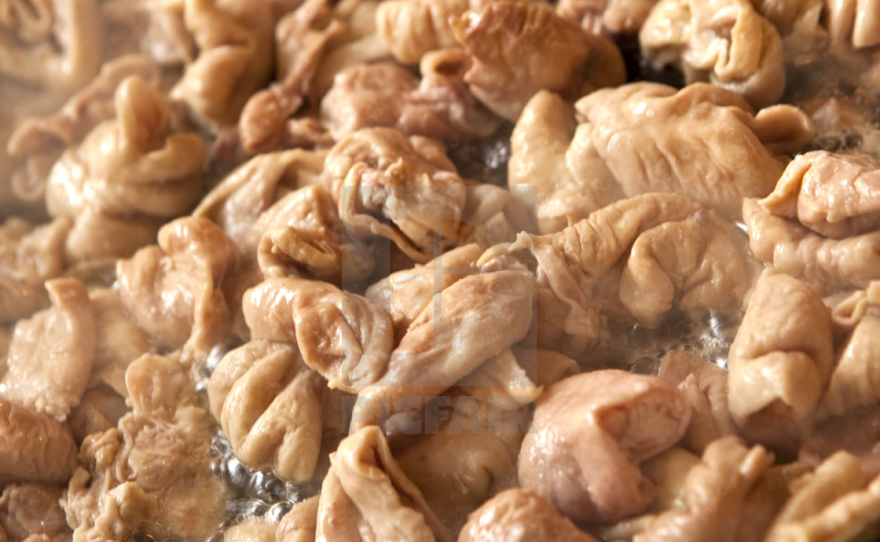
Short for “chitterlings,” chitlins are pieces of pig intestines. Chitlins are different from “cracklings,” which are the crispy fried pieces of pigskin that are also called “pork rinds.”
The word chitterling comes from Old English. It described the ruffle on a shirt, which when ironed resembled small intestines. The French word for this kind of ruffle is andouille; hence andouille sausage, made from chitlins and tripe.
In the southern American colonies, hogs were slaughtered in December. The hams and chops went to the main house, and the hog guts, ears, feet, and other leftovers were given to the slaves. After Emancipation, the practice continued, only the guts were scooped up after the slaughter and sold for a few cents a pound, feces and all (which is where we get “gutbucket”).
Boiled chitlins are dressed with hot sauce and served with ham, turkey, macaroni and cheese, collard greens, and sweet potato pie. Although chitlins are a winter holiday tradition in many African American households, some African Americans consider chitlins slave food, and refuse to eat them.
Papa Charlie Jackson expressed his opinion in “Mama Don’t You Think I Know”:
Now some people say chitlins are good to eat
I’ll never eat chiltlins, long as hog got feet
Chitlins are also popular in Cajun cooking, and in Mexico, where they are typically eaten in a spicy tomato soup. Chitlin preparation is lengthy, tedious, and stinky. Today, chitlins are sold partially cleaned, but they still require a very thorough hand cleaning by the cook. According to Moo & Oink, a company that sells thoroughly cleaned chitlins for cooks who don’t have time for the lengthy preparation, “Chitlins take a lot of time and effort to clean. Along with this effort comes a lot of waste as you throw away the fat and grit. When you are buying chitlins that require cleaning, be prepared to buy ten pounds of chitlins to get five pounds of chitlins to cook.”
The goal of cleaning is to remove the fat from inside the chitlin. The fat side has a different color than the meaty side, so you just scrape off the fat and any dirt and grit, while repeatedly rinsing. Once separated, cleaned, and thoroughly rinsed, toss the chitlins in a pot of boiling water with a little vinegar, salt, pepper, and onions. While cooking, the chitlins will give off a strong smell. You can toss a potato or apple into the pot to absorb the odor.
“What a great resource, as fascinating as it is informative. Debra’s passion for the blues shines through.” – Bonnie Raitt
“Debra’s book will teach you what you really need to know about blues history and where the blues are coming from.” – Joe Bonamassa
“Finally one can understand the mechanics behind the overwhelming viscera of the Blues. Debra Devi’s work is a true guide book to the soul.” – Al Jourgensen (Ministry)
“This book is fascinating! Take it to the bathroom and don’t come out until you’re done reading it.” – Jimmy Vivino
“This is a beautiful book. Upon receiving The Language of the Blues I discovered my knowledge only scratched the surface. Debra Devi has written an invaluable reference book. And it’s also great fun to read.” – Hal Willner
“Don’t think that The Language of the Blues might read like a dictionary or reference book. There’s no plot, but you can open it up at random and fall into the world of your favorite Blues songs, and find out more about the lyrics than you would be guessing from context. I learned a lot more about the blues music I already loved.” – Bob Margolin
