


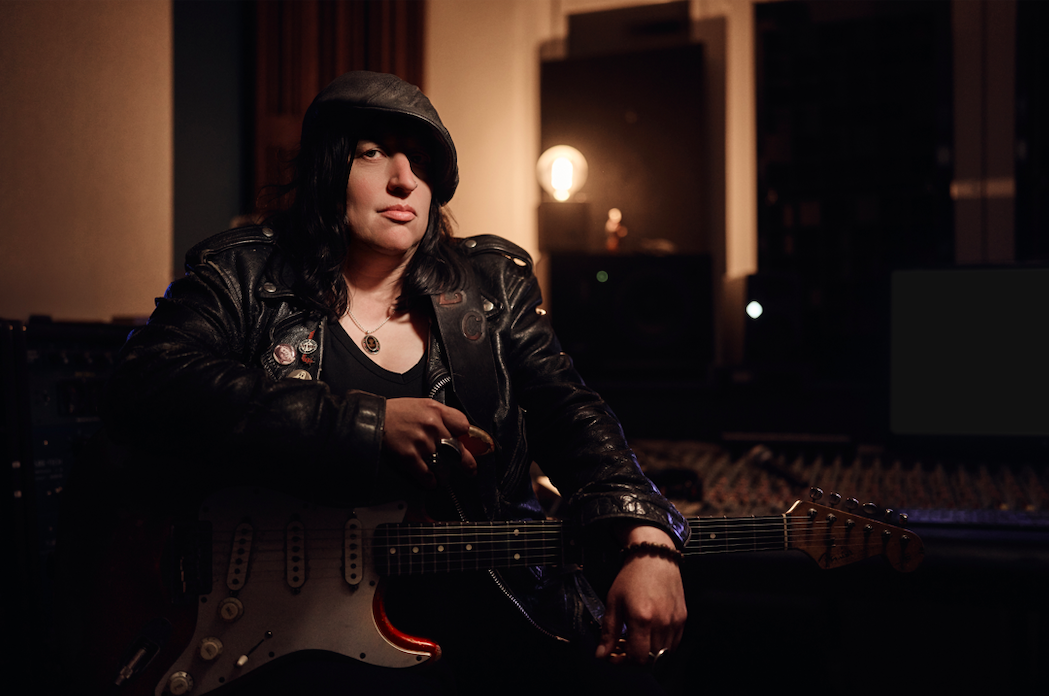
For nearly two decades, Laura Chavez has been one of the blues world’s most dependable guitarists, lending her playing to Ruf Records sessions and touring across Europe as part of the label’s Blues Caravan. Along the way, she earned a reputation as a musician who could elevate every project she joined, becoming the first and only woman to win the Blues Music Award for Guitarist of the Year.
Her first solo instrumental album, My Voice, finds common ground between blues, roots rock, soul, and Mexican folk traditions, reinterpreting familiar songs while revealing the musical perspective she has spent years developing as a player.
Chavez spoke with American Blues Scene about saying yes to her first solo record, paying tribute to her father through Creedence Clearwater Revival’s “Born On The Bayou,” finding the meeting point between her Mexican heritage and the blues on “El Cascabel” and “La Llorona,” and discovering what it means to let her guitar carry the conversation.
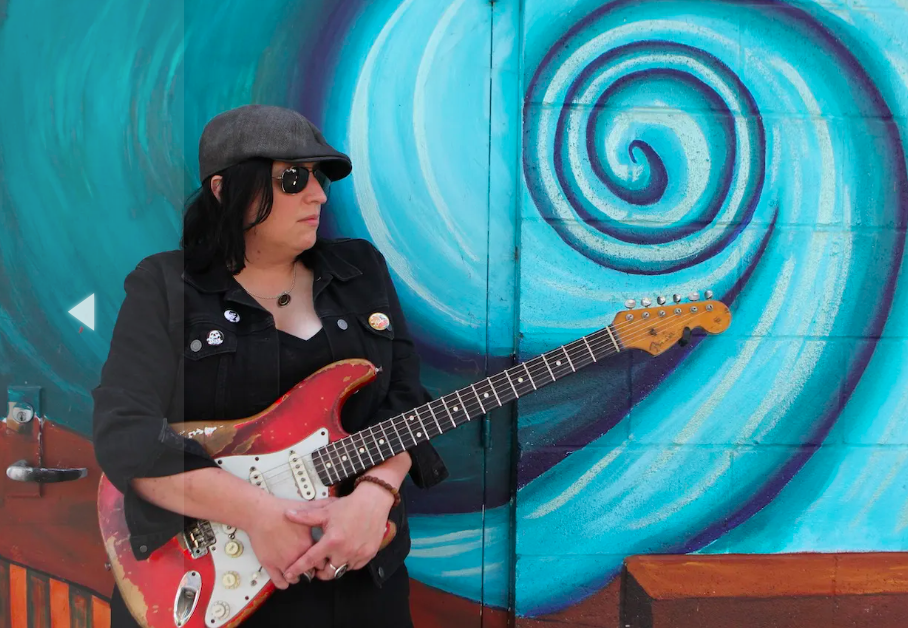
You’ve spent years being “the guitarist in the room” for other artists. What made
this the moment it finally felt right to step out with something under your own name?
I’ve been working with Thomas Ruf and Ruf records for almost 20 years as the, sort of, utility in-house guitar player. Whenever there was a new signing or artist who was not a guitar player Thomas would often ask me to be part of the session which had been a great experience. I’ve played on probably 20 or so albums of very diverse artists from Mitch Ryder to Ina Forsman and Whitney Shay. I’ve also often been part of his annual European showcase tour called the Blues Caravan as the house guitar player. These experiences have led to many long lasting musical relationships. I met Vanessa Collier making her Ruf release and the Blues Caravan was my first experience playing with Candye Kane.
So last year Thomas came to me and asked, as he had before, if I would consider being one of the main artists on the tour and record a solo album. I was always conflicted about how to do the solo album and whether I would try to enlist some friends to sing or make it instrumental and I was always too busy to really think too hard about it. This year was the 20th anniversary of the tour and something just made me say yes. I wasn’t any less busy and had no more of an idea of how I wanted to do it but once I said yes and had a deadline I had to get to work.
The album opens with “Born On The Bayou,” which immediately sets a very specific tone for the record. I’ve always loved how that song swells with a swampy tremolo effect. You’ve called it a tribute to your dad, and it feels like a very intentional choice as an opener, especially with the keys and that driving guitar approach. What made it the right place to start My Voice, and how much did that personal connection shape the way you approached the song?
We recorded that song towards the beginning of the session and it just kicked us all in the face when we heard it back. I also liked the fact that it was a song everyone has heard and felt like it was a good place to maybe gain context for the rest of the album. But, for sure, the sheer energy of the track felt like the right place to start.
I remember listening to a lot of Classic Rock in the car growing up and it definitely had an influence on how I began to play the guitar. There were two bands my dad always had, first the records, then the tapes, and then eventually the CDs, and they were CCR and The Who. So I knew I was either going to do something from Creedence or something off of Who Are You.
I picked “Born On The Bayou” again, for the familiarity of the song to a wide audience and because I knew with that one I’d be able to give it a real personal stamp, especially with Marty Dodson on drums. We like to play with a lot of energy and it just feeds off each other and builds and builds. So, I’d say it, in reality, it was more of an energy connection than an emotional one apart from my childhood memories growing up listening to it.
Even though it’s instrumental, a lot of these tracks feel like they already know what they’re saying. Do you usually hear the “story” first, or does it come out of the guitar once you start working on something?
It often comes out while I’m working on it. I have the same approach when playing other artists’ music. If I have a chance, I listen to the song first and see where I think it could go but don’t spend much time beyond that and just see where the guitar and the music takes me when I start playing.
“Chinese Checkers” pulls from the world of Booker T. & the M.G.’s but reshuffles the roles between guitar and keys. What did that experiment open up for you in terms of how you think about arrangement?
That’s the only cover I recorded that didn’t start originally with vocals and lyrics, and originally I was going to avoid doing anything that originated as an instrumental. But with that one, I loved the groove and I couldn’t get past the fact that, without Booker T and the MGs, this sort of soul and R&B music never would have become popular the way it was. There wouldn’t have been the same place for an album like mine or so many others without that band. So I wanted to pay tribute without copying it, and swapping guitar and keys seemed like a way to turn it on its head a bit and put our own stamp on it.
On “So Long Baby, Goodbye,” you’re nodding toward California roots-rock world—bands like The Blasters, that whole mix of R&B and rock energy. When you think back on that scene, what still feels like it’s in your DNA as a player?
In many ways, yes. But I so wish I was born even 10 or 15 years earlier to have really experienced when all of those bands were coming up. Candye introduced me to a lot of those bands personally, and because of her I’ve had so many opportunities to play with them or share the bill. Definitely, the energy and all of the melding of styles from punk to R&B and Blues and Roots music spoke to me as I listened to all of those things growing up – seeing how there’s no reason why they can’t all influence each other and create amazing music that had a big influence on me.
“El Cascabel” brings in your Mexican heritage and filters a mariachi standard through a blues-rock lens, with echoes of Los Lobos in that cross-cultural space. What was your way into that arrangement; did it start from respect for the original, or curiosity about what it could become in your hands?
I studied many versions of that song to land where we did on that one. For example, the bass riff that kicks it off when the band enters is really a horn line from a recording of Mariachi de Vargas, and the approach to the main melody came more from a traditional string ensemble from Vera Cruz. There are no drums on any of these recordings, but one of the most distinctive elements of this style of music is the time signature, so that gave us a place to start. I knew it could work the way Los Lobos arrange and modernize traditional Mexican styles and rhythms. As a side note, they also recorded “El Cascabel,” but they did it in its traditional style, and it’s, of course, great.
“La Llorona” has a very different mood: slower, darker, more restrained. You’ve mentioned Thomas Ruf pushing for a slow blues there. Were you resistant to that idea at first, or did it click pretty quickly once you started hearing where it could go?
I was resistant to the idea of recording just a slow Blues with me just wailing for 5 minutes on the guitar. I really wanted the songs to be songs and have strong melodies. Even if there are no vocals or lyrics, there is still melody that you can grasp and sing along to. So, I got the idea to record “La Llorona,” which has that melody and a real story, and maybe treat it as a slow Blues song, of sorts. It turned out exactly the way I hoped, and I’m so happy to hear how many people have gravitated towards it.
You’ve built a career as a highly respected guitarist for other artists, including your 2023 Blues Music Award win. On this record, even without vocals, you’re clearly the one leading the musical direction. Did approaching the music from that perspective change how you think about your own voice as a player?
I’ve always seen myself as the supportive role — the foil to whatever is out in front, and I strive to hopefully bring out the best and accentuate all that is great in whoever is fronting the band. So, yes, I sort of had to reimagine my role here in a way, but at the same time, the things that I try to bring to the table as a side player I feel are still heavily at play here. Those things are groove, energy, dynamics, and knowing the right moments to step back and the right moments to let loose.
