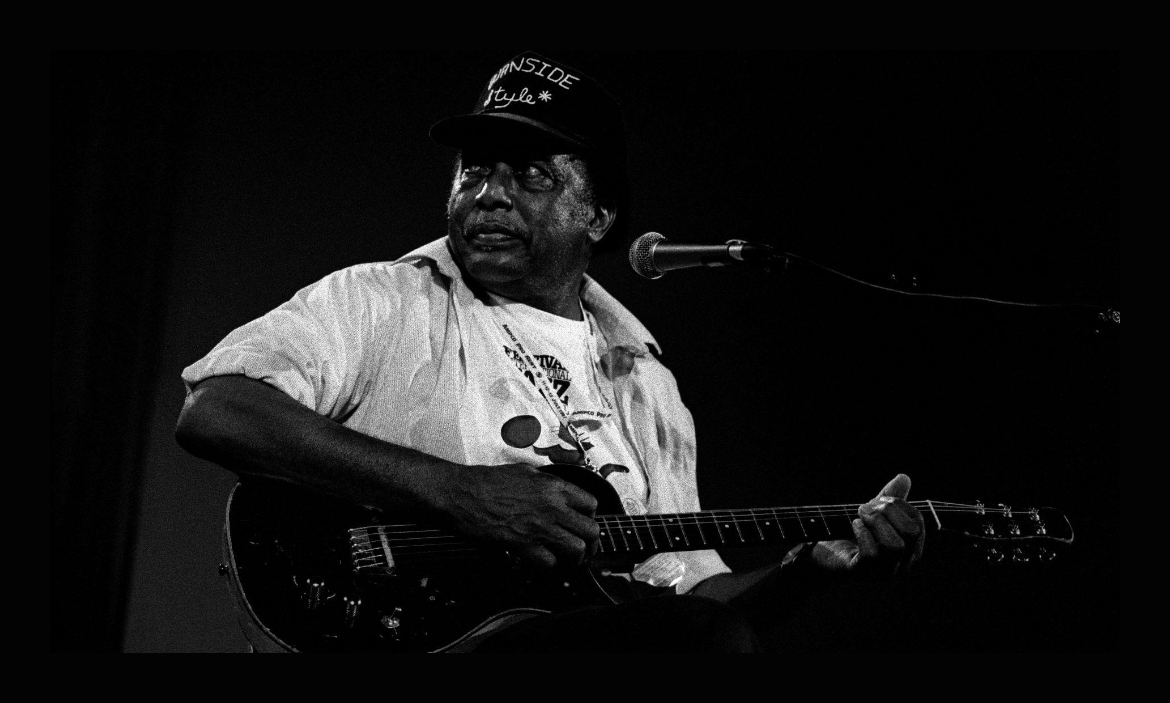
David Evans and the Sound of the Mississippi Hill Country
David Evans, an ethnomusicologist, musician and foremost expert on Hill Country blues, began documenting the region’s musicians in 1969, recording artists and community music traditions through the 1970s and into the early ’80s. A professor emeritus at the University of Memphis, Evans produced records by R.L. Burnside, Junior Kimbrough and Jessie Mae Hemphill through the university’s High Water label, helping bring their music to audiences beyond northern Mississippi. He is the author of Big Road Blues: Tradition and Creativity in the Folk Blues (1982), a foundational study of the genre, and was inducted into the Blues Hall of Fame in 2023.
A distinctive sound
According to Evans, unlike the Delta, where whites owned plantations and Black people worked as sharecroppers, small Black landholders gave the community stability. Within the tradition, fife and drum music and banjo and string band music developed. The Hill Country style that developed is very percussive and not harmonically complex, he said.
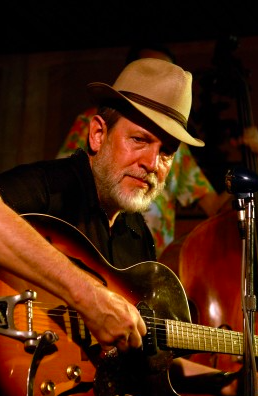
In Evans’ field recordings of R.L. Burnside, Jessie Mae Hemphill, Robert Belfour, Napoleon Strickland, Junior Kimbrough and Ranie Burnette, the musicians performed one- and two-chord, riff-based blues in a highly percussive style, often with bottleneck guitar.
Evans believes Hill Country blues developed from older folk traditions that musicians adapted as blues emerged as a distinct genre in the early 20th century. Fife-and-drum music, banjo and fiddle playing, one-string instruments and field hollers all contributed elements to the new style, he said. The result was a distinctive regional sound, rooted in older musical traditions but recognizable as its own form of blues. He added that Black workers in the field likely crafted songs while plowing or picking cotton, then came home to adapt the tunes to guitar, in a process that took place over 100 years ago.
Piedmont, or East Coast, blues is almost the opposite of Hill Country, Evans said – elaborate, showy, with frequent instrumental breaks and more passing notes and chords. Standard forms like the 12-bar form are often employed.
Its traditions range from the improvisational lead-guitar style of Blind Lemon Jefferson, which helped pave the way for later electric blues guitarists such as T-Bone Walker and Guitar Slim, to the fingerpicking approach of musicians like Mance Lipscomb. In the latter style, sometimes called “dead thumb,” the guitarist maintains a steady bass line by striking one or two strings with the thumb while picking melodic figures with the fingers.
Hill Country blues is cohesive as a genre, Evans said. Music in the genre shares the use of riffs, prominent slide guitar playing, a percussive quality, traditional lyrics and repeated phrases. A lot of songs in the tradition had unusual structures, like two-line forms or one line repeated any number of times with variations. Evans said Junior Kimbrough created odd, personal structures with great creativity.
According to Evans, for musicians expecting structure, Hill Country blues is difficult to play. If you take the riff as structure, it becomes easy to play. Evans recounted a well-respected drummer who played with Jessie Mae Hemphill at a gig in New York and was terrible because he couldn’t adapt to the lack of structure.
Blues lyrics are truth, Evans said. Blues singers try to hit the audience with their lyrics, often in the context of a rowdy house party, where listeners may only glean one verse or stanza. He said that often blues songs are not lyrically coherent on a single theme, jumping from thought to thought or even containing contrasting verses.
“But one verse, one line, might hit somebody, and somebody hears it and says, ‘Yeah, that’s me.’ And that’s the whole purpose of the blues,” Evans said. “And it creates a kind of solidarity between the singer and people in the audience.”
Hill Country music was designed for picnics, according to Evans. In the summer, picnics would be held from around the Fourth of July until a little beyond Labor Day, when harvest season began in earnest. Fraternal organizations would put on picnics, and LC Buford, who owned a country store with a jukebox and a pool table, would host blues players in front of a crowd. Generally, though, the music was performed outdoors, on a picnic ground, often a baseball field with a wooden grandstand. While picnics were free, people would sell sandwiches and drinks as they listened to fife-and-drum music.
Rhythms and the riff style in Hill Country harken back to the fife-and-drum tradition. Evans said some of the rhythmic patterns have been transferred from drums to the guitar. Those qualities, and brisk pacing, induce dancing.
“You would be impressed by the use of riffs and the very strong rhythms that – it does seem to be very dance-oriented,” Evans said. “It’s among the most dance-oriented types of blues.”
Evans is drawn to Hill Country blues for its intensity, rhythmic drive and variety, as well as its deep roots in the community. Rather than following a fixed structure, the music allows performers to develop distinctive sounds from traditional elements. Evans pointed to Junior Kimbrough as an example: Though his lyrics were often spare, his songs and playing style were original, and he built a distinctive band sound around them. Still, Evans believes tradition was the genre’s primary influence, with musicians creating their own combinations of inherited musical and lyrical elements.
Tracing the roots
According to Evans, the sound now known as Hill Country blues probably did not develop until the 1930s and 1940s. That said, there are general blues artists from the region, including several from Hernando who recorded in the 1920s, and Blind Willie Davis, from Senatobia, who recorded as a gospel slide-guitar player in the 1920s. A musician named Eli Green recorded a couple of Muddy Waters covers. Yet there is not much evidence of the music before 1942.
The precise origins of Hill Country blues remain difficult to trace, Evans said. Although Lucia Smith recalled hearing “Memphis Blues” as a popular song in the region, Evans noted that its sound bears little resemblance to what is now recognized as Hill Country blues. He suspects the genre developed relatively late in the area around Tate and Panola counties, particularly compared with the established blues traditions around Hernando, where musicians such as Robert Wilkins, Garfield Akers and Joe Callicott were active. But the historical record is thin, and Evans said it is difficult to know exactly how the style took shape. He suggested that Fred McDowell, who settled in Como after spending time around Holly Springs, may have brought musical influences from West Tennessee, where rural traditions also featured open tunings and riff-based playing.
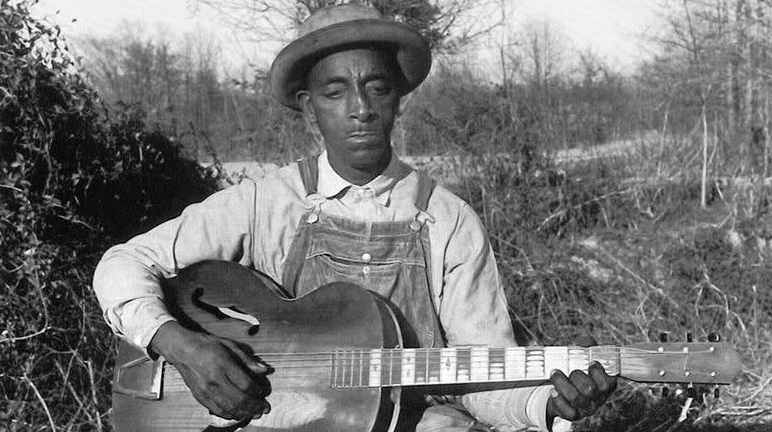
Of the first recorded musicians from the area, Evans said Blind Willie Davis, from Senatobia, recorded in the 1920s with a similar droning style, but that it was gospel music. The first star from the Hill Country who reached a wider audience outside the region was Mississippi Fred McDowell. Still, McDowell was recorded by folklorist Alan Lomax, and musicians in the region would not gain much attention from commercial record companies until the 1990s with Fat Possum Records.
“Fred McDowell was the first person from there to gain any sort of national or international notice. But his appeal was basically to the specialized blues constituency,” Evans said. “People that liked country blues, that would go to blues at coffee houses and Blues Festivals and things like that.”
The start of serious documentation of the music began in 1959, with Fred McDowell and Rosa Lee Hill for Alan Lomax.
Evans also helped bring renewed attention to the region’s older musical traditions through Afro-American Folk Music from Tate and Panola Counties, Mississippi, first released by the Library of Congress in 1978 and reissued on CD by Rounder Records in 2000. The collection combines Alan Lomax’s 1942 recordings with Evans’ own field recordings from 1969 to 1971, documenting two generations of Black musical life in the Hill Country. Alongside blues and gospel, it features fife-and-drum music, banjo and fiddle playing, homemade instruments and locally composed ballads. Evans wrote the liner notes, highlighting the importance of the 1942 recordings of Sid Hemphill and other musicians whose older styles had largely been ignored by commercial record companies.
Sid Hemphill, the fife-and-drum band leader, played a type of music that was rarely recorded, Evans said. The tradition stretched back into the 19th century, but by the time of widespread recording of live music in the 1920s, many of the traditions were neglected, or in the case of fife-and-drum music, completely ignored by commercial record companies focused on blues and gospel.
Evans sees Sid Hemphill as both an important Hill Country musician and a skilled original composer of ballads, including three of his own songs about local themes. He described the 1942 recording session as significant for documenting the region’s fife-and-drum, panpipe and string-band traditions, as well as Hemphill’s work as a musician and composer. While Jessie Mae said her grandfather, Sid, could play guitar and blues, there is no evidence of him on recordings.
Sid’s daughter Rosa Lee, however, played the blues and passed on the tradition to Jessie Mae.
“I tend to think that Sid was not much into blues, that blues was something that came in later and that maybe he didn’t particularly care for,” Evans said. “Blues was, to a great extent, the rival music to Sid Hemphill’s.”
According to Evans, Sid Hemphill had an older repertoire largely influenced by performing for white audiences. By 1942 he was in his 60s, and the younger generation may have found his music antiquated.
“White musical taste tends to be more nostalgic and oriented towards preserving older styles, whereas black music tends to be forward-looking and towards the latest thing,” Evans said. “I think Sid’s band was in a transitional state in 1942. He was appealing both to white listeners and perhaps the older segment of the black community. It represents an older repertoire, an older style, even for 1942.”
While Evans notes that the term “Hill Country blues” is constructed, he also said that it designates a regional blues sound and functions in distinguishing a body of music. Historically, the geographical region east of the Delta had long been known as the Hill Country. Evans himself used the term for Living Blues magazine in the 1980s. Generally, the term refers to counties in Mississippi – Marshall, Panola, Tate, Lafayette and Tippah. Evans said the term could stretch into Tennessee, where similar geography and sounds exist.
Although Fred McDowell is widely regarded as one of the defining figures of Hill Country blues, Evans noted that he was born in western Tennessee, near Rossville. That raises the possibility that the musical style extended beyond the Mississippi counties where it is most commonly associated. Evans suggested that similar sounds may have existed around Rossville and Moscow, Tennessee, and farther south toward Batesville, Mississippi. He also pointed to Robert Belfour, who lived near Oxford, as an example of a musician working beyond the Hill Country’s traditional center. But much of the surrounding region, Evans said, remains relatively unexplored by researchers, making it difficult to establish how widely the style was practiced.
The musicians who shaped the sound
Fred McDowell
Evans first saw Mississippi Fred McDowell in Cambridge, Massachusetts, in 1964 at a concert produced by Alan Lomax, the same year McDowell played at Newport Folk Festival. Later, Evans brought McDowell to California, and McDowell introduced him to Hill Country musicians Napoleon Strickland while living in Como in 1969.
McDowell was originally from Rossville, in western Tennessee, which as a region shares stylistic characteristics with Hill Country blues. After some time in the Delta in the 1920s, for most of his career McDowell lived in Hudsonville, near Holly Springs, and later Como, both in the Hill Country.
“He would represent the oldest layer of blues in that part of the country. At least the oldest layer that we have documentation of,” Evans said. “There are really not too many others of his generation, from that area that were recorded and none certainly as extensively as he was.”
According to Evans, McDowell was a top-notch guitar player characterized by the frequent use of slide guitar. With a plethora of recordings, McDowell produced multiple variants of the same piece, with small differences in each of them, and a wide catalogue with flexibility in his repertoire. McDowell drew from folk tradition, and his distinct arrangements would later be heard in musicians like Ranie Burnette and Napoleon Strickland.
Once McDowell earned a certain acclaim, becoming a part of the coffeehouse concert circuit and touring internationally, he played less in the community, according to Evans. While he would play at Othar Turner’s place, juke joints were rough and didn’t pay much, and he did not need the work.
Evans remembers McDowell as a “pretty sober kind of guy,” not really “a wild kind of person.” He didn’t party or drink to excess. In the moonshine-soaked Hill Country scene, this was something atypical.
McDowell was the first star able to reach beyond the region, Evans said. While the Young Brothers got some attention, nobody had really worked in the region. Alan Lomax recorded Sid Hemphill in 1942, but there was no follow-up or commercial success that resulted from the recordings. McDowell was the only blues musician that Lomax recorded from the region, Evans said. Those recordings were monumental for raising awareness for Hill Country blues.
“[The genre would] probably be nowhere. It would have just remained a local tradition. Maybe some folklorists would have still come through,” Evans said. “There are lots of regions of Mississippi and other parts of the South where nobody did any research. Who knows what they all are and what might have happened if somebody had recorded them?”
Even scholarly attention doesn’t guarantee commercial success or a thriving musical scene. Evans gave the example of Fred Ramsey, who spent time documenting blues players in Alabama, with five field trips in total. Nobody followed up on the research.
Evans views McDowell as “one of the greats.”
“He was a great purveyor of folk blues. And one who stuck with it,” Evans said. “His style didn’t change. He certainly reached a level of perfection because he was playing often. And for prestigious audiences and venues. He kept his music up.”
As interest in blues grew during the folk revival, Evans said he worked with Fred McDowell to revive older songs from his youth in Tennessee that he had largely abandoned. McDowell had recorded an extensive repertoire, but Evans felt some of it was becoming repetitive. He encouraged McDowell to revisit older material, with some success, helping broaden the range of songs captured on his later recordings.
Jessie Mae Hemphill
Evans remembers the first time he saw Jessie Mae Hemphill perform, in 1971.
“The guitar was in good shape, but the amp was sputtering, and she had only a small repertoire of blues songs at that time. I could never get a full recording because of the amp,” Evans said. “Even as messed up as it was with her amp, you could hear the essence of what she later became. I encouraged her and she started writing songs and practicing.”
Hemphill might have been playing since the 1940s, but mostly sang spirituals and covers. Evans helped her score gigs on her limited repertoire, including in Memphis and the Beale Street Festival in 1979.
“Nobody else, except her aunt, Rosa Lee, has quite sounded like Jessie. People have done her songs, but she’s unique,” Evans said. “It’s the blues boiled down to its very essence.”
While Jessie mostly played with a solo style, she had aspirations to have a larger band behind her, in the fashion of Dolly Parton, Evans said.
Born in 1923, Jessie missed two opportunities for greater stardom outside of the Hill Country region, according to Evans: first in the 1950s, and then later in the 1990s, when Fat Possum came onto the scene. Due to an untimely stroke in 1993, Hemphill became paralyzed on her left side, preventing her from playing the guitar. She continued to play the tambourine.
“I think that if she had gotten some recognition when she was young and had the same kind of encouragement that I was able to give her, she could have developed into an extraordinary artist,” Evans said. “She could have been a force in the 1950s blues scene. That didn’t happen. It didn’t happen to anybody from that area.”
Right when Jessie had her stroke, Fat Possum took off with a Hill Country blues revival scene. Hemphill didn’t garner the same attention as R.L. Burnside and Junior Kimbrough, but after her stroke, and after her death, her reputation in the blues community and among fans has become stronger.
“I think if she hadn’t had the stroke, she would have gone on and composed more and perhaps become a major star in the 1990s,” Evans said.
Hemphill never gave up gospel music and the church. Gospel and blues were intertwined in her music.
“She would go to church and sing gospel music, especially after her stroke. She just put the two together,” Evans said. “She would say she was doing blues for a living. But a lot of people say that her heart was really in the church music.”
Despite the family connection, Evans said he does not see much sonic connection between Sid Hemphill and Jessie Mae Hemphill. Jessie knew some of his songs, would perform his “The Carrier Line,” and felt that her musical ability came from her grandfather.
A contemporary of Junior, Jessie Mae Hemphill also played mostly original songs, along with a few standards and some tracks influenced by Howlin’ Wolf and Muddy Waters. Hemphill largely played as a soloist, however, while Kimbrough created a band sound.
R.L. Burnside
Evans first met R.L. Burnside in 1973 and toured in France with him in 1983, when Burnside had assembled the Sound Machine, composed of his son and son-in-law. While Burnside first started out as a solo acoustic player, he developed an electric band sound, likely originating from his time in Chicago sitting in with Muddy Waters. In the 1980s Kenny Brown joined the band, bringing slide guitar into the sound.
Locally in northern Mississippi, Burnside played house parties and juke joints, even as early as 1967 when George Mitchell recorded him. Mitchell recorded Burnside acoustic even though Evans thinks he had already made the switch to electric blues.
Tav Falco created videos documenting Burnside performing at the Brotherhood Sportsman’s Club near Como in the 1970s.
Because he developed a reputation for being really good on acoustic guitar, in France, in 1983 they insisted he play acoustic. When Evans first recorded Burnside, he had not released much material – half an LP on Arhoolie and scattered tracks elsewhere.
“I put out an album on the Vogue label, Sound Machine Groove. In 1981 it came out,” Evans said. “I thought that he deserved more of a hearing. He had a broader repertoire than those handful of tracks that were out.”
Much of R.L. Burnside’s repertoire consisted of traditional songs passed down among musicians in the Hill Country, rather than original compositions, Evans said. Burnside learned many of these songs from older musician Ranie Burnette, who had been prominent in the region during the 1940s and ’50s but was largely retired by the time Evans met him in 1969. Songs such as “Long Hair Donnie” and “Miss Maybelle” were already part of Burnette’s repertoire, Evans said, though many of the musicians who played them were never recorded. He identified “Bad Luck City” and possibly “Going Down South” as among Burnside’s original compositions.
Over the years, Burnside did not change much as a person, Evans said, but he was willing to be experimented with. Burnside wasn’t a pushover, but was willing to let people try things with him, and to “put himself in other people’s hands. He was a trusting guy.”