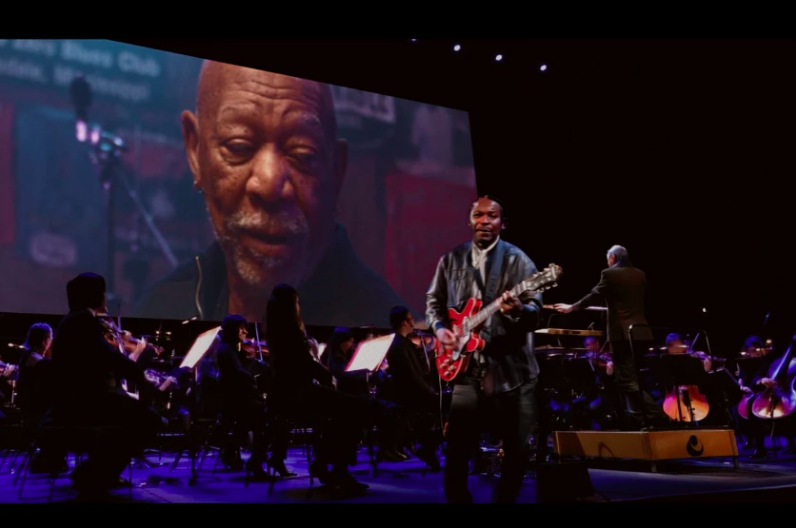
There was once a musician so good at his instrument, listeners said he got his skills from the devil. He carried with him a mystique, an aura of fraternizing with Satan, and whispers that he swapped his soul for fame and fortune.
Of course, when blues fans talk about this musician, they say Robert Johnson. But a deal with the Devil is also part of classical music. Born in 1782, Nicolo Paganini was one of the most famous violinists of all time. He played to packed houses across Europe, amazing listeners with his virtuosity. He also dressed in black, was incredibly pale, and had long fingers that gave his playing a level of unprecedented dexterity.
Despite their shared folklore, there have seldom been attempts to merge the genres of Robert Johnson and Paganini. For years, orchestras were the place of the bourgeoisie and the blues was the music of the proletariat, working class music for the poor and downtrodden. But in 2025, esteemed actor, Mississippi native, and blues bar owner Morgan Freeman decided to change the narrative. In order to prove the value of the blues and show it had a place alongside the most highly esteemed of music, he wanted to bring the blues to places it had never been before – performance halls and fine arts establishments usually reserved for orchestras, symphonies, and classical music.
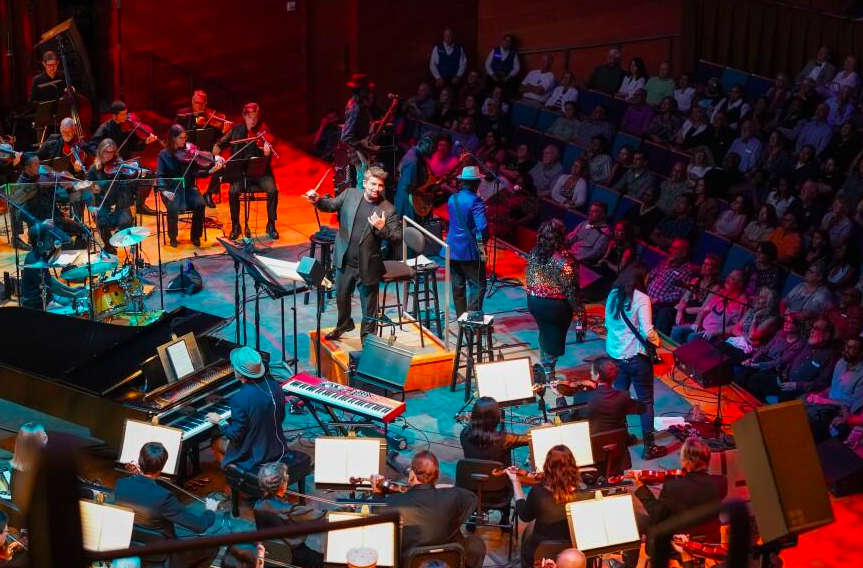
Morgan Freeman’s vision culminated in the Morgan Freeman’s Symphonic Blues Experience, a series of concerts that toured America bring an army of the blues’ best performers to play alongside regional orchestras around the country. The blues had horns, but never before was it accompanied by strings and woodwinds and the texture and depth of an orchestra. Paganini and Robert Johnson on stage at the same time.
This summer, the album version of Morgan Freeman’s travelling concert was released. After seeing the Symphonic Blues Experience in St. Petersburg, Florida last year, I couldn’t wait to relive the music.
Here is a song-by-song breakdown of Morgan Freeman’s Symphonic Blues Experience. This is an amazing album. The performances are top notch. My one qualm is that most of the songs are short. Only four of the 12 songs are over four minutes, with two of them under three minutes. The whole album is 43 minutes. It is tough to feel an orchestra in 43 minutes. Orchestras build and ebb and flow. The blues is short and to the point.
Fitting the orchestra into the blues format compliments the blues nicely, but rarely lets the orchestra do its thing. I would have liked to see one piece where the symphony takes lead and tells a blues story from its perspective. Perhaps snippets from Paganini or parts from L’Histoire du soldat, or Tale of the Soldier, the story of a Russian foot soldier who “trades his violin to the Devil in return for vast economic gain”.
But without further ado:
Dark Was the Night, Cold was the Ground
Starts with strings and the orchestra. Morgan Freeman enters and recites a 1927 narrative by Blind Willie Johnson that discusses the blues and its place in history. This piece is as true today as it was 99 years ago. I think this is the same opening he narrated at the concert, but it is Morgan Freeman. He can narrate anything and I will listen. The blues is personal to Morgan Freeman. It is where he grew up.
Crossroads
An amazing twist on a legendary song. The strings and the orchestra set it up and then the traditional blues played by Mississippi veteran Super Chikan kicks in. It is faster pace than the Robert Johnson classic, taking more influence from the Clapton Cream version than the original. But that doesn’t take away from its impact. Check out the harmonica and horn interplay before it comes to a close.
Death Letter Blues
This Son House classic was a standout of the live performance. Here Taj Mahal puts his gravelly voice to a thumping drum beat and haunting strings. Even on a second listen, this is an epic performance. I like how Taj Mahal’s lament never gets buried under the plethora of performers. This is one of the best showings of the orchestra.
Dust My Broom
Another Robert Johnson jam. Here the horns take precedent, giving it a Chicago almost soul sound. Lady Adrena flips the perspective of the original from a man to a woman. Definitely more upbeat from the original.
The Thrill is Gone
I remember this being another standout from the live performance. I saw BB King live numerous times. The horns are always a big part of a BB tune but here the song gets extra layers. Alvin Youngblood Hart does his best BB impersonation and while I would have loved to have the late legend on the song, Hart fills in well. The organ in this song is amazing as are the strings, and of course the horns do their thing. It’s a bit funkier and soulful than the original. Almost as if Isaac Hayes had a part in the songwriting. But don’t be fooled, the blues is still there. You can almost see Lucille.
Cadillac Assembly Line
If I remember right, during the performance, a video of Morgan Freeman discussed how the blues moved from the Delta up to Chicago and the inner city. There it picked up inner city struggles. In Cadillac Assembly Line, Keb Mo tells us about life of a working man in Detroit. Early in the song, the orchestra stays subtle, but as the song progresses, the strings complement Keb Mo’s guitar and the horns. Another jam that seems fit for a ’70s Blaxploitation film.
Somebody’s Knockin
Performed by Anthony Big A Sherrod, one of the most popular current musicians out of Clarksdale, Mississippi, this song has a nice vibe, kinda like a Keb Mo song with nice backing vocals. The strings give layers behind the horns and the piano. There is a lot going on here, but it works. This is tap-your-feet or get-out-of-your-seat blues number.
Travelling Riverside Blues
Written by Robert Johnson, but made famous by Led Zeppelin, this “Traveling Riverside Blues” version is performed by singer Shemekia Copeland. Once again, the roles are reversed, and Shemekia changes the lyrics a bit (no squeeze my lemon). This is definitely faster pace than the Zeppelin tune. The strings almost bring a Kashmir vibe to the song. Not really a fan of the sudden ending though.
I’ll Take You There
Not a traditional blues song and not one I expected to be part of the concert or the album. That said, Tierinii Jackson and the Stax Music Academy Chorus do an amazing job taking us there. There is a nice blues guitar backed by the strings. After multiple sad and depressing songs, this is a welcome ray of sunshine and positivity.
Love Me or Leave Me
A second song by Anthony Big A Sherrod. A soaring soulful blues piece that is perfect for sipping whiskey under the stars. The strings add a nice touch to the background.
Someday
Anthony Big A Sherrod’s third song on the album starts a bit jazzy, with the horns and strings setting up the eventual guitar and piano. This definitely feels like a Buddy Guy song. There is a lot of Chicago in this song.
I Lied To You
If you saw the movie Sinners, you know this song. When I saw the Blues Experience live, there were several young people around me who recognized this song immediately. It is possible I Lied to You introduced the blues to a whole new generation. It is only fitting that Morgan Freeman would include it here as Sinners takes place in Clarksdale, the same place Morgan Freeman co-owns his famous blues bar.
As for the song, the orchestra brings the epic feel heard in the movie. Unique here is the backing vocals that were not in the original. But the song still has the climb and build of the original. You can almost picture the roof of a performance hall burning down and the Devil waiting outside. Also, kudos to the last line, “I love the blues.” A fitting end to the album.
Overall, Morgan Freeman’s Symphonic Blues Experience is an interesting and enjoyable take on the blues. It might not please the purists, but it makes a great addition to the collection or playlist. There are a few standouts, namely “Death Letter Blues” and “The Thrill is Gone.” The worst song on the album is probably “Traveling Riverside Blues,” which although good, might not have been the best fit for Shemekia Copeland. The album is a showcase for Anthony Big A Sherrod, who had mostly been a regional performer before partnering with Morgan Freeman.
If you are a blues fan, definitely pick this up. Support Morgan Freeman in his effort to spread the word and history of the blues. See you at the Ground Zero Blues Club.