


Combined jazz and blues festivals as opposed to separate genre events are relatively rare, but they range from the successful Edinburgh Jazz and Blues Fest to the legendary John Coltrane International Jazz and Blues Festival in High Point, North Carolina. They bring musicians and fans together in one location and are a celebration of musical diversity offering a unique opportunity to experience the magnificence and depth of jazz and blues in all their forms.
Both the blues and jazz exist in the history of Black American music, their lineage permeating through the African diaspora’s struggles in the United States. The origins of the blues, being the older musical tradition of the two, are much harder to trace, coming out of 18th and 19th century Black Americans’ vocal traditions in the southern United States. They include the so-called ‘work songs’ of enslaved African people, religious gospel singing, and southern folk/country music. Jazz historians trace its musical origins from the late 19th early 20th century; but more importantly both genres are part of history and culture, in dialogue with each other as well as other musical forms.
This context is relevant to the reviews of recently discovered lost recordings featuring two of the most influential jazz musicians of the 20th century, Julian ‘Cannonball’ Adderley and Miles Davis. While many blues enthusiasts may not be immediately attracted to these jazz legends, common ground is also evident.
Julian ‘Cannonball’ Adderley Live In Paris 1969, Berlin 1972 is available on record for the first time. The liner notes explain, “he tackled each and every facet of jazz; cool jazz, funk, hard bop, and all their variations, and was head over heels in love with the blues. Cannonball was often heard to say, ‘There’s no future without the past and anybody who doesn’t really understand where jazz has come from has no right to try to direct where it’s going.’”
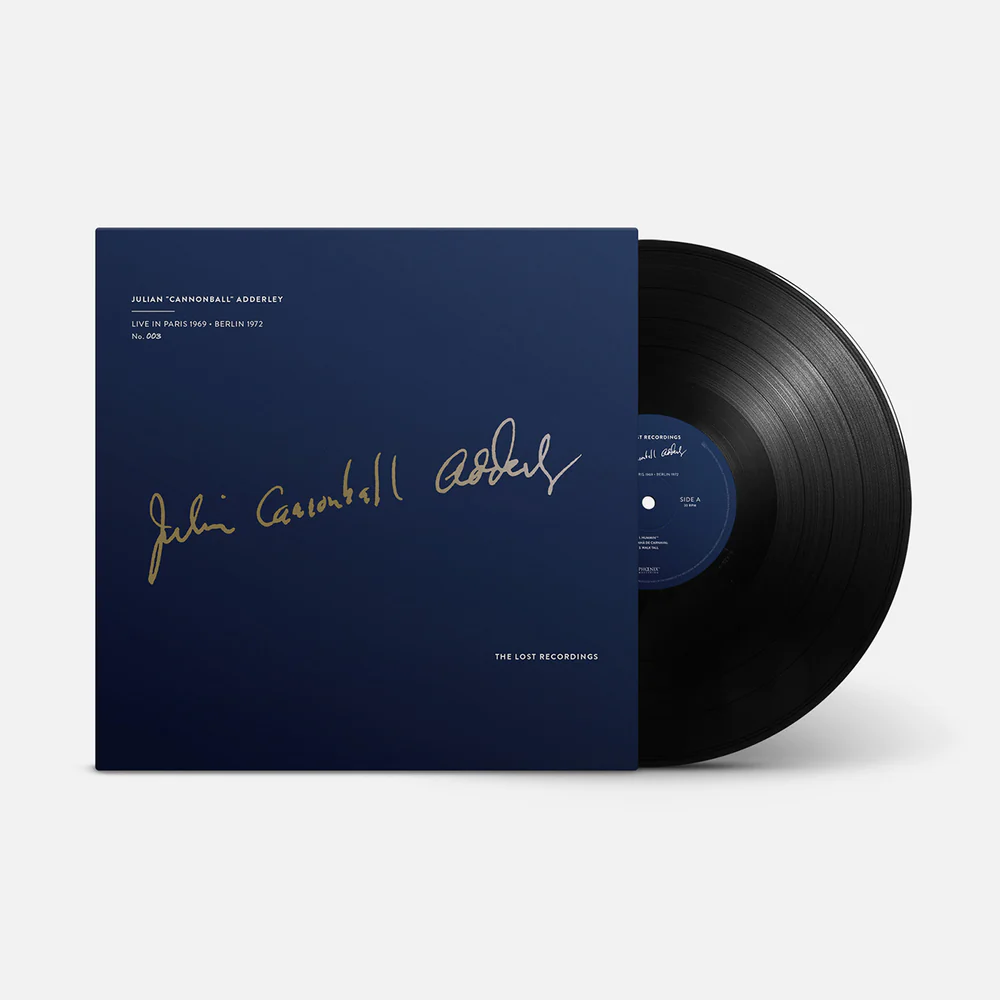
The band comprised Julian on saxophone, brother Nat playing cornet, Roy McCurdy on drums, and Joe Zawinul and George Duke sharing keyboard duties, with Victor Gaskin and Walter Booker as the bass players. Nat Adderley is widely attributed with the development and establishment of the 1960s style of ‘soul-jazz’ along with the rest of the members of the Cannonball Adderley Quintet.
Simple harmonies, a heavy blues feel, catchy riffs, and a presence of the church characterize this style. It brought back a simpler type of jazz that had direct influence from blues and gospel music. Zawinul went on to play with Miles Davis and became one of the creators of jazz-fusion combining jazz and rock. George Duke keyboards spent two years with Frank Zappa as a member of The Mothers Of Invention whilst Gaskin recorded with John Mayall on his Ten Years Are Gone and Moving On albums, when the Godfather of British Blues was branching out into experimental jazz fusion.
This live recording from 1969 confirms the blues credentials of the band with Cannonball talking directly to the audience about his feelings for the blues which he finds hard to express. His brother Nat takes over the vocals and gives an exemplary gritty “Oh Babe” sung with passion and despair. The version of this song on Lost Recordings is the equivalent of listening to the band performing in your front room because of the exceptional audio quality.
“Work Song,” with its funky blues vibe is one of Nat’s best-known compositions, inspired by his childhood experience of seeing a group of convict laborers singing while they worked on a chain gang paving the streets. Also included on the album are “Hummin’,” “Manha de Carnavall,” “Mercy, Mercy, Mercy,” and two versions of “Walk Tall.”
Miles Davis Quintet, The Complete Live In Paris 1960 Vol.1
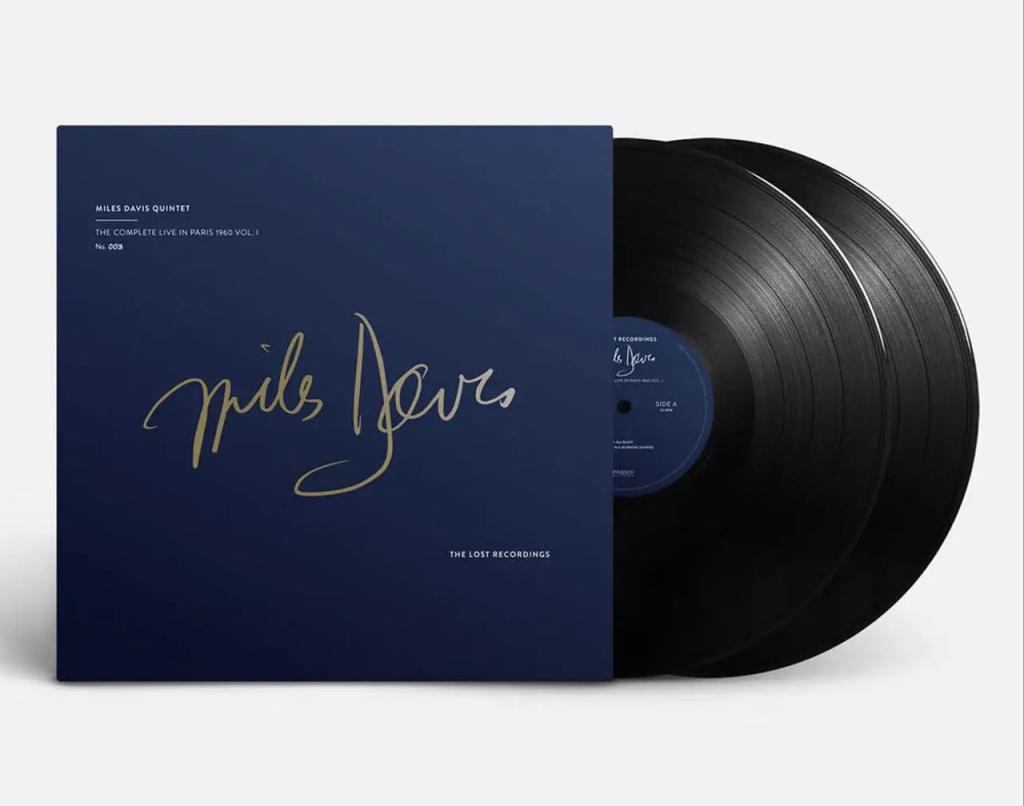
The Lost Recordings Team recounts the adventure in retrieving the original tapes while undertaking research in the Netherlands:
A friend of ours who was in Brittany at the time sent us a photograph taken at the house of a music lover who restored tape recorders. The photograph was rather blurred but we thought we could make out the sides of red magnetic tapes that looked like Sonocolor tapes of years ago.
One of these tapes, just 30 minutes long, was labeled Miles Davis-Olympia 1960 and we recognized the sound of the inimitable Davis and Stitt. The concert was well known but the three titles featured here – “All Blues,” “Softly, As In A Morning Sunrise,” and “Makin’ Whoopee” had never before been published. Our hunt for the remaining tapes led us to the south of France, the USA and then to Stockholm in summer 2024. We are proud to present the first volume of this legendary concert, which we have restored entirely, including these three previously released titles.
This extraordinary piece of music history features Miles on trumpet, saxophonist Sonny Stitt, Wynton Kelly, piano, Paul Chambers on bass and Jimmy Cobb, drums.
“All Blues,” with its laid-back tempo and bluesy feel, showcases the best of Davis, a timeless classic from his epic Kind Of Blue album, hailed as one of the greatest albums of all time. An interesting fact is that most people who are familiar with the composition are probably unaware that the song actually had lyrics added soon after Davis recorded it, and was subsequently released by the man who wrote the words, Oscar Brown Jr. A singer, songwriter, and poet, Oscar wrote well over 100 other songs in addition to the lyrics to “All Blues.” He was also known as a Black activist, and his lyrics reflect the social and racial unrest of the early 1960s and beyond. He also wrote lyrics for music composed by, or in conjunction with, other jazz greats including Nat Adderley’s “Work Song” referenced earlier.
With his “All Blues” lyrics, Brown talked about how we are all people, regardless of color: “I’ll know we’re all blues/All shades, all hues, all blues/Some blues are sad/But some are glad, dark-sad or bright-glad/They’re all blues.”
And while not overtly, he also addressed the challenges faced by America’s Black population: ”The color of colors/The blues are more than a color/ They’re a moan of pain/ A taste of strife / And a sad refrain/ A game which life is playin’. Blues can be the livin’ dues/ We’re all a-payin’.” Other tracks featured are: “Walkin’,” “Four,” “Autumn Leaves,” and “The Theme.”
The purity of the sound makes this whole double album imperious, the crescendos unforgettable and Davis omnipresent throughout.
American Blues Scene has published two reviews in The Lost Recordings series, one is jazz, the other a blues festival compilation. Ella Fitzgerald Live at the Concertgebouw 1961 was rated ‘a solo performance of breathtaking virtuosity’ and The American Folk Blues Festival 1962 & 1963 offered ‘a front row experience of the blues’ transformative impact on European audiences, forever influencing the global landscape.’
These latest offerings from Cannonball Adderley and Miles Davis will appeal mainly to jazz aficionados but hopefully should also arouse the interest and gain the respect of the blues community.
Vinyl limited editions Of Cannonball Adderley and Miles Davis Vol 1, plus CD version of The Complete Live In Paris Vol 1 and ll on UHQCD from The Lost Recordings store.
