

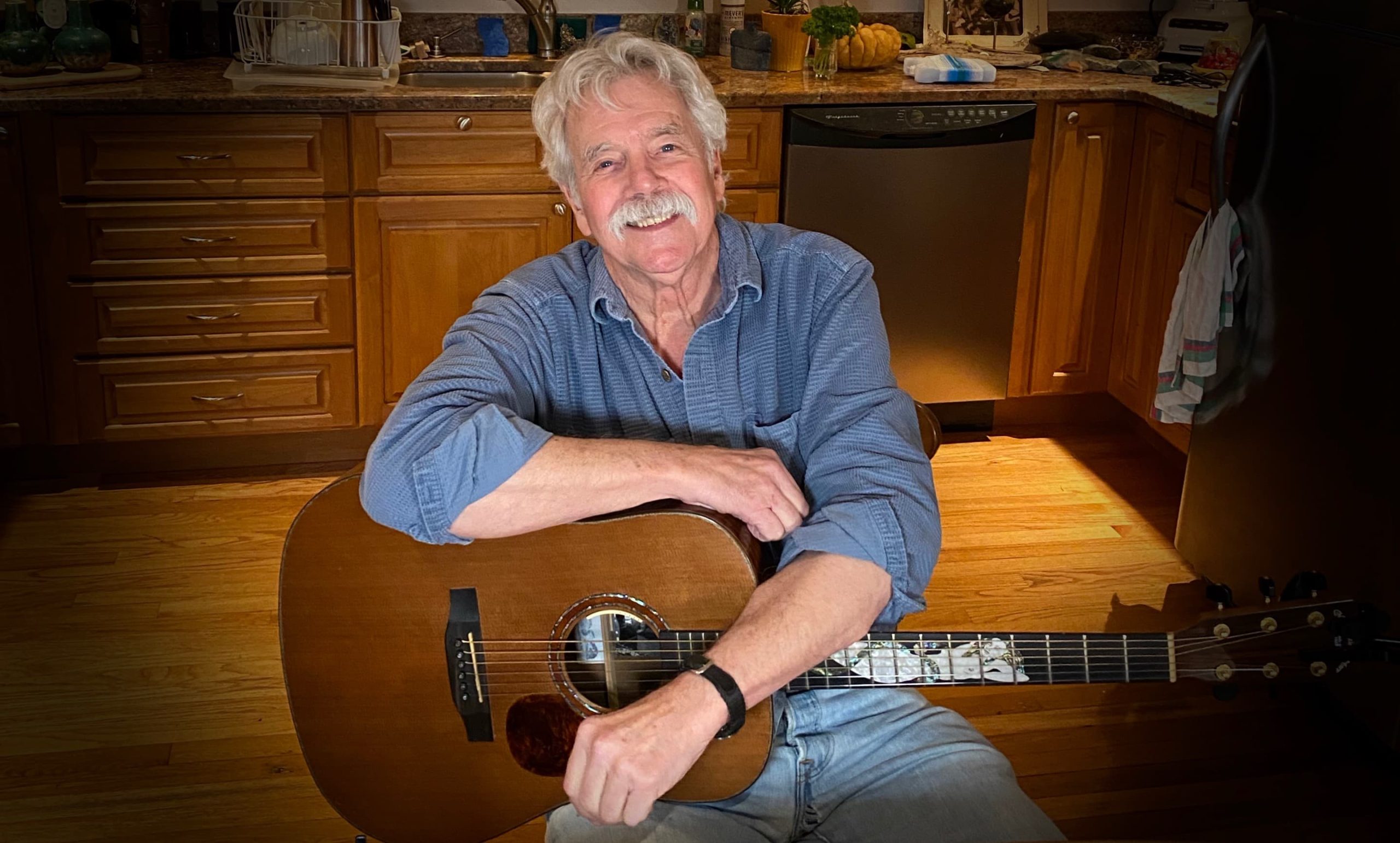
Tom Rush has written only one song since Gardens Old, Flowers New came out in 2024. It’s not because at age 84 he’s slowing down. Far from it. “I’ve been too busy, but I’m going to get to work on that (writing new songs). I’m also working on four different books.
“I’ve written a book of lyrics to the songs I’ve written and a book called Road Maps Why You Probably Don’t Want to Be A Traveling Musician – all about what goes into being a traveling musician. Hopefully it’ll be interesting enough for people who will find it a good read. And then I’ve got a novel that I actually haven’t made any progress on for 10 years or more. It’s just sitting there. It’s actually for kids. It’s kind of a sci-fi novel.”
Does he want to talk about it?
“Uh, no!”
He told me in 2024 with his tongue only half in cheek that he plans to play Symphony Hall on his 100th birthday. “It falls on a Saturday. It’ll be February 28th, 2041. And they’re not returning my calls. I think they’re not taking me seriously.”
The name of his one new song is “It Takes A Whole Lot of liquor to Like Her.” When I jokingly suggested a different take on the title, he laughed and said, ‘Well, no, that’s exactly where I go with it.” I’m laughing now. Maybe I should have gone to Harvard, I told him. He went to Harvard when I was at Tufts. “Maybe so. Maybe so. It’s not too late. You could probably still get in.”
I’ve been a Tom Rush fan for more than six decades. He was a bridge during the folk scare between the hardcore traditional folk artists and the new breed of more commercial folkies like Peter, Paul, and Mary and the Kingston Trio. Like Dylan and Tom Paxton, Tom wrote his own material. He also had a knack for covering the work and giving wider exposure to emerging singer-songwriters like Joni Mitchell. And he could play rockin’ blues electric guitar.
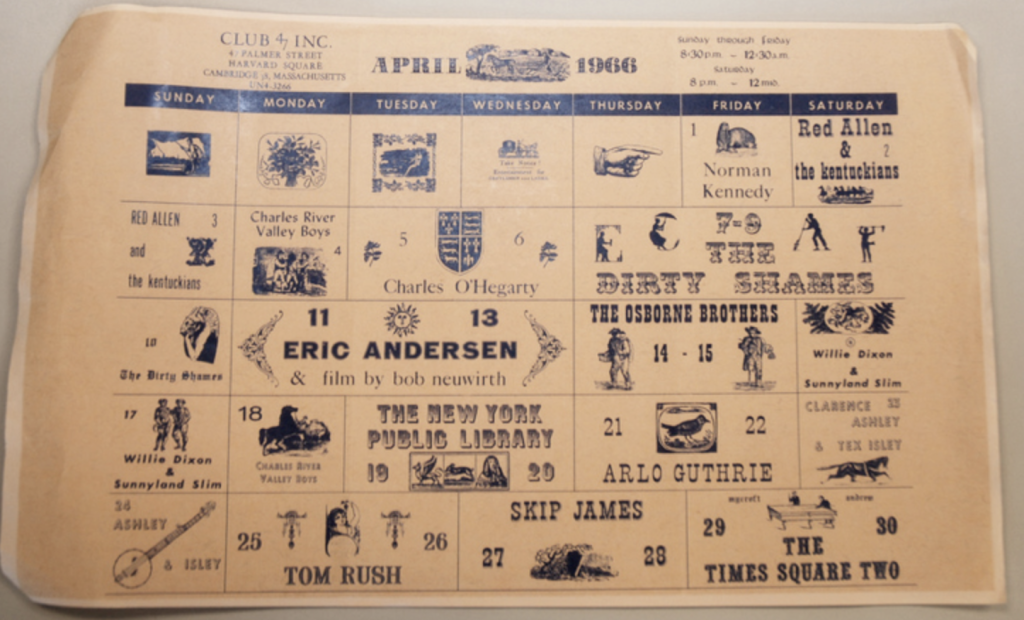
What has appealed to me most about him for six decades is that he rocked out occasionally with material that went way beyond the revisionist work of the British Invasion rockers. He was a student at Harvard at the same time he was performing at the Club 47 in Harvard Square, a few blocks from campus.
He’s grown wiser with his core audience. The 14 songs on Gardens Old, Flowers New cover an array of topics, and he’s currently on tour. He told me last year, “As for the show, at least I finally figured out how to articulate. The listener in the audience doesn’t want perfection. They want connection. Very early on I learned I have to tell stories between songs because I get people engaged, and they’re more likely to like a song you’re about to do if you’ve got their attention.”
Today, he adds to those comments. “A year ago, that was my big revelation: connections. You can make mistakes. Perfection actually gets kind of boring after a few minutes unless there’s also connection involved, but the guys who can play a thousand notes a minute on the guitar I’m impressed with, but I don’t feel like, ‘Oh, I know what that guy is feeling. I just know he can play a lot of notes.’
The late folk music journalist Scott Alarik said of him, “Tom Rush’s name is rarely trumpeted among the folk music giants of the past half-century. Yet it can be argued that the New Hampshire native has been the most consistent.”
Alarik was the word in folk music circles. Tom Rush agrees. “He was. I love him. He was very articulate. I miss him. I knew him pretty well. I got him to come to a very strange show. I had surgery at Mass General for an aneurism of the left subclavian artery. There was a danger apparently of the nerves that handle your left arm are entwined with the vessels, and there was a danger I would lose the use of my left arm. So, the doctor that operated on me wanted me to come to general rounds where all the surgeons get together and talk about their most exciting cases.
“I went and I said, ‘Would you like me to bring my guitar?’ So, I showed them that my left arm works, and he said, ‘Yeah, that would be great.’ The doctor before him was talking about something that to me was extremely boring. Then, my doctor got up and talked about my left subclavian. I got up and did ‘Making The Best of A Bad Situation’ for the crowd, but I got Scott to come and review it as a show. I got a good review.”
He sums himself up by saying, “I am young and strong and old and wise at the same time.” Tom is three years older than me. We’ve both outlived most of our contemporaries. At the end of our interview, I thanked him for taking the time to talk to me. His response? “A pleasure. A pleasure. Let’s keep it up.”
I told him I intend to keep it up as long as I can, and I guess he’s in the same boat.
“Absolutely,” he said. “Let’s do it.”
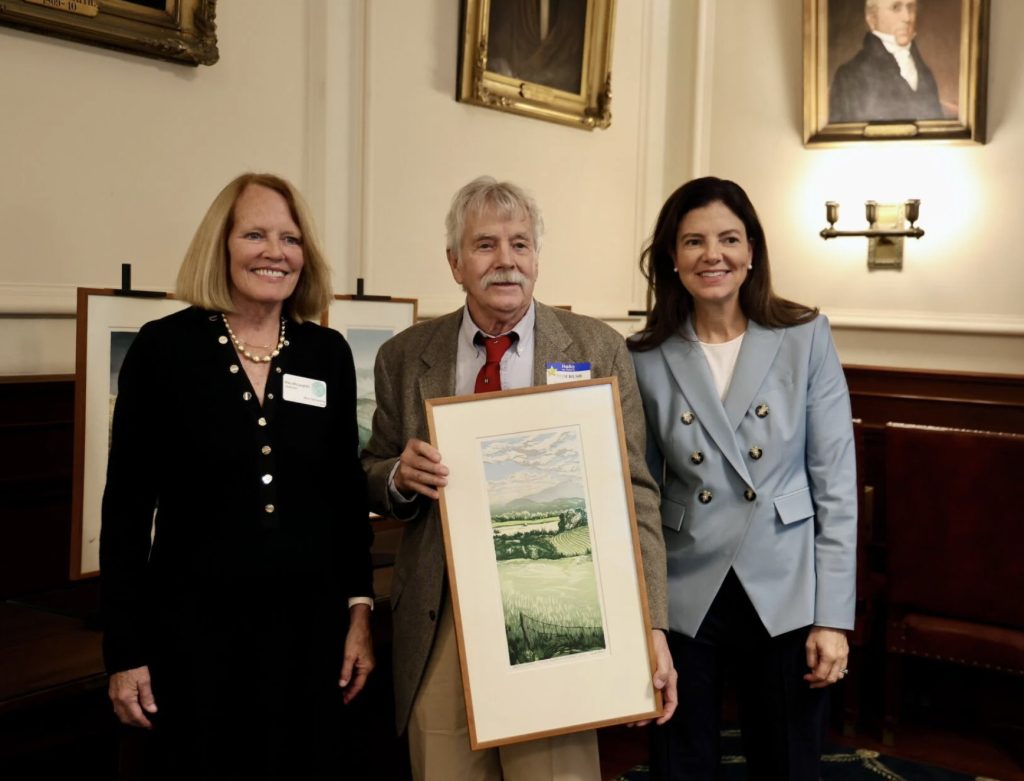
Editor’s note: Since this interview, Tom has been honored by the New Hampshire State Arts Council with the Lotte Jacobi Living Treasure Governor’s Arts Award, which recognizes a professional New Hampshire artist in any discipline who has made a significant contribution to their art form and to the state’s arts community, reflecting a lifetime of achievement.