


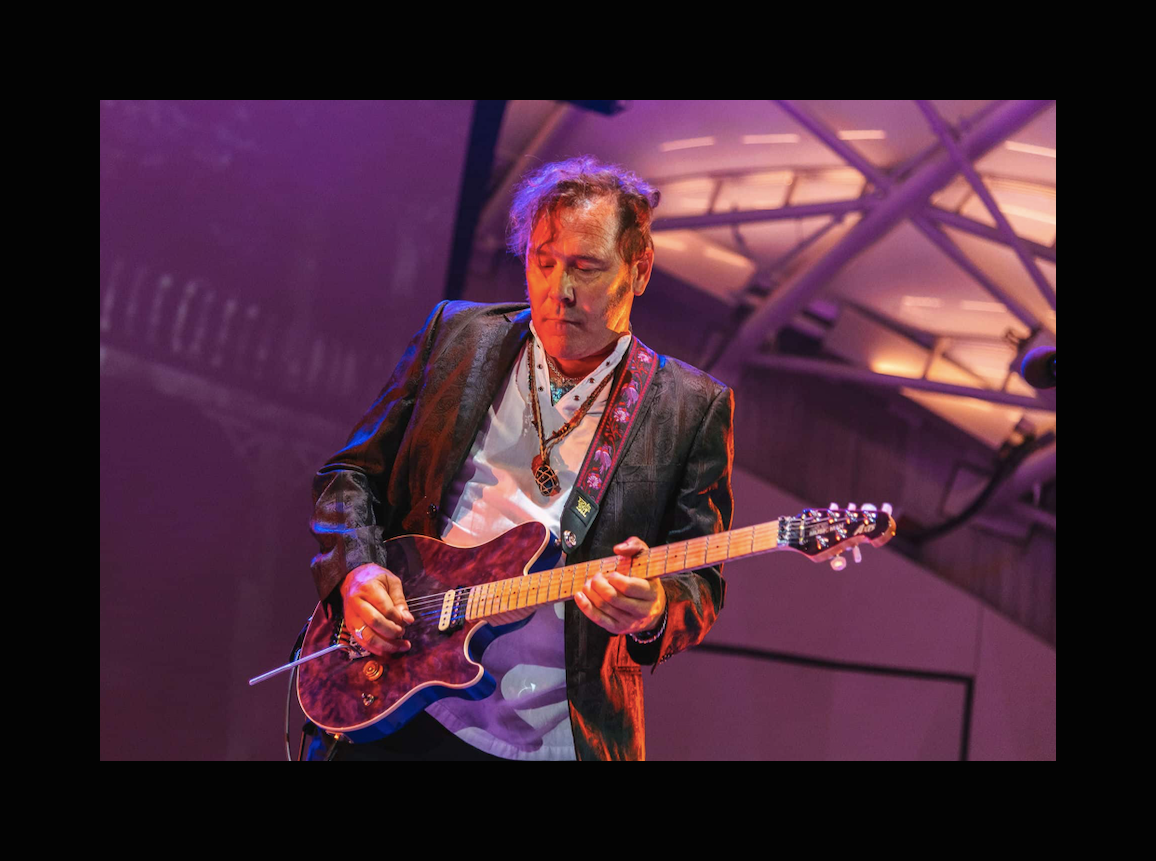
Fresh off a morning walk among alligators, dragonflies, turtles, fish, and birds, singer-songwriter/guitarist Will Johns sounded genuinely taken with Florida life so far. Newly arrived in the Greater Tampa Bay area from his native England, he’s still experiencing the brief stretch of mornings before summer turns them into bathwater.
I asked Will about the textures across his new album On Top of the World, particularly the guitar phrasing on songs like “Bull Cow Blues,” “Loneliest Man on Earth,” and “Moondog,” and the sonic language tying the songs together. His response aligns with Willie Dixon’s philosophy of the blues as being “the true facts of life expressed in words and song.”
“I have to just say the truth. Blues is the truth. Just being true to what the album is about and what it represents, and sticking to the purest essence of it. The inspiration for it was being on top of the world in the mountains and volcanoes of Guatemala, and having a bit of an epiphany: what good is it to have all these accolades, to try so hard and achieve so much success, and find yourself at the top if you are all alone with no one to share it with? There’s also my song ‘Loneliest Man on Earth,’ which is the ultimate realization of that feeling — being up there, but alone, and you can’t take anyone with you on that path, really.”
With “Mannish Boy,” Will takes on one of the most timeless standards in the Muddy Waters repertoire, driven by a cyclical groove that finds its power in momentum rather than resolution. “I’ve always played ‘Hoochie Coochie Man,’ which is a very similar riff. And this one doesn’t resolve. So, musically, it’s still blues and it’s very simple, but in ‘Hoochie Coochie Man,’ it goes to the four chord and then the five, and it resolves, whereas ‘Mannish Boy’ just goes on and on and on. It just is. It’s like the endless day that never turns into night, or the endless night that never turns into day. I did start with a version of ‘Smokestack Lightning,’ and as it developed it just didn’t ring true like ‘Mannish Boy’ did. It fell by the wayside as the record progressed.”
Will Johns has grown up inside a musical lineage most people study from the outside. He speaks less in terms of tradition or lineage than in a sense of internal direction, which has proven a steadying instinct inside the noise of expectation. “I’m trying to follow what my soul says to do, going back to the truth, just keeping it real.” A phrase he uses with the awareness of how easily it’s been flattened by repetition. Across the record, he brings in collaborators from different corners of the blues and rock lineage, including Tomiko Dixon (Willie Dixon’s granddaughter), who appears on the album’s rendition of “Spoonful,” and Steve Ferrone (Tom Petty, Eric Clapton), whom Will praises for his “amazing pocket playing.”
I’d seen Steve Ferrone with Mike Campbell not long ago, where he spoke about meeting Tom Petty and the making of Wildflowers, still carrying a sense of disbelief and gratitude about having been inside it from start to finish. The way he told it held the room completely.
Will speaks about Ferrone like an old friend: shared geography, old conversations, ordinary points of contact. “Well, Steve and I are both from Brighton, on the south coast in the UK, so we have that in common too. We have a good laugh and a great connection. When I lived in Brighton, Steve’s cousin David used to cut my hair. We always get together and have a chat about what Steve is doing and what we’re doing, and then send selfies with my new haircut. Steve and I worked together on a project called The Cream of Clapton Band. Obviously, he played with Eric for years, and was also on Unplugged, which is still the greatest selling live album of all time.”
Coming from one of the most closely linked families in British rock history, Will is the son of producer Andy Johns (The Rolling Stones, Led Zeppelin) and actress/model Paula Boyd, as well as the nephew of recording engineer Glyn Johns (The Beatles, The Rolling Stones, Eric Clapton). His aunt, Pattie Boyd, was famously married to both George Harrison and Eric Clapton, relationships that inspired some of the era’s most enduring songs. While studying Performing Arts at Oxford, he formed his first band, Cloud 9, inspired by his late uncle George Harrison’s 1987 album, before going on to become an in-demand studio and touring guitarist. Shortly after first picking up the guitar, Clapton taught him the chords to “Crossroads,” a direct line into the music that surrounded him.
“People always come up to me and say, ‘Hey, on that recording that your dad did with Led Zeppelin, how far was the microwave from the guitar amp when he recorded it?’ And I’m like, you know what, I know what he’d like to put in his sandwiches. I don’t follow every technical thing that people love. They wanna know every single detail — what kind of reel-to-reel tape did he use when he recorded Exile on Main St., how many miles of tape did they use? And it’s like, I’ve got absolutely no idea. But I’ll tell you what kind of sunglasses he used to like to buy, what brand. That I know.”
Will has been added to the September 2026 lineup for Eric Clapton’s Crossroads Guitar Festival in Austin, Texas, benefitting the Crossroads Centre Antigua.
“I take everything with a pinch of salt until it’s actually happening. In the music business, what they say: ‘here today, gone later today.’ So I’m excited about that. But at the same time, I’ll be more excited about it when it’s like a week away. I can’t really get my head around it; it seems absolutely bonkers.”
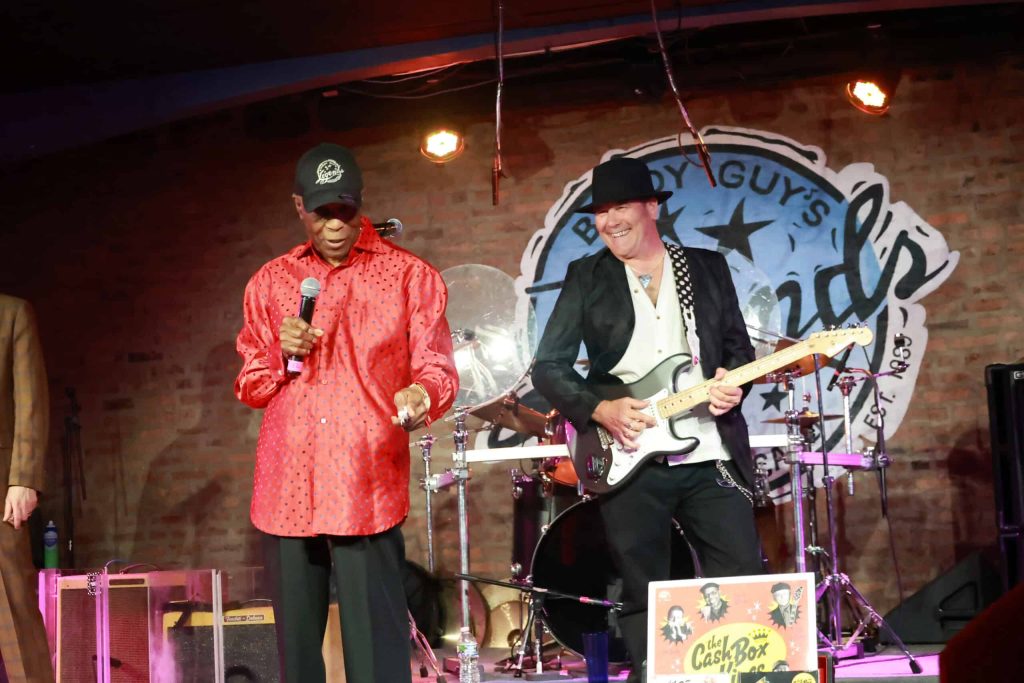
Will’s induction at Buddy Guy’s Legends, with Buddy himself present, offered a measure of validation after a period of uncertainty. “I’m hesitant to use the word despair, but there was definitely an element of, you know, what am I doing this for? What does this all mean? I really just want to have a normal life with a lovely wife, and just go to work and come home and be normal. Whatever that means. Whatever normal is.
“And then to find myself in Chicago playing, and Buddy’s on stage saying, ‘Do a solo, do a solo,’ and that was my spot. It wasn’t the kind of song where I’m going to go in front of the stage and play a million notes and show my lightning side. It was the opportunity to show the depth of my soul and every bit of blues that I had in me. And he said after I played, ‘Now that’s what you call the blues,’ to the audience. And that made everything I’ve been through, everything I’ve tried to do feel worthwhile.”
Buddy has been doing a run of shows at Legends and will be at Crossroads Guitar Festival, too. “He’s so funny, probably one of the only entertainers who can get away with being that cheeky.”
A new lineup has come together around Will. “On keys, vocals, and other instruments, Alyssa Martini — she comes from Seattle, she’s here now. On bass guitar, Johannes “Ice” Quilitz. And on drums, Tim Adger. I’m really enjoying working with these guys. When we play and in rehearsals, I get goosebumps.
“I met Alyssa when I was on tour with the Cream of Clapton Band, up in Seattle. She’s a friend of Whitney Petty, who’s the guitarist in Thunderpussy. We hit it off immediately. She was actually going to join the band on bass at one point when we were stuck for a bass player, and then we reconnected at the Venice Blues Festival — run by Nick Sperry. It just took a while for the stars to align.
“Alyssa and I have this amazing natural musical connection. She’s also certified in music healing, and she plays harp. It’s absolutely amazing. We’re working on another little side project as well — it can perform as the duo, or feature the whole band, it’s very delicate, very refined. We were filming some promotional material down on Treasure Island the other day, and the wind was blowing through the strings of the harp and making the most beautiful sounds.”
Will has just completed his autobiography BLUESDADDY: Born into Noise, Raised on Chaos and Saved by the Blues, written with Marshall Terrill, set for release later this year. At what point did he realize the story needed to be told in his own words? “It was an idea to do it pre-pandemic. I actually started putting down the transcript with encouragement from my now ex-wife Lucy. We had separated, but it was still lockdown. We were still living in the marital home with our two boys. In the evenings, she said, ‘Let’s start this process of your book,’ and we’d press record on the computer. She would ask me questions, and I would just ramble on and tell my stories. It wasn’t necessarily linear; there was a lot of going back and forth, or suddenly remembering something, or something else triggering another memory.
“We ended up with about five or six hours of transcripts. That would’ve been January 2021. Then they just sat there. It wasn’t until last year that I felt overwhelmingly that I needed to get this story down. I explored different ways of doing it, and I was lucky enough to contact Marshall Terrill, a published author who’s written books on Elvis and his manager, and Steve McQueen. I sent him the transcripts, and he had a listen. He said he’d be happy to work with me on turning it into a book. We’ve just finished the fifth draft recently, and now we’re working on how to present it and which photos to use.”
BLUESDADDY is also the name of Will’s most popular album to date.
“It’s been an incredible process, because when you start getting that stuff down in writing, you begin to remember other aspects and feelings and vibes that were going on in life. So it has been kind of cathartic. It’s been very eye-opening and quite an enjoyable experience. In the book, I talk about growing up in and around Eric’s house, with Eric, and he taught me how to fish and cast a line. I sent him a chapter and he came back and said it was a fantastic read.”
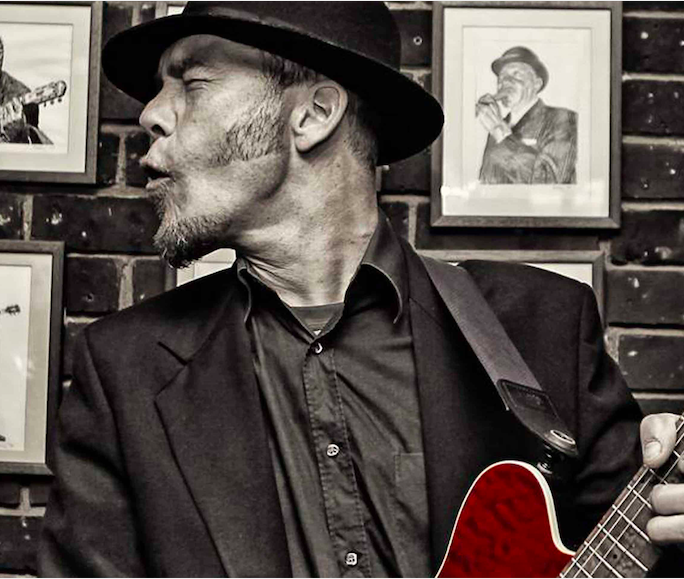
Will Johns has found a foothold in the local blues scene in Safety Harbor, Florida, where he says he’s been met with a warm reception, and where fishing doesn’t quite stay confined to childhood with Uncle Eric. “People love the blues here. I found my place where it fits, and my music is appreciated. I have a smile on my face because every place I’m playing, I’m getting a nice welcome. And the decor is in keeping with my hobbies and the things that I like; there’s always big fish or a huge shark up on the wall.”
Asked what he hopes remains after a show, he comes back to the live moment itself and what it unlocks in the room. “Just that it’s real. I would like to think that people leave my shows and they’ve had the experience where the music has touched their soul, and that at one point or two points, or however many points they’ve had goosebumps on their arms, and they’ve remembered what it is to be truly human. It’s a spiritually uplifting experience.”
