


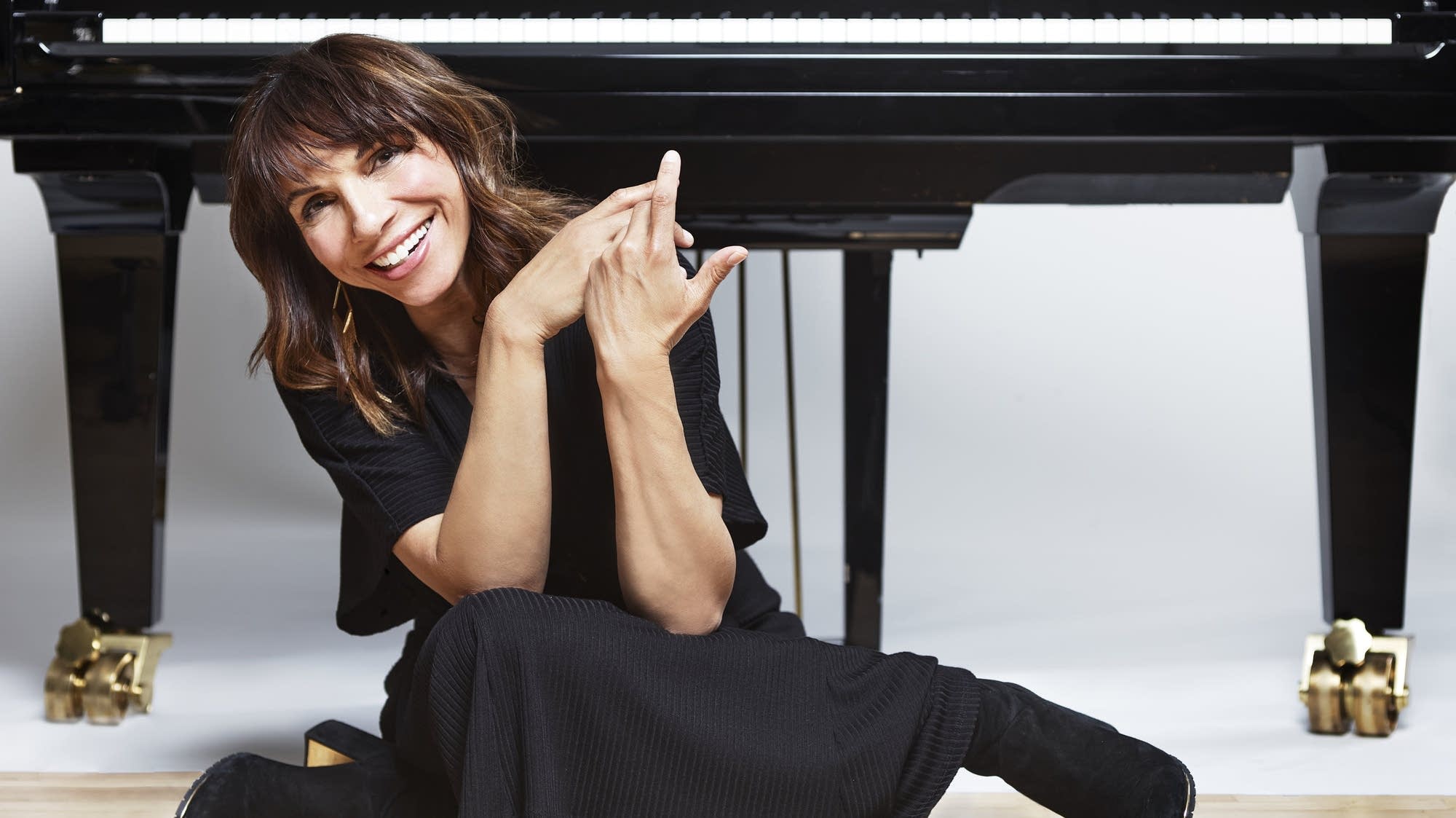
It may seem strange that a roots publication such as American Blues Scene would feature the work of a classical pianist, even if that work includes Willie Nelson’s “Changing Skies,” Stephen Foster’s “Hard Times Come Again No More,” and the traditional “In The Sweet By And By.” Hold These Truths, the new album by Lara Downes, along with her initiative, The Declaration Project, is deeply rooted in the voice of everyday people. Lara, classical pianist, host of NPR’s Amplify, and advocate, created the Project to “mark the 250th anniversary of the United States in a way that feels honest to the moment: complicated, unsettled, deeply human, and still reaching toward possibility.”
Lara brought The Declaration Project into several major public forms this summer. Declaration: Songs of Democracy, Voices of Hope, was presented on July 1st at the Lincoln Center as part of its Summer for the City series. Hold These Truths, her new album, was released on July 3rd on Pentatone. Other events included a June 25th opening performance at the Aspen Ideas Festival, a July 18th concert at the Massachusetts Museum of Contemporary Art, and America in Pursuit, her NPR series of conversations with leading scholars and thinkers.
Lara was kind enough to take time out of a very busy schedule to answer our questions about The Declaration Project.
* * * * *
When did you first conceive of The Declaration Project?
The first seed of The Declaration Project came from thinking about America’s 250th anniversary and wondering what kind of musical response could possibly meet this moment. I knew I didn’t want to create a simple celebration or a nostalgic tribute. The country feels too complicated, too divided, too full of unresolved history for that.
So I started with the words we all know so well: life, liberty, and the pursuit of happiness. I wanted to ask what those words mean now, not in theory, but in people’s actual lives. It quickly became clear that I needed to leave the studio and the concert hall and go out into the country. That’s when it became a journey.
What did you hope to achieve from the Project?
I hoped to create a space for listening. That sounds simple, but I think it’s actually very radical right now.
I wanted to hear how people across the country are thinking about America, about freedom, about belonging, about happiness, about the future.
My hope was never to arrive at one answer. It was to gather many voices and allow them to sit together, sometimes in harmony and sometimes in tension. I wanted the project to hold the beauty of America and the difficulty of America at the same time.
Is The Declaration Project still ongoing? And if so, for how long?
Yes, very much so. The album and the Lincoln Center performance are major milestones, but they are not the end of the project.
In some ways, I feel like this is just the beginning. The 250th anniversary is not a finish line. It’s an opening. The questions that shaped this project are not going away after one concert or one album release. What does it mean to be American? What do we owe each other? What kind of future are we willing to imagine and build?
How was your July 1st concert, Declaration: Songs of Democracy, Voices of Hope, received?
It was received with a lot of emotion, which was really meaningful to me. The evening brought together so many different kinds of artists, sounds, and stories, and I think people felt the scale of what we were trying to hold: the history, the pain, the hope, the uncertainty, and the possibility of this American moment.
What moved me most was that the audience seemed to understand that this was an invitation for them to join this community and this conversation. The voices from the road, the new commissions, the choir, the orchestra, the solo artists, the video portraits – all of those elements came together to make something that felt alive and communal.
For me, the most powerful response was the sense that people left not with easy answers, but with deeper questions and new energy. That felt really joyful.
How did you select the songs for the follow-up album, Hold These Truths?
I wanted the album to feel like a journey through American music, but not a chronological museum tour. I was looking for pieces that carried memory, struggle, hope, resistance, beauty, and the unfinished promise of this country.
Some of the music reaches back before the nation’s founding, like Shawn Okpebholo’s reimagining of “My Days Have Been So Wondrous Free,” which connects to Francis Hopkinson, one of the signers of the Declaration of Independence. H.T. Burleigh brings in the spirituals and the music of survival, faith, and community. Stephen Foster’s “Hard Times Come Again No More” speaks to suffering and compassion. Oscar Peterson’s “Hymn to Freedom” carries the spirit of the Civil Rights era.
But the album also begins with something brand new: Edmar Colón’s “Welcome,” a tender piece written from the perspective of a father thinking about the future his child will inherit. That felt like the right doorway into the album. The music looks backward and forward at the same time.
The spoken reflections that introduce each track were also essential to the selection process. They came from people I met through The Declaration Project, and they helped guide the emotional shape of the album.
Why the three different arrangements of Carlos Simon’s “Hold Fast To Dreams”?
Carlos’s piece felt like a kind of heartbeat for the album. The title itself, “Hold Fast To Dreams,” carries so much of what this project is about: the need to keep imagining a future, even when the present feels unstable or frightening.
Carlos originally wrote these three pieces as settings for voice, interpreting Langston Hughes’ iconic poem* in very different moods that consider the power and also the fragility of our dreams: audacious, tender, animated, urgent, private, collective. They shift depending on who is holding them and what they have had to overcome. “Hold fast to dreams/For if dreams die/Life is a broken-winged bird/That cannot fly.” I think we are living in a time when it’s essential to hold onto our dreams, keep them alive, let them take flight. The future depends on them.
The mood throughout Hold These Truths is largely reflective. Was that intentional?
Yes, I think it was. Reflection felt necessary. This is not a moment for easy triumphalism, and I didn’t want the album to pretend otherwise.
The country is in a very fragile place. We are surrounded by crisis, division, uncertainty, and grief. But I also kept encountering hope everywhere I went. Not loud, uncomplicated hope, but quiet, stubborn, hard-earned hope. The kind that lives in classrooms, in families, in elders’ memories, in young people’s dreams, in music that has survived for generations.
So the album is reflective because the project itself is reflective. It asks us to pause and listen: to the past, to each other, and to the future that is still asking something from us. But I don’t hear the album as sad. I hear it as searching. And I think searching can be a very hopeful act.
* * * * *
You can visit and submit your own entry of hopes, memories, and dreams at The Declaration Project.
