


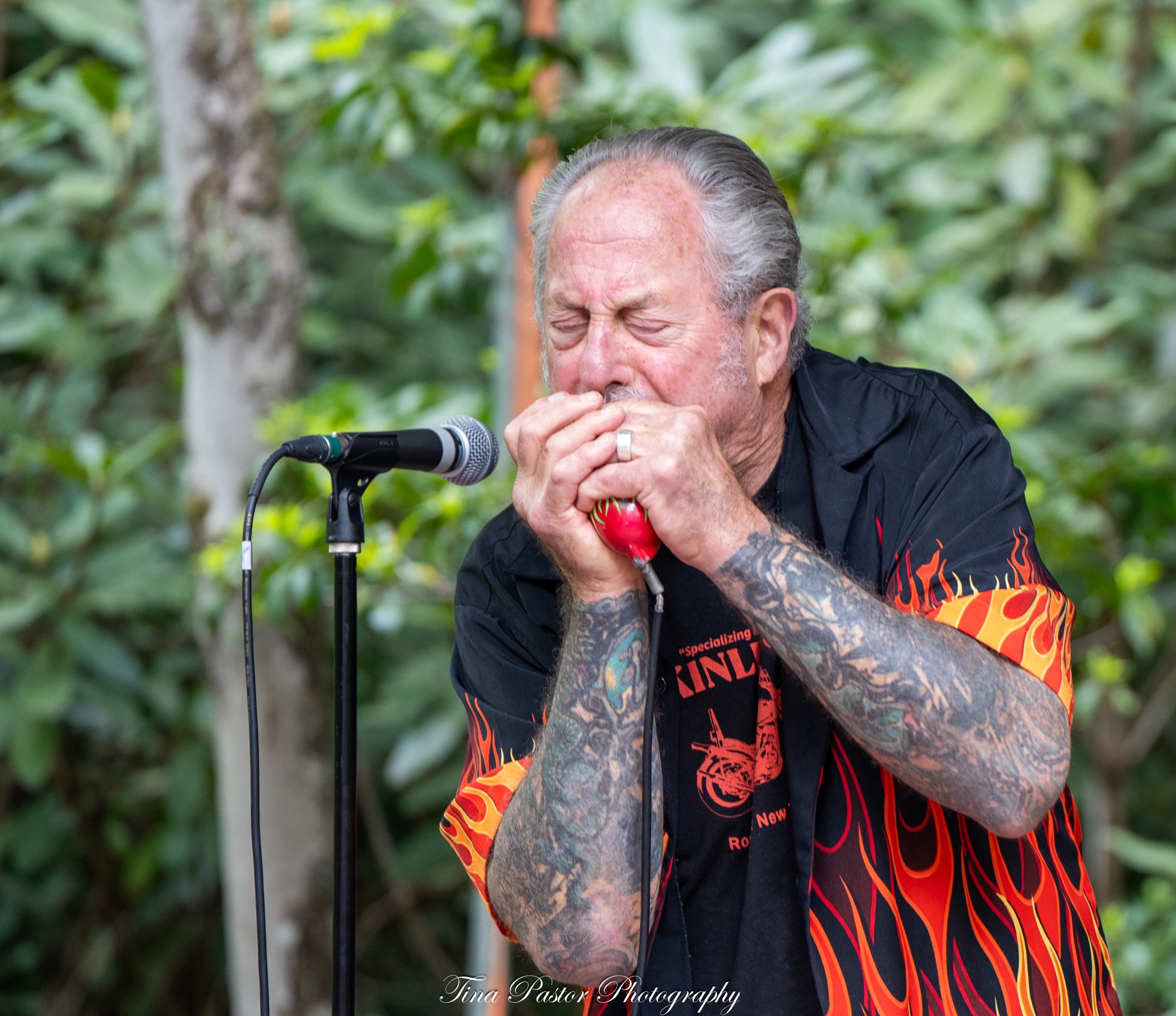
There are white blues artists and then there are blues artists who happened to be white. Mark Wenner, the lead singer and harp master of The Nighthawks for more than half a century, happens to be white, and his band The Nighthawks in spite of a myriad of personnel changes have always been near the top of the line in a select group that includes Paul Butterfield, John Hammond, and Charlie Musselwhite. A graduate of Columbia University and humble to the max, he’s been one of my favorite interviews for many decades and catching up with him is always akin to talking to the brother I never had.
Here’s how our most recent conversation began.
Mark: You’re right on time.
Don: It’s not my first rodeo and it’s not yours.
Mark: (Chuckle) How are you?
Don: 81 and still functioning.
Mark: So am I, most of the time. Not that far behind, but far enough.
Don: Ha. Thanks for rubbing it in, brother. How are you doing?
Mark: I’m doing pretty good. I’m still hobbling around on a cane.
Don: Why is that?
Mark: Well, I had a bad motorcycle accident two years ago, and I think I’m healed from the wreck more or less, but I think my knee was messed up before that. I’m gonna get a new one. I got a new one in January. I’ve got new hips and a rebuilt heart, so I might as well get a new knee.
Don: Wow, pretty soon you’ll be an android. Maybe sooner than later. I’ve had two hip replacements and one was 12 years ago.
Mark: Wow.
Don: One was 11 or 12 years ago. They said it might last 10 years, and I’m still – I don’t feel it at all. I’m sure it’ll be fine. I wouldn’t worry about it a bit.
Mark: I’ve had both hips done, but I understand the knees are a little tougher.
Don: That’s what they tell me, yeah.
Mark: It’s a moving part.
And we were off on a 45-minute conversation to advance The Nighthawks’ fall tour. Just one of the things I love about Mark and his ever-changing cadre of a band is that the Nighthawks’ sound has been consistently in the pocket as a rootsy blues and rhythm and blues juggernaut. They hit home every time I’ve seen them or heard them on a new record.
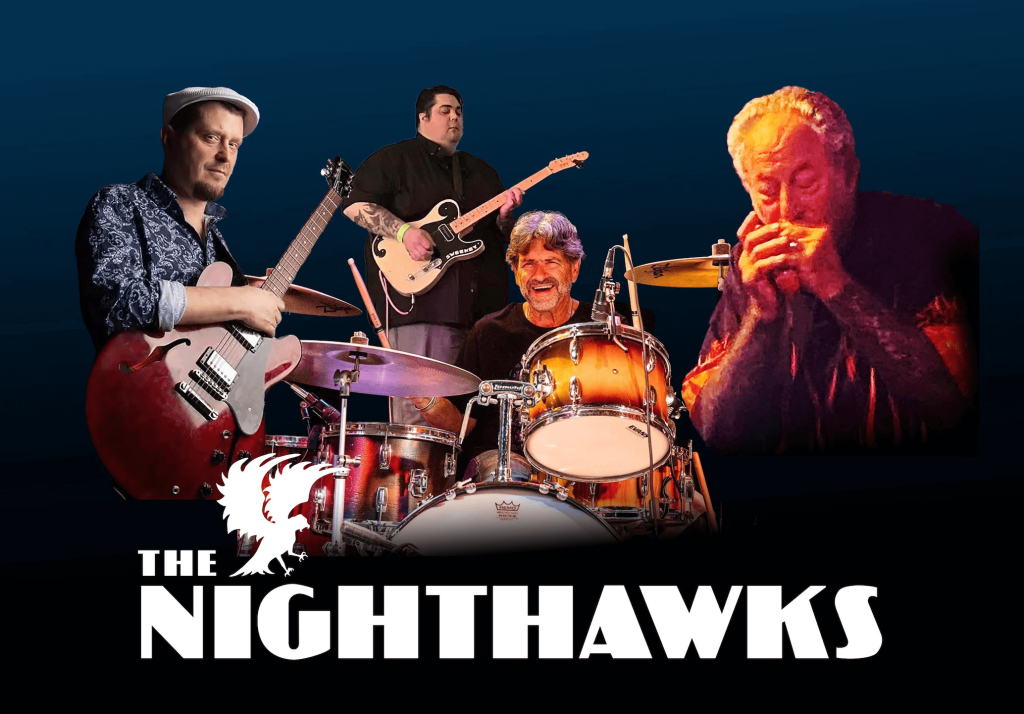
Mark spent six years at Columbia University, New York’s Ivy League college, studying English literature before he formed The Nighthawks.
“It was an incredible experience in many ways. I still have an amazing group of friends still out there who I still keep in touch with, like Bob Merlis. He was vice president of Warner Brothers. We spent a lot of time together. We lived two blocks apart. He lives on the west coast, so I don’t see him a lot anymore. It used to be that when I would go out there, I would stay with him.”
Perhaps what I love most about Mark is that while he has constantly written new material he’s never tried to re-invent or modernize his sound. “Anytime that I tried to do something not straight from the heart, it was a miserable failure,” he explained. “All our greatest successes have been first doing what I wanted to do. I’ve always kept on the straight and narrow. I guess getting into the harmonica was a critical thing. I was early on a blues fanatic.
“When I was listening to the radio at seven, eight, nine years old, the elements I loved were the bluesiest elements – even the rockabilly – and I was aware of Jimmy Reed and John Lee Hooker really early. By ninth grade I was a Muddy Waters fanatic. I was an obnoxious blues purist when white people started doing blues—even my hero John Hammond and Dave Van Ronk. I was really snooty; at first, I thought they were the Amos and Andy of blues.”
That changed very quickly. He remembers first seeing Paul Butterfield while still in college.
“The other beauty of being at Columbia was a short subway ride away for the six years I was in New York. I saw everyone in small clubs, and the Fillmore East. I saw Muddy. I saw Buddy Guy live in ’68 in a club. I sat in with Slim Harpo at Steve Paul’s Scene. Buddy Guy played at Columbia, and I walked in playing harp, and A.C. Reed shuttled me out.
“At the homecoming dance in October, ’66, we hired the Paul Butterfield Band. My poor date – we didn’t dance at all. I just planted myself in front of the stage which was about chest high just staring at Butterfield the whole show. They did all the stuff from the first album. East West had not come out yet, and they played all that stuff. They were all tripping on mescaline, as I was given to understand. That stuff was definitely not Chicago blues at all, ‘The Work Song’ and ‘East West.’
“The drummer was Bill Davenport as opposed to Sam Lay, but holy crap, that just set me off. Then, of course, the Charlie Musselwhite album came out, Rod Piazza’s The Dirty Blues Band (1967) came out. I just sat in the dorm room playing that stuff, or I was out until 4 in the morning coming home from Café Au Go Go, and of course I didn’t do very well that year. The second year I dropped out for a year.”
Half a century later, despite all the personnel changes, The Nighthawks are still instantly recognizable. “Oh, absolutely. I think I’m actually getting good on the harmonica. The main thing is I’m playing as much as I want. I’m playing really great music with really great players and the people I’m playing for.
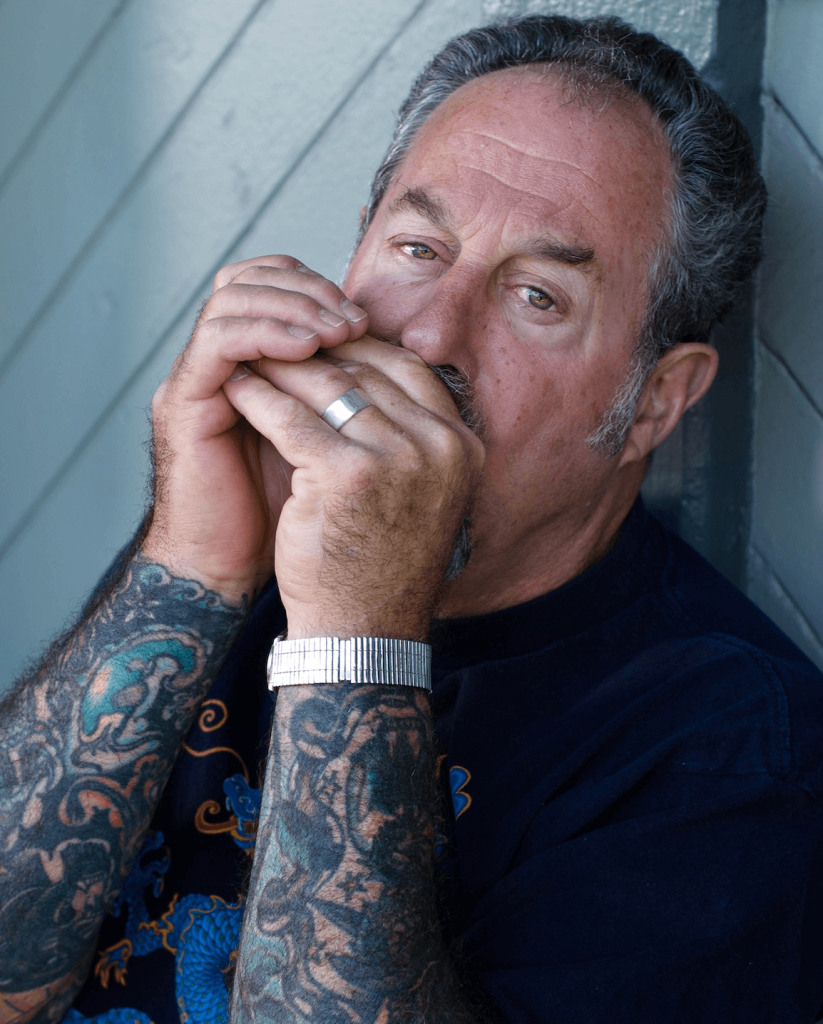
“I’m a little under the radar compared to some of my base (artists) that I started with because I’m not touring like they are. I don’t want to go on an airplane like Kim (Wilson), Kid Andersen, or Rick Estrin. They don’t mess around. Meanwhile I’m playing a club up in Maryland. I’m driving an hour or three hours. Once in a while I do a little road trip, but I don’t do that kind of work anymore.
“Once a year or twice a year we come up into your area of the northeast, and outside of Rochester and Syracuse for three nights. We have three dates in Florida. It’s been 35 years since we’ve been in the upper northwest, and I’m not interested in Europe anymore.
“I feel like I can actually sing. Nothing like (our drummer) Mark Stutso, but I get to do what I do comfortably and with strength. I just feel confident in what I do, and I’m doing it well and doing it better.
“The main thing is I’m playing as much as I want. I’m playing really great music with really great players and the people I’m playing for. I’m inclined to have someone say, ‘I haven’t seen you in 30 or 40 years — you’re playing really great.’ Or, ‘I’ve heard of you for 30 or 40 years, but I’ve never seen you.’ People do come up wearing Nighthawks t-shirts. It’s not like I’m trying to shill something they don’t want to buy.”
The Nighthawks perform favorites from their whole career going back to 1972. They do the theme from The Sopranos, and “Gas Station Chicken” is still a popular request.
Mark doesn’t ride a motorcycle anymore. He himself drives the group’s van only a couple hours here and there. There are no current plans for another album, but he says “I gotta keep playing music until I can’t.”
I ended the interview by telling him it was great talking to him again. His response? “I’ve known you for a long time.”
