


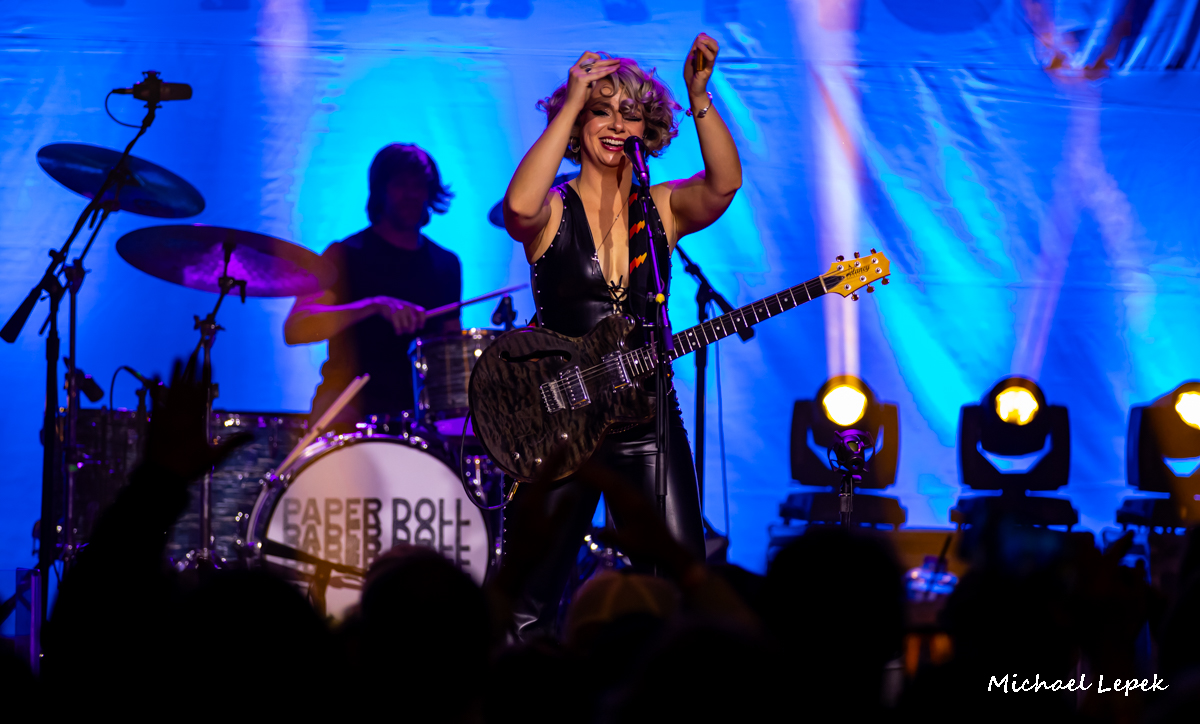
Samantha Fish may not look like an obvious heir to blues giants like Muddy Waters and Howlin’ Wolf, but as a contemporary artist, she’s well on her way to earning that comparison.
“I could go and get nominated for this Grammy and then go to Thanksgiving dinner, and most people in my periphery are like, ‘Gee, you did what?’ You know what I mean? So, there’s a little humbling happening all the time. I’m surrounded by people who don’t get a big head, because I’m around normal people all the time.”
Samantha’s last release, a collaboration with Jesse Dayton entitled Death Wish Blues, was nominated for a Grammy in 2024. Paper Doll, Samantha’s latest album, has been nominated for Best Contemporary Blues Album at the 2026 Grammy Awards. She has opened for The Rolling Stones, who waved at her in passing. When they’re dead and gone, she’ll be playing the same venues as a headliner.
“When you’re surrounded by real people, they don’t care. I’m out there on the road, and there’s just very real things that you interface with all the time. So, you might be feeling high and mighty one day, and the next day something goes crazy weird. It’s like, well, this is a bit of a humbling experience. So, it keeps you grounded is what I’m saying.”
The fact that Samantha isn’t stuck on herself helps, too.
Much of Paper Doll was co-written by her producer Bobby Harlow. “He’s very intense, very passionate and very enthusiastic about music. He’s not just listening to a song. ‘That’s cool. We’re going to try to get textures on it.’ We’re in the studio and he’s telling me, ‘Hey, that lyric doesn’t really fit. You’ve got like a mouthful there. We’ve got to figure out how to streamline that.’ You know, that’s part of the writing credit for me.
“It’s like when you start restructuring lyrics and everything. So, he’s just a very hands-on producer. We ended up co-writing a lot. We got together for a session. I went and wrote a song with Anders Osborne, and for me it was just a beautiful finish in a lot of ways.”
Rock and roll and blues have had an interesting relationship over the last seven decades. Samantha brings out the best of both genres, the intensity of rock and roll, and the emotions of blues. She’s steeped in both.
“I feel like love and heartache are obviously two of the most popular things, especially in blues music. I’m not writing about my taxes. It’s about feeling. Love is obviously one of the most prominent things we can draw from, heartache, loss, you know? It’s all about what it means to you as a listener. Like what does it connect for you?
“Not all of those songs are about me and my relationships. I mean, there’s a song in there about family. There are songs that are political. There are feminine empowerment themes throughout, you know? It might boil down to a single dynamic between two people, but it’s not always about a romantic relationship. It’s about what it means to you.”
Her influences are very disparate and include Prince, Leonard Cohen, and Black Sabbath. “I do like those artists. I’m a Prince fan, and Leonard Cohen is a great writer. Black Sabbath? Hell, yeah. I love Black Sabbath. I do feel like I’ll say like a hundred names, and they (public relations people) pull the three zaniest ones to put together.”
I remind her that she’s the one who makes the final decision as to what goes into the final press releases. “I’m working so hard out here just to put on a show. I let everybody else do their darn job.
“I collaborate a lot on this record. I worked on a lot of songs in a short amount of time, and I’m not saying it was rushed. I’m just saying it was kind of where I was at. Our touring schedule was really intense and crazy last year. That was the Rolling Stones. That was the year we were out with Slash.
“In between all that, I’m writing a record, and I knew I had to go into the studio and figure out how to record it when we had no time to do it. So, collaborating has always been a vehicle for me to get instant feedback, and say I’ve got a melody and I’ve got choruses and I’ve got lyrics, but I gotta wrap it up and finish it.
“I’ve got to get there and labor over a song for months and months, and sometimes when you bring in another person, they can help you identify the parts of these songs that are like, ‘That’s a really catchy hook,’ or ‘I really identify with the story here.’ Then, they can come in and say, ‘I don’t know what you’re talking about.’ And it just helps you identify what are the universally identifying factors in a song.”
Jim McCormick is Samantha’s longtime co-writer. “Jim and I have just been working together for a long time. He’s kind of like a lyric doctor. That’s what they call him. He’s really good at finding universal truths in stories, and he’s just very successful at it. That’s what he does full-time. He knows how to write songs that connect with a lot of people. Sometimes I’ll get a little lost in my own storytelling, and it may be only inversely known to me. He’ll come in and help me clean up some things just to make it the best it can be. That’s what I’m trying to do when I’m collaborating, to make something better.”
A lot of blues artists today bring rock and roll influences into their music. Samantha fuses the two. “R. L. Burnside is one of my top artists along with Jr. Kimbrough. I love Mississippi Delta music, too. I love melodies. I love North Hill Country, stuff like that, and I love rock and roll. The Stones are a massive influence, and I love soul music as well. I listen to a lot of soul and girl groups. I love Betty Harris. I love Irma Thomas.
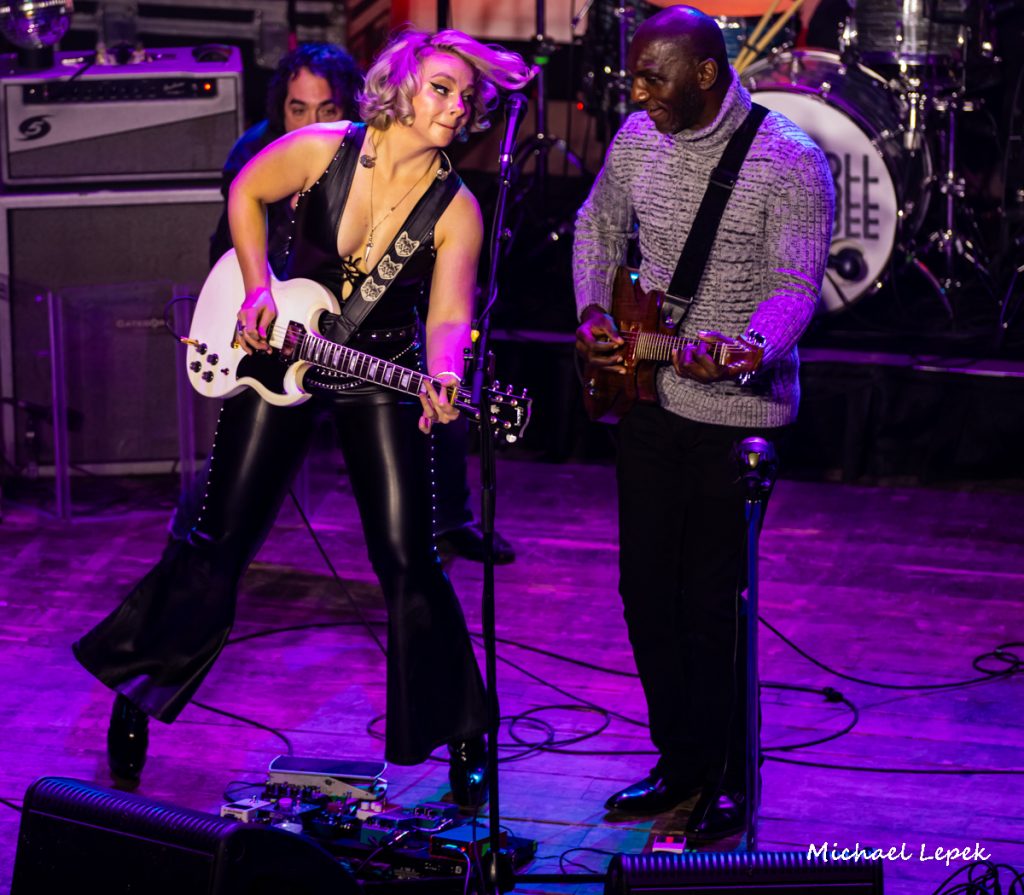
“I’m really into Detroit, Memphis, and I’m constantly looped into O.V. Wright, Al Green, and Ann Peoples. As far as guitar players go, when I was young and growing up, I got a heavy dose of Freddie King. I’m really into his guitar playing, and the power of performance there. I’m trying to think of more blues, but I like rock and roll – New York rock and roll from those eras.
“Black Sabbath’s Tony Iommi is one of my early guitar influences. One of the first bands I sat down and I wanted to dissect everything about the guitar playing. I just love the band because it’s heavy, and there’s something about 1970s heavy rock that’s loose and greasy. I just like that. That business is sort of related to the blues thing, even with the heavy English rock bands.”
So, will the 21st century go down as the point when a white woman from the Midwest is regarded within the same blues lineage as Howlin’ Wolf? “What’s the plan? Well, that’s the thing. I feel if I connect to my younger self, if the 20-year-old version of me could see what I’m doing now, I’d be pretty blown away because I think back then my goals – and they were lofty – but I think I’d be surprised where I’ve been able to take this. The goal posts of ‘what is the top thing to attain?’ you know?
“Talking about goals, this tour is obviously a little material goal. I want to play certain places. There’s earmarks I want to hit. The major goal and the over encompassing goal is how do I reach more people? How do I bring more people in? How do I do that while maintaining my artistic integrity and doing the things I want to do?
“Artistic integrity for me just means being able to follow the muse, and that muse is somewhere else than where it’s going to be in two years. I think you have to be able to challenge yourself and grow and change. And I’m really fortunate that I’ve had the support to do that, because I know there’s a lot of artists that have a really successful record, and the label just wants them to keep at that over and over again because that was what worked. I feel like that’s one way to do it, but I also feel like it can be limiting, and if I can still go and grow and reach more people and build on that foundation and also build on that freedom to challenge myself as an artist, that is the ultimate goal.”
A great artist rising, Samantha Fish has more worlds to conquer.
