


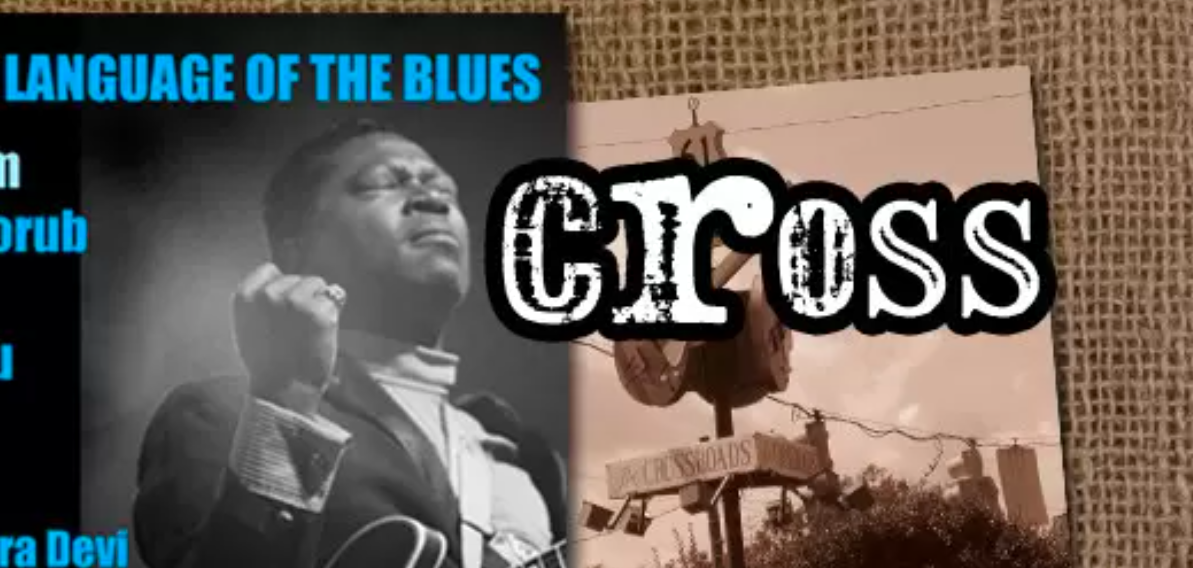
In the African-American folklore system called “hoodoo,” to cross someone means to jinx or curse that person. African crossing methods that made their way into hoodoo involve drawing cross-marks on the ground and spitting on them while verbally cursing the person. The cross-mark poisons the person who walks through it.
Cross-marks typically involve a crossroads sign, such as an X in a circle, but there are many variations, such as three wavy lines, or three arrows. A cross is only supposed to affect only the person whom the hoodoo doctor intends to curse–but if you see something like this scrawled on the ground, it wouldn’t hurt to walk around it.
In the Vodou religion, spirit-ancestor-gods called loa (or lwa) are believed to hang out in the center of a crossroads, because to be able to stand upon a crossroads means one has mastered both life and death. It means one can cross between the spirit world and the world of the living. As Michael Ventura explained in his famous essay on Voodoo and rock ‘n’ roll “Hear that Long Snake Moan”:
For the African, the human world and the spirit world intersect. Their sign for this is the cross, but it has nothing to do with the Christianist cross, which impales a man in helpless agony upon the intersection….[In Africa] the earthly and the spirit worlds meet at right angles, and everything that is most important happens at the spot where they meet, which is neither solely of one world nor the other.
The metaphysical goal of the blues musician, as expressed in the crossroads legend of Robert Johnson, is to experience this meeting of both worlds at the crossroads, touch the divine and bring it back as music.
Crossing isn’t always mythic; sometimes it’s right outside your door, as Ma Rainey warns:
Black cat on my doorstep, black cat on my windowsill
If one black cat don’t cross me, another black cat will
“What a great resource, as fascinating as it is informative. Debra’s passion for the blues shines through.” – Bonnie Raitt
“Debra’s book will teach you what you really need to know about blues history and where the blues are coming from.” – Joe Bonamassa
“Finally one can understand the mechanics behind the overwhelming viscera of the Blues. Debra Devi’s work is a true guide book to the soul.” – Al Jourgensen (Ministry)
“This book is fascinating! Take it to the bathroom and don’t come out until you’re done reading it.” – Jimmy Vivino
“This is a beautiful book. Upon receiving The Language of the Blues I discovered my knowledge only scratched the surface. Debra Devi has written an invaluable reference book. And it’s also great fun to read.” – Hal Willner
“Don’t think that The Language of the Blues might read like a dictionary or reference book. There’s no plot, but you can open it up at random and fall into the world of your favorite blues songs, and find out more about the lyrics than you would be guessing from context. I learned a lot more about the blues music I already loved.” – Bob Margolin
