


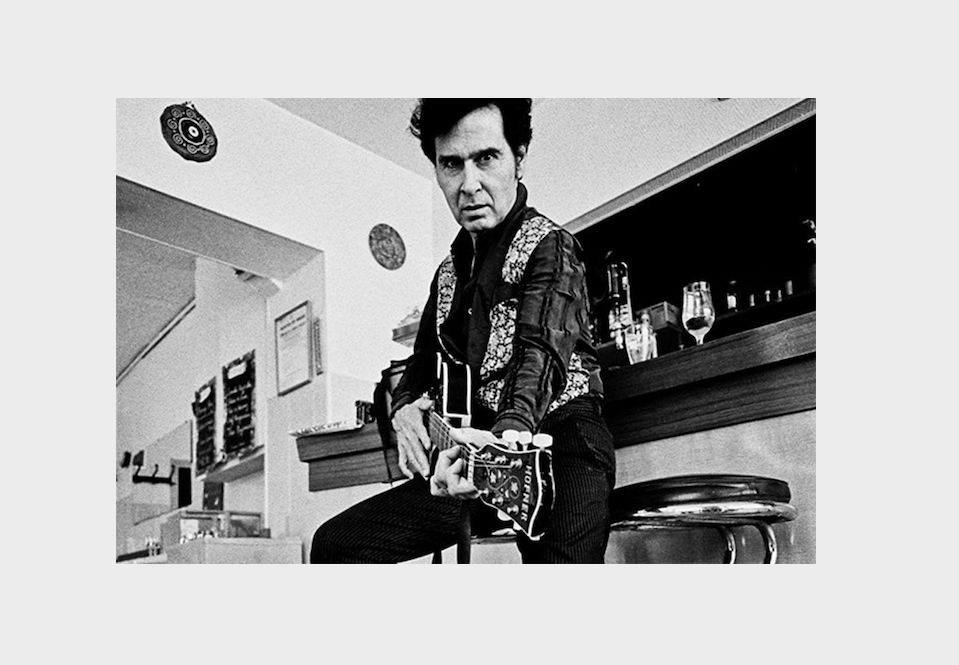
Long before Memphis rediscovered its cool — before heritage tourism polished Beale Street neon and boutique hotels colonized cotton warehouses — Tav Falco was stalking those same industrial corridors with a camera in one hand and a guitar in the other. He was documenting what felt like the last unmediated generation of North Mississippi hill country bluesmen — musicians still playing for dancers rather than audiences — while simultaneously crafting his own new, art-damaged sound that refused revivalism. Preservation and provocation happened at once.
Musician, filmmaker, photographer, and documentarian, Falco has spent more than five decades moving between preservation and performance. To him, Memphis was fertile ground for artistic and musical expression.
But Falco’s creative journey began in rural Arkansas.
“I was a child out on the farm, the backwoods in Arkansas,” Falco says. Isolation defined those early years. His father, recently retired from a thirty-year Navy career, brought home a portable Navy phonograph — painted battleship gray, with a handle — and stacks of 78s stored in paper sleeves. That machine became Falco’s first stage.
Television hadn’t yet reached rural Arkansas. Until he was eleven or twelve, there were no flickering screens in the house — only radio waves and the phonograph needle dropping into shellac grooves. What he played most wasn’t blues, but Wagner. “The Walküre aria,” he recalls. “I’d blast it out across the field.”
Alone on the farm, he invented companions. “I had created a number of imaginary friends and I conducted plays out on the farm.” A flatbed trailer near the house became his stage. “That was my ship. That’s where I performed these plays.” Performance, in other words, preceded music.
Radio widened the aperture. The first song he remembers hearing — likely over WNOE — was Wilbert Harrison’s “Kansas City.” Soon Wolfman Jack’s Mexican border-blaster signal boomed across Arkansas nights. R&B and early rock ’n’ roll crackled into the darkness. The wider American soundscape arrived by AM static.
By the mid-1960s, Falco was bussing from Arkansas to Memphis to attend country blues festivals at the Overton Park Shell. He met musicians there — bluesmen, rock ’n’ rollers, working artists — and recognized that Memphis held something Arkansas did not. “If you’re from Arkansas, you either go to Dallas or Memphis,” he says. “I should go to Memphis.”
After a brief and chaotic stint in Dallas — “barely got out of there alive,” he jokes — he followed his girlfriend to Memphis in 1973. She drove a ’50 Ford. He followed on a Norton motorbike. He would remain in the city for nearly two decades.
At the time, Memphis was widely regarded as culturally exhausted. Sun Records was legendary. Stax was struggling. The mythology loomed larger than the moment. But to Falco, the music was not dead. “It was in the air,” he notes.
By then, his listening habits had shifted sharply. He had largely abandoned mainstream rock after the 1960s. Instead, he immersed himself in the avant-garde — Karlheinz Stockhausen, Edgard Varèse — alongside Eric Dolphy and country blues. The combination would define his aesthetic: structural abstraction and raw rural trance circulating in the same bloodstream.
He also began filming.
Through his video art collective TeleVista, Falco made field recordings and short films documenting blues musicians in Memphis and the North Mississippi hills. “We wrote all of these manifestos,” he said. “‘We’re preserving something. Nobody sees it anymore.’ But mainly, an artist works with what he has at hand. I was in Memphis. You work with what’s around you.”
Falco’s lens extended beyond Burnside. Through TeleVista, he documented Jessie Mae Hemphill, Otha Turner, Sam Phillips, Phineas Newborn Jr., James Carr, Cordell Jackson, and a wide constellation of Memphis musicians, artists, and political figures. Working alongside collaborators including poet Randall Lyon and photographer William Eggleston, Falco moved between cotton lofts, rural jukes, and downtown studios, building an archive that blurred ethnography and art action.
At its core, he was documenting musical communities in northern Mississippi and Memphis.
Jessie Mae Hemphill, he said, emphasized rhythm and groove over melody, often sitting with an electric guitar and tambourine at her foot.
“RL was in harmony with his family and church community,” Falco said. “Jessie Mae was more complex, ambitious.” The personalities differed, but the trance impulse remained.
Falco insisted that the hill country blues he was immersed in differs profoundly from Delta blues.
“When I hear Delta blues, I hear something very defined,” Falco explained. “Structured and oppressive. You feel all that cotton that was picked. You feel those heavy bags on your back. You hear plantation life — the calls out in the fields.”
The geography matters. The Delta horizon stretches flat and uninterrupted.
“You see from can to can — from the can on the horizon in the morning to the last reflection in the evening. It’s flat. It’s suppressive. There’s a fatalism in Delta music.”
Hill country, by contrast, rolls and bends. “There’s jubilation down south,” Falco said. “Life was rough — dark, baby, those turpentine camps — but people had gardens. They had a hearty life, though it wasn’t easy.”
The sound reflects that terrain. “That music there has very high retention of African influence,” Falco said. “Very atonal. Extremely trance-like. Rhythms produced to induce a kind of trance connected to dance. It was all one thing — the dance, the music, the dice game, what was going on in the back room with the girls.”
The epicenter of that world was R.L. Burnside’s juke joint — which Burnside himself called a “tonk.” “You went into the tonk — people call it a juke joint — but it wasn’t just a roadhouse. There was no bar set up. It was called the Brotherhood Sportsmen’s Lodge.”
Falco documented Burnside in his 1974 short film Honky Tonk, using long, unbroken takes influenced by Jean Rouch and Dziga Vertov. The camera lingers. The groove deepens. The dance becomes the narrative.
Falco remembers Burnside as a musician whose power multiplied the moment he plugged in. “Burnside was articulate on acoustic but transcendent on electric,” he says. His battered pawn shop guitars — often inexpensive Japanese models — produced what Falco called “paradoxical tonalities driven by swampy rhythms.” Onstage, Burnside swayed “like a king snake — mesmerizing and trance-inducing.”
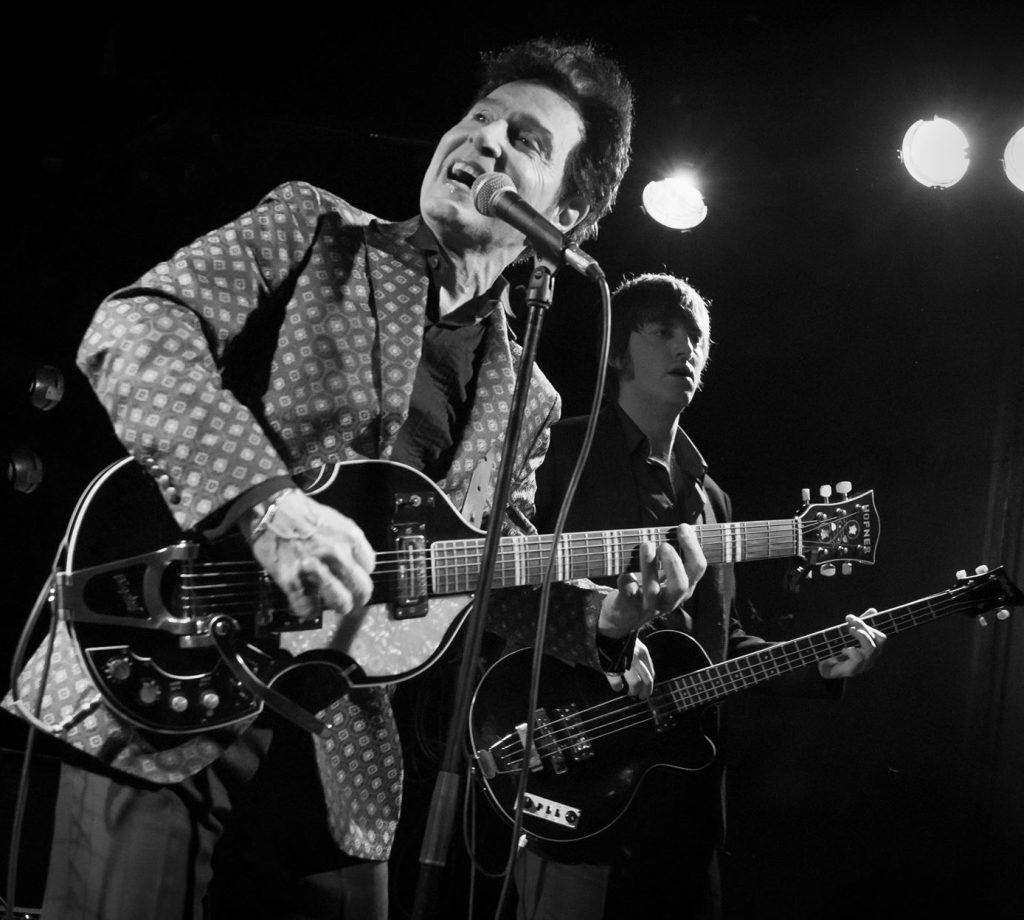
That electric trance would later seep into Falco’s own band, Panther Burns. Their 1981 debut Behind the Magnolia Curtain included a feral cover of Burnside’s “Snake Drive,” years before Burnside’s own Mr. Wizard would bring that hypnotic groove to a wider audience. Equal parts ethnographer and instigator, Falco helped ignite Memphis’ late-’70s blues revival alongside Big Star, Mud Boy and the Neutrons, and the Dixie Flyers — not by polishing tradition but by tearing into it, composing, as he put it, only to “decompose.”
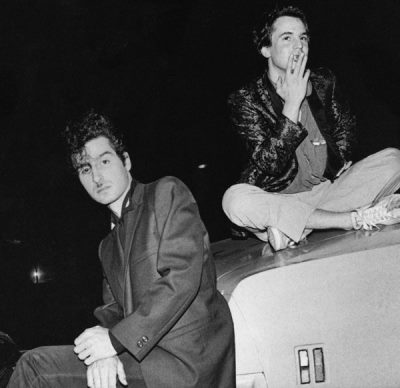
Groups like Big Star, the Dixie Flyers, and Mud Boy and the Neutrons formed a loose but influential Memphis underground. Big Star circulated largely through records; Mud Boy and Panther Burns were, as Falco put it, “onstage art-action phenomena.”
Other musicians occupied different psychic spaces. “Jack Owens was very introspective,” Falco said. “He was in a world that had a lot of spirits and demons. It’s all there in his music.” His lyrics were filled with devils, religion, and spiritual unease. Fatalism returned, but from another direction.
Mississippi Fred McDowell embodied yet another mode. Falco recalls seeing him perform in a dirt parking lot near Front Street. McDowell, he said, was “deep blues — lyrically and spiritually profound.” Even lighter numbers carried gravity. “You could carouse to Burnside. I can’t imagine anyone carousing to Mississippi Fred McDowell.”
Race and geography structured these spaces as much as sound did. “You go into a white honky tonk and ask for Schlitz,” Falco recalled, “they’d tell you to go to the Black club for that. They wouldn’t serve it because Black people drank it.” Segregation lingered not just socially but commercially — even in beer brands.
He grew up in a segregated corner of southwest Arkansas, where strong community bonds coexisted with cultural isolation. At the time, he says, segregation felt built into daily life — something not fully examined until he left for college at the University of Arkansas. “That’s when I began a gradual radicalization,” he says. Distance clarified what proximity had normalized.
Falco absorbed all of it. He bought a $5 Silvertone guitar from a neighbor near the railroad tracks. He learned by watching Burnside tapes and playing along in what he calls his “own fractured way.” “I didn’t know a note from a molecule,” he said, laughing.
Yet decades later, Falco has begun studying music theory. “Music is mathematical vibration,” he said. “I’ve gotten into the ancient modes. I haven’t gotten to the bottom of it.”
Blues, for Falco, was never merely repertoire. “They would play on the porch — that’s what the real blues were,” he says. “It wasn’t the records. It was what they did at home. It was confessional. Cathartic.”
That ethos of composition and decomposition became central to his own work. In the 1970s, he formed the Big Dixie Brick Company, an art-action theater troupe featuring poets, strippers from a biker club, and improvised performance rituals. Soon after, he formed Panther Burns — not as revivalists, but as sonic saboteurs.
“You compose ’em; we decompose ’em,” was the band’s credo.
Panther Burns didn’t preserve rockabilly and blues so much as fracture them. Hill country repetition collided with noise, European art theory, and Memphis grime. The result was neither revival nor parody; it was transmutation.
Not everyone appreciated the approach. Falco once heard that John Lee Hooker had confronted Burnside: “Why are you trying to ruin our music?” Burnside’s stripped-down, groove-locked style — minimal chord changes, relentless repetition — sounded regressive to some. To Falco, it was hypnotic. The narrow band of vision was its strength.
Falco’s resistance to commercialization wasn’t abstract. After refusing to hang a Budweiser banner behind Panther Burns at a Memphis festival, the band was never invited back. So he created his own platform.
From 1985 to 1990, CounterFest operated as an underground alternative to corporate music festivals, staging atonal musicians, experimental filmmakers, visual artists, and fluorescent poster designers in cotton lofts, abandoned theaters, and even river barges.
The final CounterFest drew attendees from Jim Jarmusch’s Mystery Train cast and crew — a fitting convergence of Memphis myth and art-house cinema.
Later, Fat Possum Records would bring Burnside to global audiences, pairing him with Jon Spencer and other rock figures. Falco views that period as “an experiment.” Still, Falco insists the tradition continues. “The blues lives. Country blues lives.” He points to the North Mississippi Allstars, the Burnside family, and the descendants of Otha Turner and Napoleon Strickland. The line is unbroken, even if the venues change.
In the end, Falco’s life work resists easy categorization. He documented vanishing worlds while mutating their forms. He revered the porch while electrifying the stage. He preserved by destabilizing.
“In the blues, there’s a body of music,” he says. “Songs done by many different artists. They decompose them in their own way.”
Compose. Decompose. Repeat.
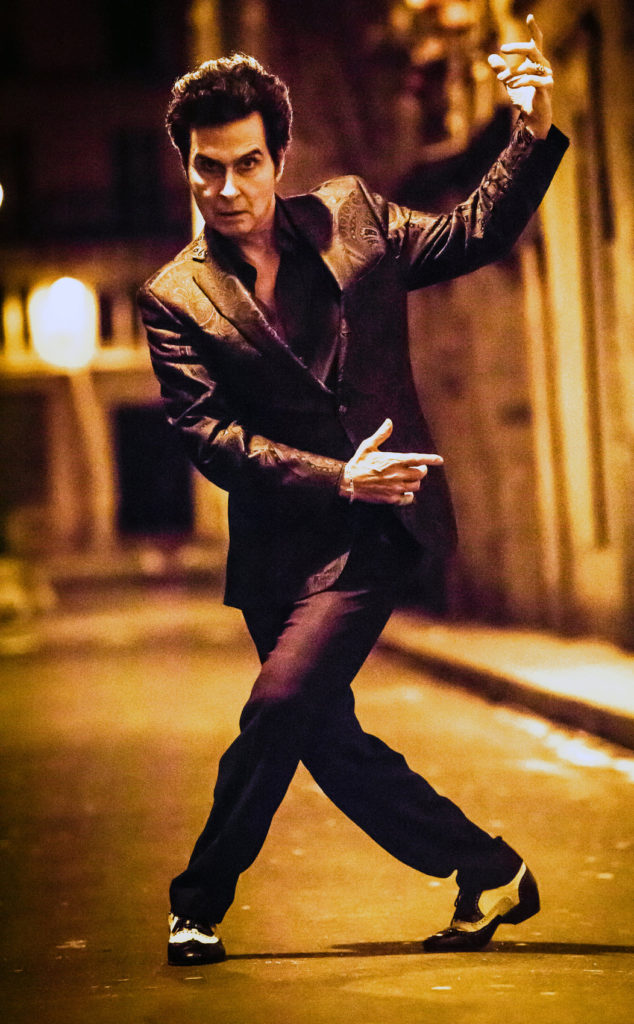
Growing up an only child, Falco says he was drawn equally to theatricality and photographic chemistry. “Emotional reactions on stage conflated with chemical reactions in the lab.” Over time, he began to see silent film as “visual music.”
“For me, music and film differ only in frequency,” he says. “I make silent film with disembodied sound, with my own secret eye. I have one song to sing, musically or on film, and I sing it in different ways.”
That idea — one song expressed across mediums — ties the documentaries, Panther Burns, photography, and later feature films into a single arc rather than separate careers.
Like the hill country groove itself, Tav Falco’s project never resolves; it circles, deepens, and keeps time. From Arkansas to Memphis to his current residency in Thailand, music is in the air.
