


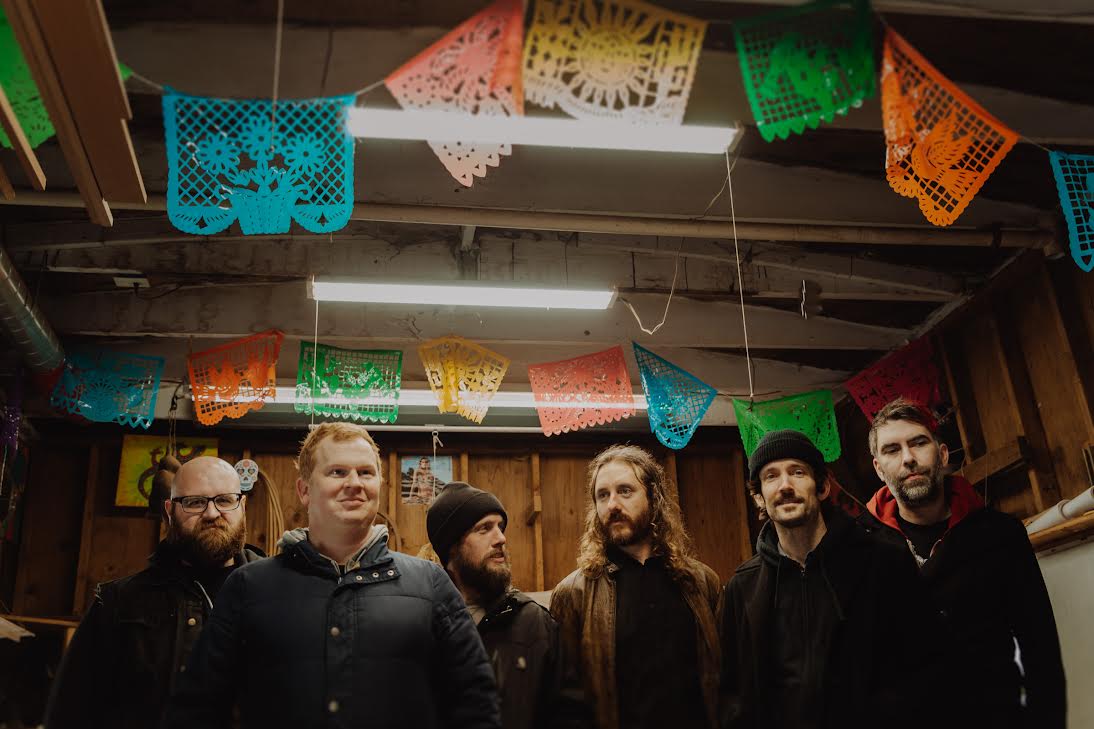
The Builders and the Butchers’ new single “Mother Mary” carries a Byrds-like warmth that gives way to a down-on-your-luck country feel in the vein of “Dead Flowers,” a dynamic that drives the song’s compelling character. The interplay between banjo and viola imbues the track with what vocalist/guitarist/songwriter Ryan Sollee describes as a “drunk romantic” quality. It also marks new territory for the band, who haven’t previously leaned so directly into traditional country.
“With all of our songs we’ve never written a straight up old country tune before, so it was a fun place to dip our toes,” Sollee tells me. “For me the song really came alive when Matt and Harvey laid down the Banjo/Viola lines that play off of each other. It sounds to me like a drunk romantic and perfectly fits with the lyrics.”
A sense of connection runs through both “Mother Mary” and the broader scope of No Tomorrow, reflecting Sollee’s view of music as a shared space in an increasingly divided world. “I think performing music and seeing live music is one of the most connecting traditions there is. When a song is being played nobody is thinking, ‘I wonder who the person next to me voted for,’ or what their political views are. It is just about sharing a moment collectively together. There are a handful of songs on No Tomorrow that are written about connection and transcending the way we are treating each other, attempting to exist in a higher place. I think the best way to exist in today’s world is to flood the ‘zone’ with art and reject people who aim to divide us.”
Sollee approaches songwriting with a focus on balancing hardship and light, crafting songs that can hit multiple emotions at once. “For me the best songs are complicated… For example, I love gospel music but am agnostic myself. I can connect with the emotion more than the actual words. I think what human beings need right now is to feel uplifted and connected to our collective humanity, so many songs make me feel this way. If our songs can do that, even a little bit, then that feels really good.”
More than 20 years of performing and recording have led Sollee and the band to trust the process, allowing ideas to evolve without overworking them. “I think over the years I/we have learned to be less precious about ideas and move forward just trying to create the best songs we can without getting too bent out of shape about a part, or a song getting cut or changed. Also if someone gets upset in the process we trust that if we communicate out of respect we can move through these tense moments as a band.
“For me personally, I bought an old ‘50s Gibson arch top guitar that I used to write all of the songs on this record. There is something about that guitar that is really special and it was so effortless to write using that guitar. I’ve never been much of a ‘gear’ person before this, but I do think now there are some instruments that vibrate with our personal DNA, and that guitar is that for me. As far as making this record went, it felt the same as all the previous records in that we just got together and started laying down tracks and followed interesting ideas to see where they led.”
The band’s shows are famously immersive, with call-and-response and audience participation, and on stage, Sollee sees “Mother Mary” as an opportunity to explore a softer connection. “Obviously you hope that every song immediately resonates with an audience. I hope people sing along with the chorus on ‘Mother Mary’; it’s fun for me to sing, so I hope it’s fun for other folks too. I think our band is a little gun shy when it comes to low-key, slow songs like ‘Mother Mary.’ We are super comfortable with a song getting folks to dance and get engaged; it would be great to grow into a band that can get more emotional energy from an audience reacting to soft, quiet songs.”
Fans help steer the setlist as much as the band’s own instincts, guiding which songs survive the stage and which are cut. “If we have a song that we love playing, but the audience isn’t feeling it after a few shows, we cut those songs from the set. For us the audience is everything, and we want to play songs that we enjoy, but at the end of the day we are on stage to entertain, people paid money to be entertained, so I feel like that is our first responsibility.”
