


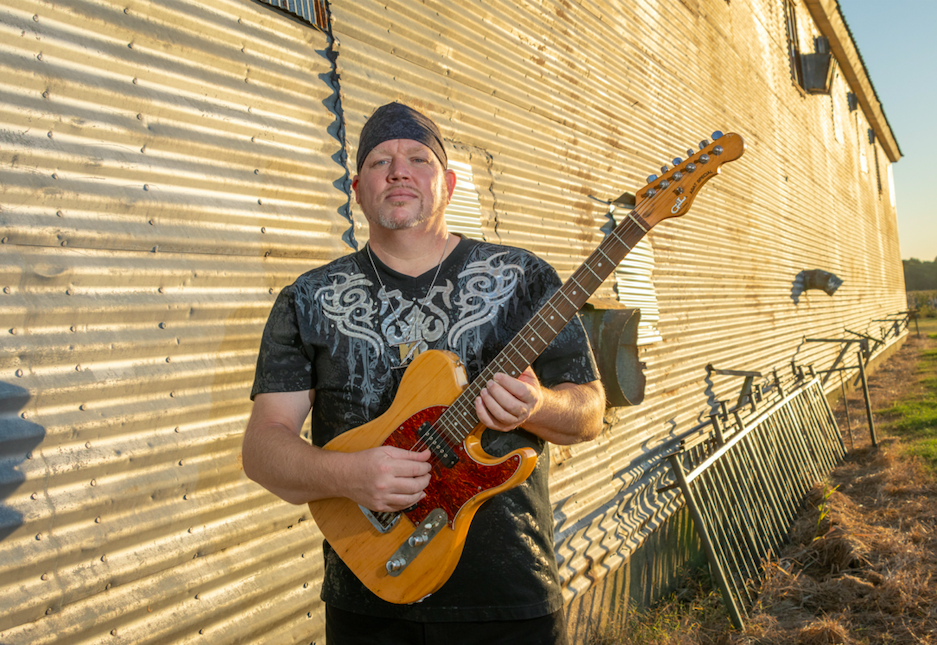
Before the barbecues and juke joints of North Mississippi, before the world tours and the reputation as one of Hill Country blues’ most kinetic performers, Lightnin’ Malcolm was just a kid with a broken instrument and an itch he couldn’t shake. At five years old, living in Missouri, he found a scrap of a guitar in a pile of junk—just a couple of strings stretched across it—and started trying to make something out of nothing. It wasn’t much to look at, but he couldn’t put it down.
When some bootleggers down the road saw him carrying it around, struggling to coax sound from it, they stepped in and bought him a cheap Hondo. Malcolm was, as he puts it, “over the moon.” It was the moment everything snapped into focus. Decades later, he says he can still smell that first real guitar.
Immersion in the blues followed naturally. By his mid-teens, Malcolm was already out playing constantly—yard parties, front porches, country stores—anywhere that would have him. Much of it was informal and often unpaid, but it was education in the purest sense. After moving to Mississippi, he learned from proximity, traveling and performing alongside figures like R. L. Burnside, T-Model Ford, Robert Belfour, and Big Jack Johnson.
What he took from them went beyond musical vocabulary: how to read a room, stay grounded, and endure. The lessons weren’t always spoken, and often had little to do with scales or chords. They were about life, about resilience, and about not letting anything throw you off course.
Those lessons were tested immediately. In the juke joints and backyard gatherings where Malcolm cut his teeth, the margin for error was thin. He remembers being dropped into the middle of a room full of people already dancing to Al Green or Marvin Gaye, expected to take over and keep the energy alive. “They want to have a party,” he says. “Either you can make them party or you get out of the way.”
There was no room for ego or hesitation. You had to win people over fast, or you were done. Over time, that pressure forged a performer who could not only hold a crowd, but elevate it—someone who understood that entertaining wasn’t about showing off, but about feeling the room and giving it exactly what it needed.
Out of that environment came Malcolm’s signature approach: a dense, driving guitar style that carries bass, rhythm, and lead all at once. It’s partly innovation, partly necessity. Playing solo meant he had to fill space, to make one instrument sound like several. “If I hit it right, the bass never misses, because it’s right there with me,” he says. The result is a sound that feels bigger than its parts—percussive and deeply rooted in what’s often called Hill Country blues. For Malcolm, that label is secondary to the feeling behind it: a stripped-down, groove-first approach that trades chord changes for repetition and momentum. “It’s a hypnotic groove,” he says, built from just a few notes, but carried by rhythm. Simple on the surface, but endlessly complex in execution.
That groove is also more elastic than it might seem. Malcolm hears Hill Country blues not as a closed tradition, but as a foundation—something that can stretch into funk, reggae, or even hip-hop without losing its core. He moves between those sounds naturally, guided less by genre than by feel. Some songs lean raw and elemental; others pull in richer harmonies or outside influences. But even at its most expansive, his music circles back to the same root. It’s the throughline that keeps everything grounded, the thing audiences respond to most viscerally. “When you’re playing something that you really love… they’ll feel it,” he says.
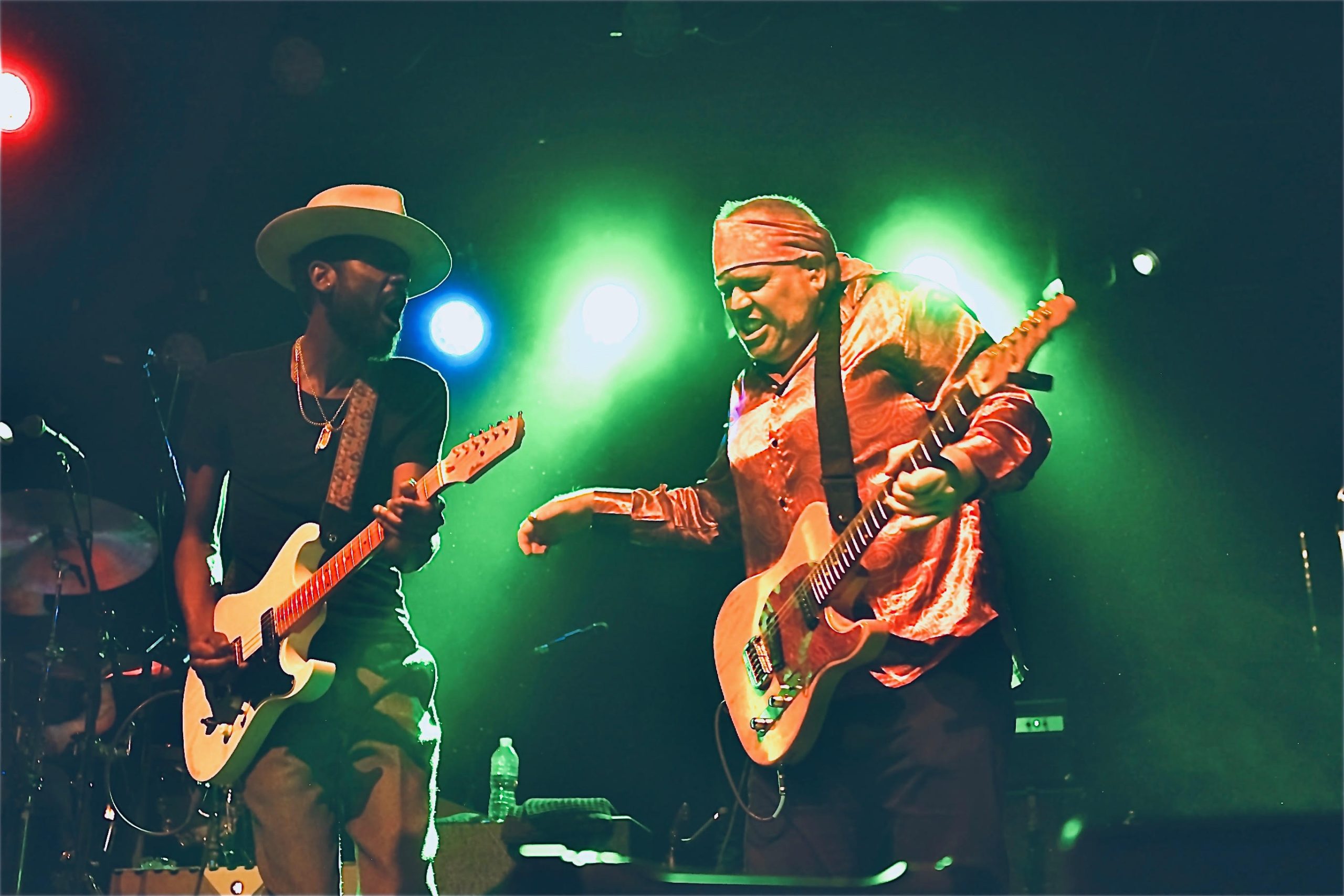
Malcolm describes the juke joints and yard parties of his early years as environments that demanded total immersion—places where the audience didn’t just watch the music, but actively shaped it. “The women would let you know that they were digging,” he says, recalling how their energy could push a young player “above your head,” pulling performances into something more intense than planned.
He remembers a time before phones and recording, when everything lived only in the moment: “They used to pour whiskey… Hennessy in my throat in between lines of the song,” he says, laughing at the chaos of it. In those settings, he often found himself playing beyond what he technically knew, relying on feel rather than structure. “It’s like I caught the Holy Ghost,” he says, describing how a couple of chords could turn into a full performance once the room is locked in. More than anything, he emphasized the responsibility he felt in those moments—not to himself, but to the people in front of him. “I didn’t want to let them down,” he says. “Their party is everything to them.”
If that philosophy sounds simple, the reality of living it isn’t. Malcolm spent decades on the road, at times playing close to 300 days a year, building a career gig by gig. Not all of it was glamorous. There were long drives, uncertain pay, and the constant low-level danger that comes with late nights and unfamiliar places. The older musicians he learned from helped him navigate that, showing him how to keep his bearings in an environment that could easily knock you off course. It’s part of why he still approaches the stage with a kind of humility, an understanding that the opportunity to play at all isn’t guaranteed. “Way better musicians than me never get to do that,” he says.
Still, for all the grind, the act of playing itself remains the easy part. It’s the release valve, the reason for everything else. “That’s my favorite time of the day,” he says. “Everything is leading up to that.” When a crowd is locked in, he’ll stretch a set far past its scheduled end, chasing that shared momentum. It’s less a performance than a feedback loop—energy moving back and forth between musician and audience until the distinction blurs. In those moments, Malcolm isn’t thinking so much as reacting, pulling from a deep well of songs and instincts built over decades. “When it’s good, it’s kind of like everything’s a blur,” he says.
In recent years, that relentless pace has shifted. With a son at home and a studio of his own in Holly Springs, MS, Malcolm has started to spend more time off the road, turning inward and taking stock of what he’s built. The change has opened up space to write and record more deliberately, to finally process the backlog of ideas gathered over a lifetime of constant motion. He’s begun releasing new material in a steady stream—one-man-band recordings that capture the full scope of his sound, built from the same principles he learned in those early days: keep the groove strong, keep it honest, and let the feeling lead.
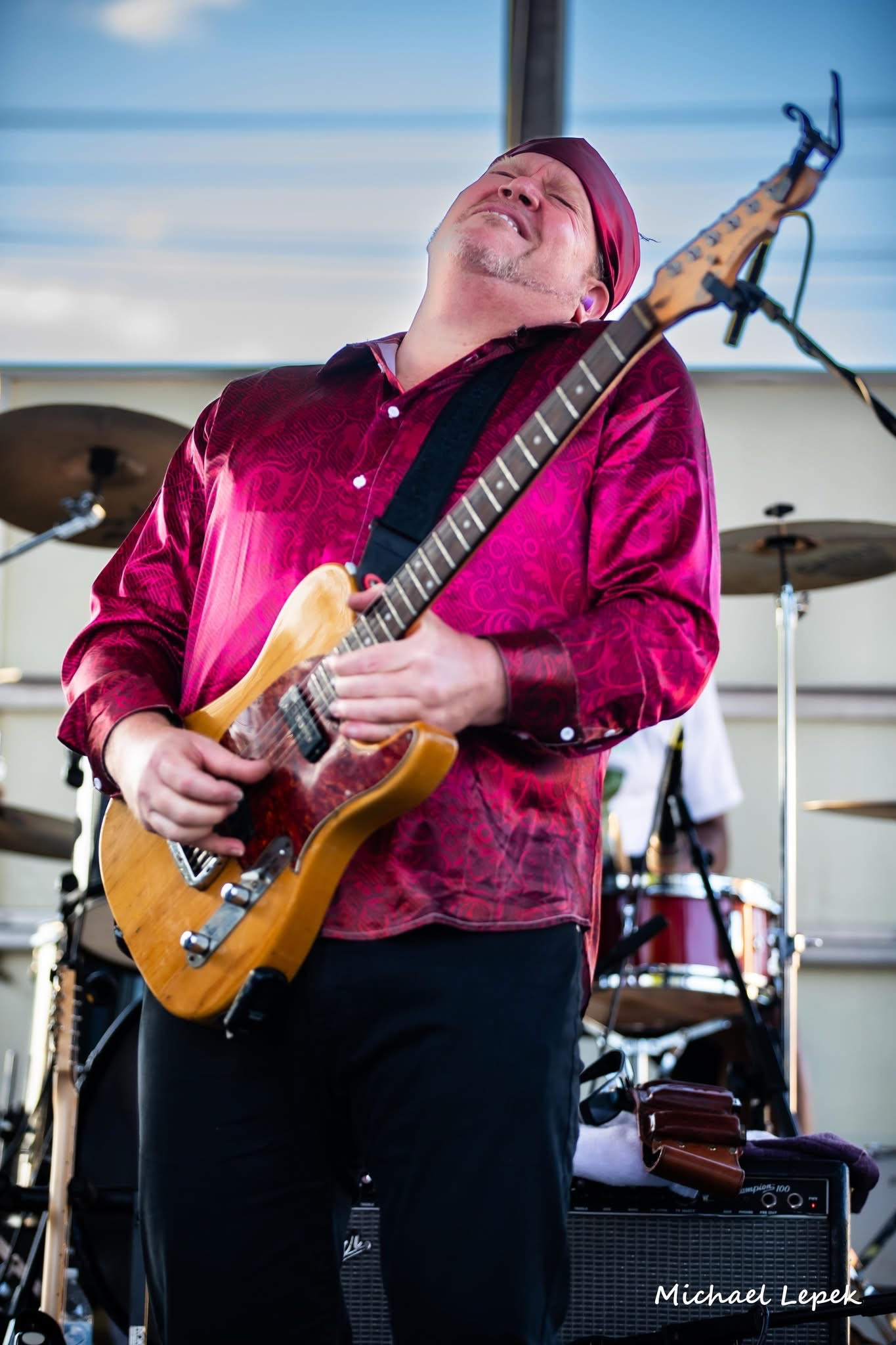
Malcolm already has a backlog of solo material, with over 50 songs ready to be released. He plans to release LPs with 12 songs each, every three months, for over a year. This builds off eight solo releases to date, starting with Juke Joint Dance Party in 2004, and most recently Turnt Up Loud from 2025.
What hasn’t changed is the core impulse that started it all: that kid with a broken guitar, trying to make something out of almost nothing. The technology is better now, the stages are bigger, and the audiences more far-flung, but the essential drive is the same. Music, for Malcolm, isn’t a career he chose so much as something he couldn’t avoid. “It’s like oxygen,” he says. And like oxygen, it’s most powerful when you don’t think about it—when it’s just there, moving through everything, and keeping the whole thing alive.
