


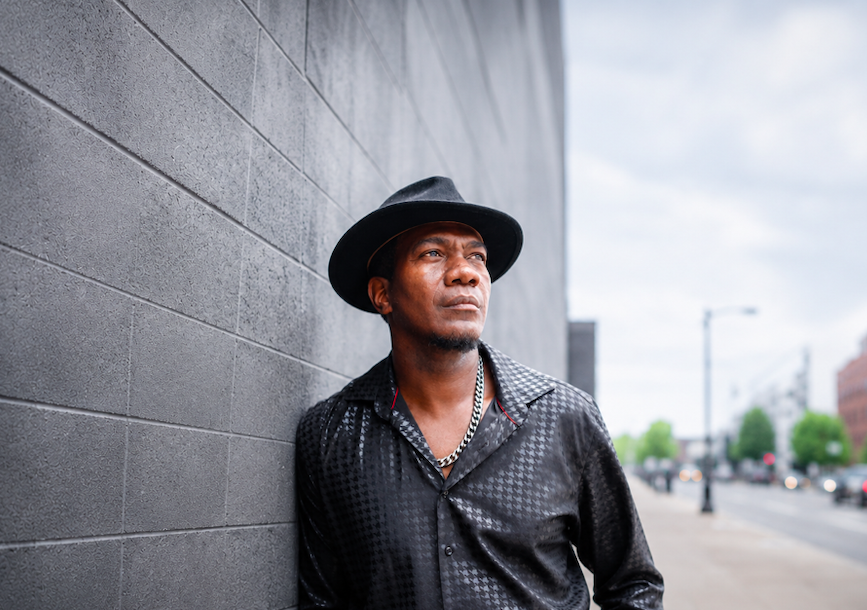
Kent Burnside learned the groove in Mississippi cotton fields. Over time, it became more than rhythm — an all-encompassing ethos, a way of moving through sound and through life. To lock into the groove was to lock into northern Mississippi itself.
Long before he toured internationally or opened for blues legends, Burnside spent his childhood working under the Delta sun, picking cotton and peas alongside family members in northern Mississippi. The work was repetitive, exhausting and poorly paid — nine hours in the field for about $13 some days — but the rhythms of labor became inseparable from the music that would become his life’s work. “When you’re in the field all damn day, you got to make the day go by,” Burnside said. “You’re singing or you’re clapping or you’re playing the same thing just to get through the day.”
From those field rhythms emerged Hill Country blues: the hypnotic, groove-driven North Mississippi style pioneered by musicians like R. L. Burnside, Jessie Mae Hemphill and Robert Belfour. Unlike traditional Delta blues, which often centers chord changes and lyrical storytelling, Hill Country blues locks into trance-like rhythms that can stretch for 15 or 20 minutes at a time. “It’s the groove, man,” Burnside said. “That groove, you can’t be still. It’s like that heartbeat.”
Today, Burnside — R.L. Burnside’s grandson — has become one of the genre’s most visible torchbearers. Produced by Grammy-winning producer Boo Mitchell, Hill Country Blood serves as both tribute and declaration while offering a deeply personal statement about identity, family, migration, and carrying a distinctly Mississippi sound forward. “That blood flows through me, and I’m going to play hill country till the day I die,” Burnside said. “That’s why I named it Hill Country Blood because I took it personally.”
The album emerged partly in response to criticism Burnside received after moving north to Des Moines, where his children live. Some relatives and longtime fans questioned whether he was drifting away from his roots or abandoning Hill Country blues for more modern styles.
Burnside heard the criticism clearly. “My family thought I kind of forgot about my heritage, my roots,” he said. “Like I came up here and forgot about my Hill country.”
Hill Country Blood became his answer. “Even though I’m up north,” Burnside said, “Hill country always going to be with me till the day I die.” The album is notably freer and more expansive than his earlier records. Burnside says previous projects felt confined by expectations — an unspoken pressure to stay within the strict boundaries of traditional Hill Country blues. This time, he stopped worrying about pleasing purists.
“Hill Country Blood, man, I was me,” Burnside said. “I was raw. I wasn’t afraid.” Producer Boo Mitchell pushed Burnside to lean further into his instincts rather than imitate tradition mechanically. “Boo showed me just be you, Kent,” Burnside said. “Don’t feel like you got to do something different. Do what you feel in your heart to do.”
The result is an album that honors Hill Country tradition while blending elements of blues-rock, soul, Chicago blues and even traces of contemporary influences Burnside absorbed over decades of touring. “I like R&B. I like rap. I like it all,” he said. “Hill Country is my love, but I do other stuff.”
The tension between preservation and evolution has defined Burnside’s musical life. Growing up, he desperately wanted to sound exactly like his grandfather. But R.L. Burnside encouraged him to find his own voice rather than become an imitation. “I asked my grandfather, ‘Why don’t I sound like your music sound like yours?’” Burnside recalled.
His grandfather’s advice became foundational. “He said, ‘As long as it feels good, sounds good, you do it,’” Burnside said. “‘Take that groove and just keep driving it.’” Burnside developed a distinctive playing style partly because he plays guitar primarily with his thumb instead of a pick — an uncommon approach that creates a heavier, more percussive rhythm.
“I play guitar with my thumb,” he said. “Most people find that very unusual.” The style reinforces the hypnotic pulse central to Hill Country blues. Burnside says outsiders often misunderstand the genre because the repetition can appear deceptively simple. “People think it’s easy, but it’s not,” he said. “That drummer is just like that heartbeat. You got to keep that groove locked in.”
Hill Country repetition is inseparable from Black labor traditions in Mississippi. The grooves emerged organically from people trying to survive physically demanding workdays. “We used to sing in the field,” Burnside said. “We said repetitive stuff because you’re trying to make the day go by.”
He remembers hating cotton work as a child. “I was all made on the peas because I hated picking fucking cotton,” he said, laughing. But the rhythms followed him home, eventually landing on his guitar. “Every time I was out there in the field, I was repetitive,” Burnside said. “So what I would do, I would take it when I go home and have me a different song.”
The field rhythms eventually became guitar grooves. “Certain songs,” he said, “take me back home to Mississippi when times was tough.” Burnside’s childhood unfolded inside the orbit of R.L. Burnside’s growing legend. The family lived crowded together — sometimes 14 people in one house — while his grandfather balanced farm labor and music. “Music wasn’t paying off at the time,” Burnside said. “He worked his ass off during the week just so he could put food on the table and he could play music.”
R.L. Burnside worked as a farmer and heavy equipment operator during the week, driving tractors and combines before performing at house parties and juke joints on weekends. He taught Kent how to drive a tractor when he was just nine years old.
Burnside watched his grandfather struggle financially for decades before outside audiences finally discovered Hill Country blues through labels like Fat Possum Records in the 1990s.
“We knew something special was going on,” Burnside said. He remembers white music fans and documentary crews suddenly appearing at the family’s isolated home “way in the woods” carrying cameras and recording equipment.
“Ain’t nobody going to come way in the woods just to hear the music unless something special going on,” he said. Even in segregated Mississippi, Burnside saw music create unusual spaces where racial barriers softened — at least temporarily.
“Music brought everybody together,” he said. “People respected him because of the music.” Outside those musical spaces, Burnside experienced racism directly. As a child, he once accidentally crossed onto someone’s property and was immediately accused of trying to steal.
“I didn’t say nothing because he saved my life,” Burnside said of a bystander who recognized him as R.L. Burnside’s grandson and intervened before the situation escalated. Music became both refuge and opportunity. Over the years, Burnside toured extensively with blues icon Buddy Guy, opening shows and absorbing lessons about stagecraft and entertainment.
“I learned I didn’t even have to pick the guitar up to entertain people,” Burnside said. He also learned discipline. As a teenager, Burnside would sneak backstage during breaks to play Buddy Guy’s guitars, frequently breaking strings.
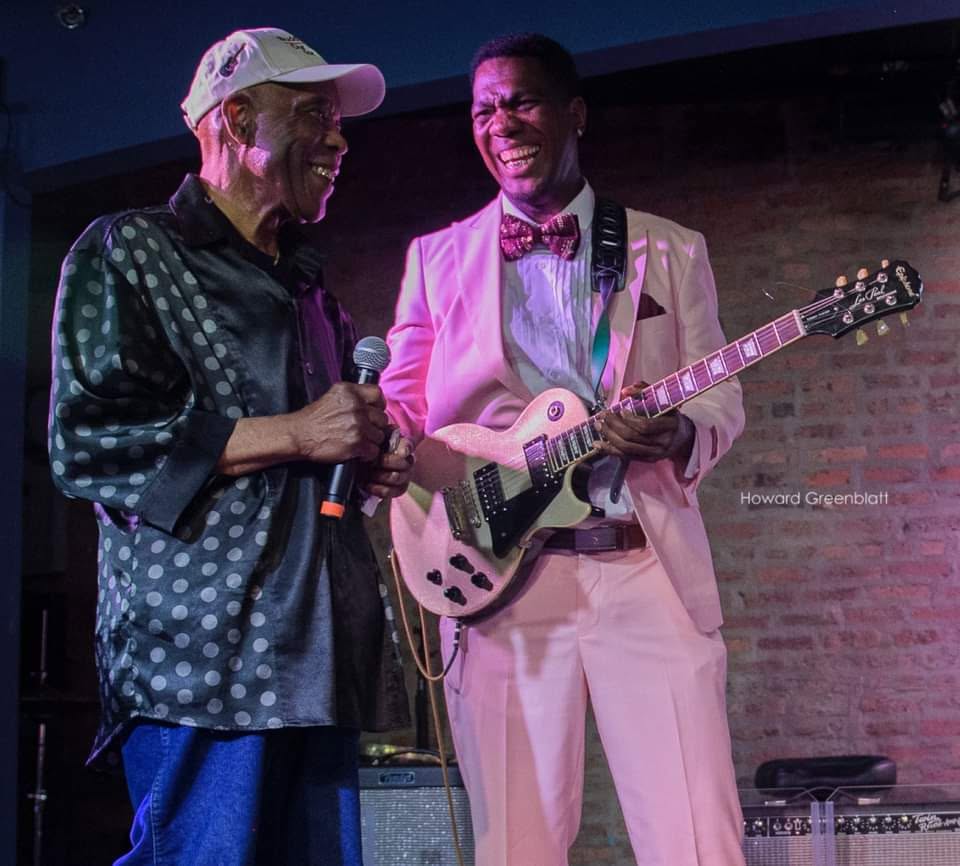
“He wasn’t going to keep paying for them,” Burnside said, laughing. He credits Guy and musician Jimbo Mathus with expanding his understanding of performance beyond technical guitar playing. “I knew I was a hell of a guitarist,” Burnside said. “But I learned how to entertain.”
His influences stretch far beyond Hill Country blues. Burnside admires Howlin’ Wolf, Albert King, John Lee Hooker and soul singers like Johnny Taylor. He also speaks enthusiastically about younger and contemporary musicians including Joe Bonamassa, Gary Clark Jr. and Christone ‘Kingfish’ Ingram. “They took that groove to a different level,” Burnside said.
He sees these musicians not as threats to blues authenticity, but as evidence the music continues evolving and reaching new audiences. “You got to change with the audience,” Burnside said. “I play Hill Country, but I spice it up a little bit.”
That adaptability has helped Hill Country Blues survive beyond Mississippi juke joints. Yet Burnside worries younger listeners often fail to understand the historical pain embedded in the music. “When you listen to Hill Country Blues,” he said, “you’re listening at how hard we had it in Mississippi.”
He describes the music almost as oral history: a sonic memory of agricultural labor, poverty and endurance in the rural South. “We worked our ass off,” Burnside said. “I want people to appreciate it.”
At the same time, Hill Country blues has always been deeply communal and celebratory. Burnside lights up talking about the annual Hill Country Picnic, where roughly 100 Burnside relatives and musicians gather to eat, reconnect and play music late into the night.
“It’s like one big family reunion.” The festival itself has grown into an official gathering that draws roughly 2,000-3,000 fans and musicians from across the United States and abroad, many of whom camp on-site throughout the weekend. Within that larger crowd sits the core community of performers and family members who form the genre’s living lineage.
Organized by guitarist Kenny Brown and his wife, it functions as a living showcase of the Hill Country blues community, bringing together key figures from the Burnside and Kimbrough family traditions alongside younger artists carrying the sound forward. What began as a smaller, family-rooted gathering in northern Mississippi has evolved into an annual convergence where elders, rising players and extended musical kin share stages and sets deep into the night.
The gathering includes members of the Burnside and Kimbrough families, descendants of multiple Hill Country blues lineages intertwined across northern Mississippi. Multiple Kimbroughs play Cotton Patch Soul Blues, a distinct, but connected genre.
“If we ain’t seen nobody in a year, that’s when we see them,” Burnside said. The picnic reflects the same culture that once surrounded Mississippi juke joints: homemade liquor, all-night dancing and musicians stretching grooves endlessly while crowds move together.
“Hill country is just a party,” Burnside said. “One big party, man.” Burnside’s own family remains central to his life and music. His son, Kent Jr., plays guitar and leans toward rock music, while his daughter sings and plays as well.
“I’m just glad he picked up the guitar,” Burnside said. He laughs describing how his son owns thousands of dollars’ worth of guitars, including a Joe Bonamassa model. “I try to tell him it ain’t the guitar that makes you play good,” Burnside said.
Like his grandfather before him, Burnside balances music with other work. In addition to touring, he owns a construction and demolition company, KT Hauling and Demolition, employing several workers while his son helps run operations when he’s on the road. He said he prioritizes his music and that hardships over the years keep him playing the blues.
“Shit, man. I’ve been divorced two or three times and had a couple of girlfriends. When you’re going through this stuff with women and when you ain’t got no money, that’s what keeps you playing the blues,” Burnside said. “People ask me, “Are you going to ever retire?” I say, “Hell, no. I can’t retire. I got too many grandkids.”
Blues endures because it speaks directly to ordinary life and tells personal, but universal stories, Burnside said. He hears truth in artists like Johnny Taylor because the pain in the songs feels lived-in rather than performed. “You can feel it,” Burnside said. “Everybody got heartaches. That’s why I can play blues.”
Now Burnside is already preparing his next project, tentatively titled The Dark Side of the Hill Country Blues. The album, he says, will explore the more difficult realities hidden behind romanticized images of juke joints and blues mythology — domestic tensions, poverty, and instability that underpinned many musicians’ lived realities. “A lot of people didn’t see the bad side,” Burnside said. “But we made it through it.”
Through all of it — the fields, the family struggles, the touring, the migration north and the changing music industry — Burnside keeps returning to the groove he learned as a child. “You acknowledge the groove no matter what,” he said. “That’s the heartbeat of it.” And for Kent Burnside, keeping that heartbeat alive has become both inheritance and responsibility.
“I want to preserve this music.I don’t want it to ever die out.”
