



Dan Auerbach’s path to North Mississippi HiIl Country Blues began at the library in downtown Akron, Ohio. As a kid and a fledgling guitar player, Auerbach watched Alan Lomax’s American Patchwork VHS tapes featuring Fred McDowell at the library.
While Auerbach burst onto the music scene in the early 2000s with the Black Keys, becoming one of the most critically acclaimed and popular garage rock bands of the 21st century, he said that the blues has always been a part of his musical DNA. Auerbach’s father, whom he described as “an old hippie,” gave him a surface level appreciation for the blues with old classic records, while his uncle Tim exposed Auerbach to Lightnin’ Hopkins, Guitar Slim, and above all, Robert Johnson.
The gritty grooves of Hill Country and Cotton Patch Soul blues immediately gripped Auerbach’s imagination. A Fat Possum compilation featuring R.L. Burnside and Junior Kimbrough sparked what he described as an “obsession” with the music, and hearing Kimbrough for the first time in 1998 “lit a fire.”
“Everything about life changed after I heard Junior’s music. When I heard that music, that’s what made me want to drop out and fucking take up music full-time,” Auerbach said. “His style of music and his philosophy for groove and song structure resonated with me so much that I decided to make a life out of playing music.”
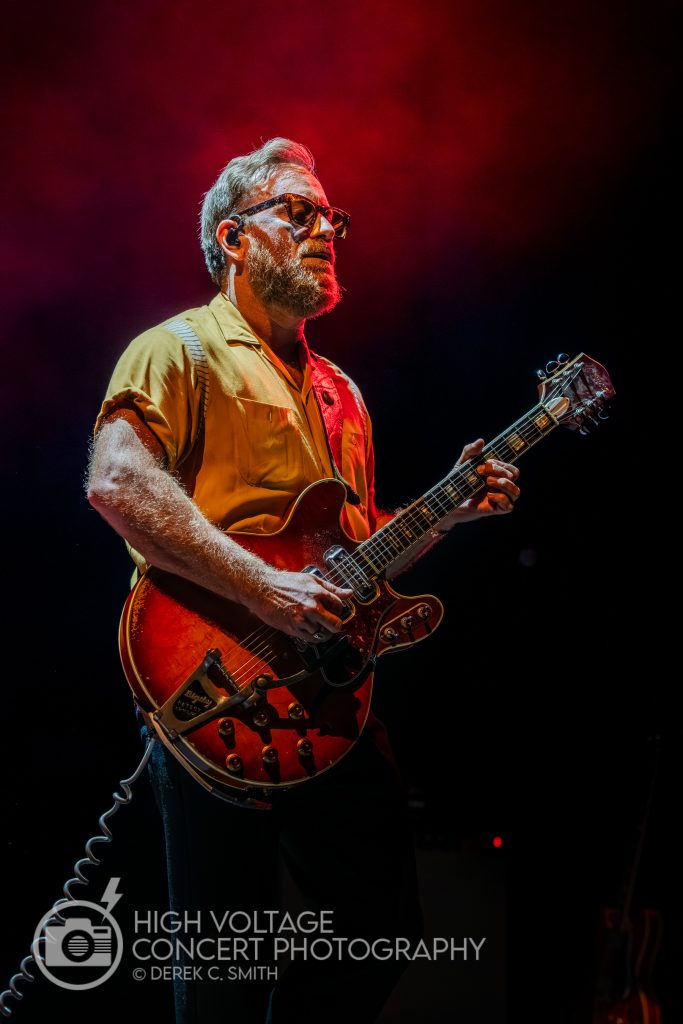
Over two decades, The Black Keys have covered Junior Kimbrough on both the stage and on record. In 2006, the group released an EP, Chulahoma: The Songs of Junior Kimbrough, featuring covers of tracks like “Keep Your Hands Off Her,” “Meet Me in the City,” and “My Mind Is Ramblin’.”
Blues threads through Auerbach and drummer Patrick Carney’s work, even in grungier garage/ indie rock albums like Thickfreakness (2003), Brothers (2010), and Turn Blue (2014). As Auerbach said, the blues is the building block of everything he knows about guitar playing and stems from the records he listened to as a kid. “Everything I do has that foundation, whether you can hear it or not.”
In 2019, The Black Keys released their full-fledged Hill Country Blues album, Delta Kream, relying on veteran players from the scene including Eric Deaton, Kenny Kimbrough, Kenny Brown, and Robert Finley. Auerbach said the sessions naturally emerged from a jam session.
“It was really just for the love of the music and to kind of dig into some of those songs and artists that had inspired us in [Hill Country],” Auerbach said. “ That was very real, man, because we were playing with all this crew from Mississippi who lived and breathed that music.”
Auerbach said Delta Kream wasn’t conceived as a commercial project but as an opportunity to play alongside musicians he deeply admired. “We just wanted to have a jam session,” he said. “It was purely selfish.” He believes that lack of expectation is what made the album work. “There was no other intention there other than to have a good time and make some music with some people that we really respect.”
Auerbach said he held the Hill Country crew in high regard, calling Kenny Brown “a living legend.” Deaton was equally inspired by Junior Kimbrough, and the pair share the same musical fundamentals, Auerbach said. “Eric and I were like, ‘This is what we want to do with our lives.’ It’s always easy for me to play with Eric, even though we don’t play together that often. He plays so well with Pat for the same reason. Eric and I both learned our instruments by listening to Junior Kimbrough, so we naturally lock into the groove together.”
Peaches! emerged as a musical bright spot during a dark time for Auerbach. His father was sick, and Carney suggested the pair get in the studio for a couple hours as a distraction. “I was like, “Well, let’s call Eric, Jimbo Mathus, Kenny, and just jam. Just have some fun.”
In the studio, the musicians assembled put Hill Country spins on an assortment of soul, rockabilly, garage rock, and blues songs that Auerbach had been collecting in his phone notes app for a few years. While the session was only intended to be a jam session, when Auerbach listened back to the tapes he found something worth releasing and preserving. He said it was a live, unrehearsed moment of inspiration.
“We listened back to it and we’re like, ‘Oh, shit, this sounds pretty cool.’ It definitely had that juke joint feel, and none of us had ever played the songs before. We’d figure out the chords, and then we’d just run through it,” Auerbach said. “The record is about as raw as it gets.”
Hill Country blues is a release and an escape for Auerbach, the type of music he plays when the pressure isn’t on. “When I get to play Hill Country, it’s just freedom. I’m getting to play for fun. When I play rock and roll, generally, it’s like I’m working. I’m at a show. I’m getting paid. I’m on tour,” Auerbach said. “I’m away from my kids for a month at a time. When I play Hill Country music, it’s always usually when I have some time off and I’m just hanging out, and there’s no pressure. It’s really enjoyable.”
Auerbach said a thriving Hill Country blues scene still exists in Northern Mississippi, with lots of talented young players. He added, “It’s in the water down there.” While the Black Keys have historically always had touring conflicts, he said that he would like to play at the Hill Country Festival in the future.
It’s inspiring that it’s still there and still happening and that there’s still people doing it, man,” Auerbach said. “It’s a musical style that’s not uber popular, but it doesn’t matter because it’s just always kind of bubbling below the surface. And I think that’s a really good place for it to be.”
Auerbach added that it’s good for certain types of music to be hard to find, in a similar way that Junior Kimbrough’s Juke Joint was in the middle of the woods, down a back road, with no signs. The search, he suggested, makes the discovery itself part of the experience.
Although Hill Country blues has remained a defining influence, Auerbach said Junior Kimbrough’s distinct “Cotton Patch Soul Blues” left the deepest impression on him. He called Kimbrough “unique unto himself” and his favorite musician. While Fat Possum grouped Kimbrough and R.L. Burnside under the Hill Country blues banner, Auerbach said Kimbrough occupied his own musical space.
Junior Kimbrough was “God level,” in Auerbach’s imagination growing up. Some of that mythos remains, since Auerbach never got to meet the older musician. “He’ll remain this kind of mysterious, otherworldly figure in my life who influenced me greatly, but I’ll only really ever know him through stories, just like you,” Auerbach said.
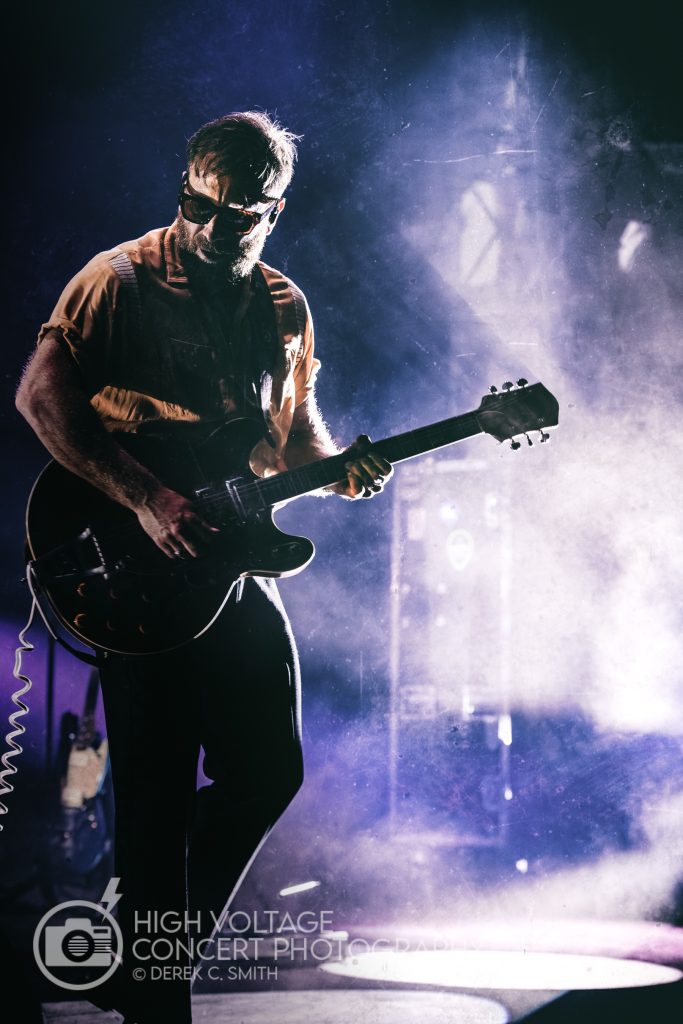
Auerbach described Hill Country blues and Cotton Patch Soul Blues as stripped-down, minimalist music built around hypnotic grooves, dance rhythms and the juke-joint tradition. “In Hill Country Blues you don’t hear a shuffle. Most other blues would be a shuffle; it’s trance music. The songs are kind of long and extended, and it was meant to get you in a trance on the dance floor,” Auerbach explained. “They would keep playing one song for so long that it would eventually put people in a trance and kind of it was a special quality of the music.”
Due to the trance-like quality, Auerbach said the musical style more closely resembles improvised jam music like the Grateful Dead than Chicago blues like Muddy Waters.
In their Hill Country adaptations, The Black Keys adopt a loose and fun-based approach that honors the music, but lets them be themselves while showing their influences on their sleeves, Auerbach said. He added that all music is borrowed from somewhere, and Junior Kimbrough had his own influences. “You either have love for this music or you don’t,” Auerbach said. “And if you love it, then you’re doing right by it. You’re sharing the love of it, and you’re playing the songs, and you’re carrying on the tradition.”
Auerbach is proud to be a connector, helping a wider audience stumble upon and cherish Hill country Blues. Blues remains central to Auerbach’s musical identity, though he follows his instincts wherever they lead, from blues to punk to garage rock.
Looking back, Auerbach said both Delta Kream and Peaches! serve as love letters to North Mississippi. “They’re kind of our love letters to the region. That whole space has been endlessly inspiring for us,” Auerbach said. “We like to show our love for it.”
