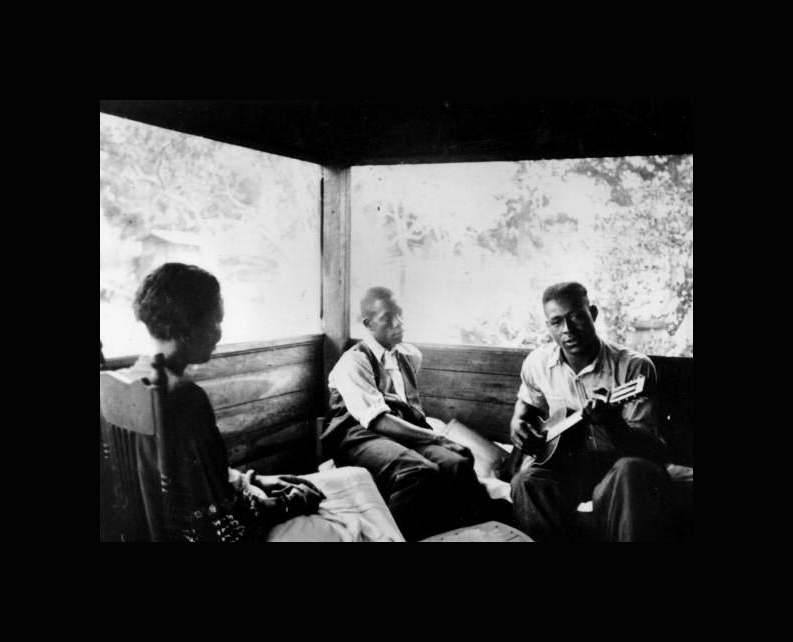
In June 1935, Zora Neale Hurston, Alan Lomax, and Mary Elizabeth Barnicle traveled through Florida and the Bahamas recording songs, stories and performances. One surviving photograph shows Hurston with Rochelle French and guitarist Gabriel Brown in Eatonville. The image is quiet, but the work around it helped preserve a Florida blues voice that might otherwise have remained outside the commercial record industry.
Brown was a singer, guitarist and storyteller whose repertoire crossed blues, folk song and older narrative traditions. The Library of Congress holds recordings from the expedition, including “Careless Love,” associated with the Eatonville sessions. Hearing that material today means encountering more than a song. It documents how music circulated person to person before genre histories were standardized by labels and later critics.
Hurston’s role matters. She was not simply a literary celebrity standing beside a recording machine. As a folklorist and anthropologist with deep knowledge of Black Southern life, she understood language, performance and local trust as essential parts of documentation. Her presence complicates the familiar story of collectors arriving from elsewhere to “discover” musicians.
The Eatonville work also challenges the idea that Florida sits outside the central map of blues history. The state connected Caribbean routes, turpentine camps, farms, rail lines, church traditions and growing towns. Its musicians absorbed and reshaped sounds moving through all of them.
Archives cannot reproduce the full circumstances of a performance, and documentation carries the choices and blind spots of the people who made it. But the photograph and recordings give modern listeners a route back to a specific place, date, and group of people. They remind us that preserving the blues means preserving context—not only famous records.