


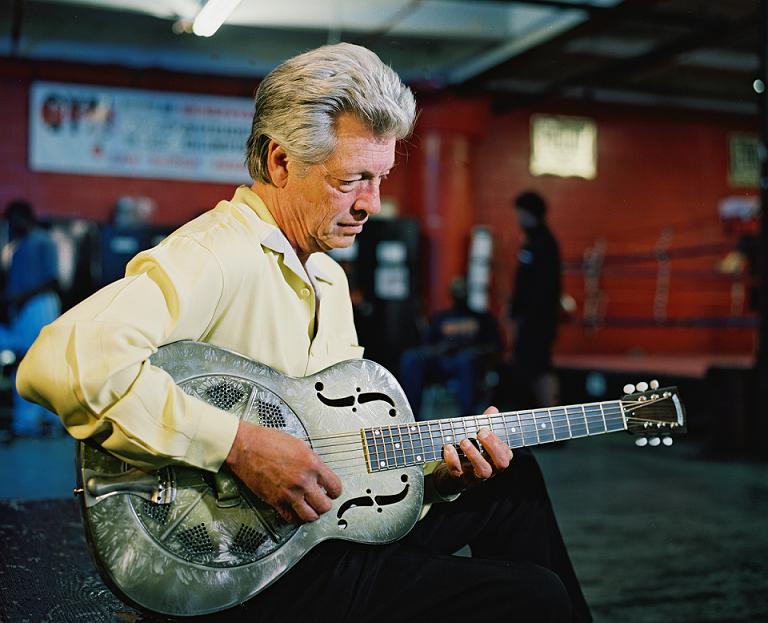
John Hammond was the first American artist to show the British Invasion rockers how to blend blues and rock without an English accent. The Stones may have rocked out, and Tom Rush may have given the folk scare a New England accent, but John was a New Yorker, the son of a Columbia Records executive and producer. From his very first album to his last, John cast his own long shadow with music that moved the needle as he paid homage to southern blues progenitors, amplified what Dave Van Ronk called the folk scare and gave three and four dimensions in his roar, thunder, and swoon. He passed away on Saturday, February 28th.
He consistently was the textbook example of America’s ownership of the pop, rock, blues, and folk charts for more than six decades. He may not have sold as many records as Elvis or The Beatles, but he showed artists from the blues, rock, folk, and pop categories how to take their fans to heaven.
And he did it with a flair that acknowledged his antecedents from all extremes. First recording in 1963, he mixed originals and covers in albums and crisscrossed the rich 20th and 21st century concert stages, mixing and matching acoustic and electric formats in stages around the world.
“I’m not a junior,” Hammond told me in 2019. He shared only his first and last name with his famous father, John Henry Hammond, the man credited with discovering everyone from Billie Holiday and Bessie Smith to Janis Joplin, Bruce Springsteen and Bob Dylan. Young John’s middle name was Paul. That said, he nevertheless felt the weight of the shadow cast by his father.
“There were times when it was just very difficult,” he once told me. “I had my own headstrong ways, and I had to do everything kind of in spite of his warnings of getting into a business he thought was rotten to the core. In the beginning I knew that he would never really approve, but when he saw that I could make a living and be successful to a degree, I think he was very relieved. And after a while I got a feeling from him that he was proud of me.”
John Hammond was there when they booed Stevie Ray Vaughan off stage at the 1984 Montreux Jazz Festival. Blues Explosion, recorded at that festival, went on to earn both Stevie and John Hammond their first Grammys. It was just a wonderful recording in the sense that it really captured the show. Of course, it won the Grammy that year, and it was already deleted from the Warner Brothers catalog – typical of the blues reality.
“I’ve taken flak all my career about being the wrong color, the wrong this or the wrong that,” he told me in 2003. “But listen, I love to do what I do, and if I didn’t feel like it was happening and working, I wouldn’t do it. This is my life.
“I’ve always had a spot in my heart for those early electric blues artists who had just made the transition from country blues — Howlin’ Wolf, Muddy and Little Walter, Robert Lockwood Jr., the guys who made the Chess sound — and for that style of making the guitar sound which is electric. So, even in my early recording days I still played electric guitar as well as acoustic. So, I’ve tried to maintain that over the years although I’d say I’m a much better acoustic guitar player than electric. I still have the capacity.
“I’ve done so many gigs and so many recording dates. I didn’t feel uptight anymore in the studio,” he explained in 2003. “I get that nervous energy, but it isn’t fear anymore, especially to work with guys who we played a lot of gigs with.
Jimi Hendrix was a guitar player in Hammond’s band, not the other way around. “He was a sideman when I met him. When we did our gig at the Café Au Go Go, he was playing the guitar as backup to me at first, but he would always do a song or two in the set. Then, when he left to go to England and record, that’s when he came up with this incredible sound that was unique to his day. I think there will never be another Hendrix, and he formed a school no one will ever graduate from. He was phenomenal, inspirational.”
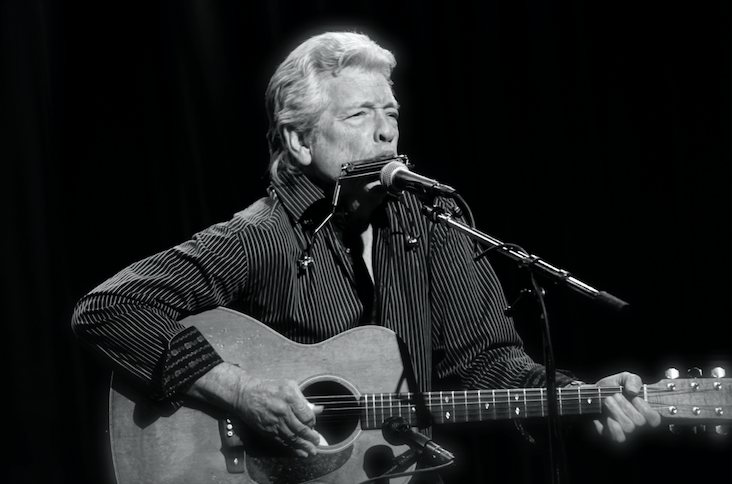
Out of all his starburst connections, it was Hammond’s weeklong stint opening for Howlin’ Wolf at the Ash Grove nightclub on the west coast in 1964 that had the most impact on his career and his view of himself as a blues singer. “I’m walking backstage, and I open the door to the dressing room, and there is Wolf standing there, and he says, ‘How did you learn to play like that?’
“And I couldn’t remember my name.”
