


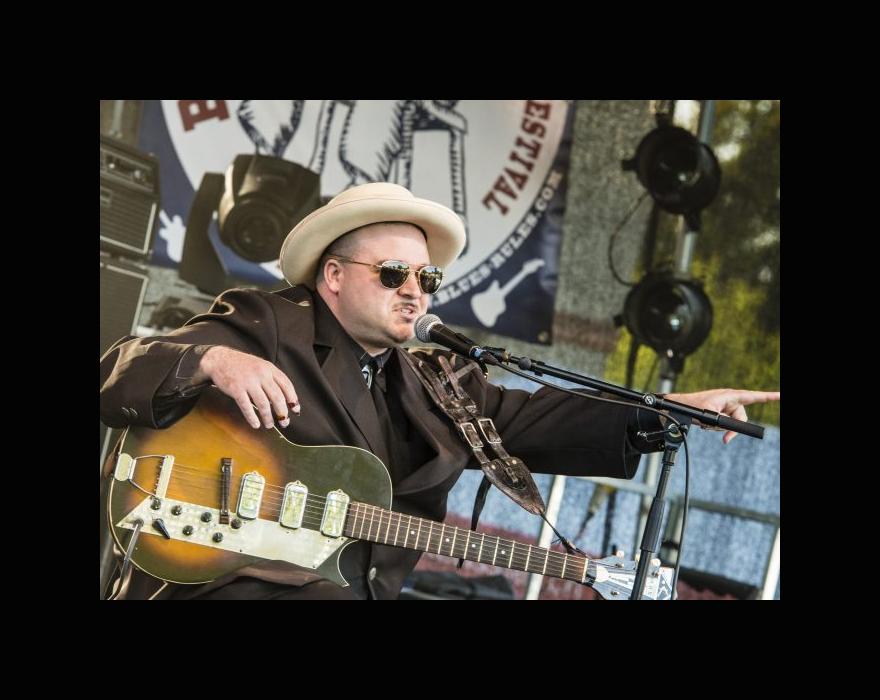
Mississippi Gabe Carter didn’t grow up in the Deep South, but the blues found him early, and never let go.
Born in Indiana near the Michigan border, Carter describes his upbringing simply as “nothing to write home about… Middle America stuff.” But music entered his life almost immediately. By the age of three, he had already learned how to operate his parents’ record player and began spinning albums on his own.
One record stood above the rest.
“My favorite record at that time was Songs in the Key of Life by Stevie Wonder,” Carter recalled.
As he got older, Carter became a crate digger long before he knew the term. He would walk to a thrift store where records sold for just 25 cents, picking albums based solely on the cover art. Soon, blues legends began to fill his collection.
“By the time I was seven or eight, I fell in love with Bessie Smith and B.B. King,” he said. “I would just listen to those nonstop.”
Trips to the local library deepened his education. There he discovered Muddy Waters, another towering influence. “When I was really young, I just loved the blues,” Carter said.
But one moment would define his musical path more than any other.
As a child, Carter rented the documentary The Land Where the Blues Began from the library. Hearing Bentonia blues master Jack Owens was a moment of inspiration.
“When I heard Jack Owens, that was it, man,” Carter said. “That was what I needed. I just wanted to play like him.”
Bentonia Shadows and Hill Country Groove
Carter’s sound today draws from two distinct Mississippi traditions: the eerie minor-key mysticism of Bentonia blues and the hypnotic rhythm of Hill Country blues.
“What I loved about the sound from Bentonia is that it’s so eerie,” Carter explains. “It’s kind of spooky and minor. It’s got a real dark side to it.”
Hill Country blues, by contrast, carries a different feel entirely.
“Hill Country is more sexy,” he said with a laugh. “It’s got a groove — full and smooth.”
Rather than choosing between the two traditions, Carter merges them.
“I just play what comes naturally,” he said. “I definitely have some of that eeriness in there, but at the same time I like that smooth sexiness of the Hill Country sound. I like to combine them.”
Blues, Gospel, and Faith
Carter’s music is also shaped by his Christian faith. A believer in Jesus Christ, he has spent periods of his career focusing heavily on gospel music. “The core of those two musics are so interconnected,” he said of blues and gospel.
But for Carter, the emotional purposes of the two genres differ. “The blues is the truth of life,” he said. “And the gospel is the truth of the afterlife.”
While he continues to love gospel, the realities of performing have nudged him back toward blues in recent years. “At this point I don’t really feel like playing gospel music in clubs,” he said. “But good gospel music is so powerful — sometimes even more so than blues.”
A Hill Country Sound in Chicago
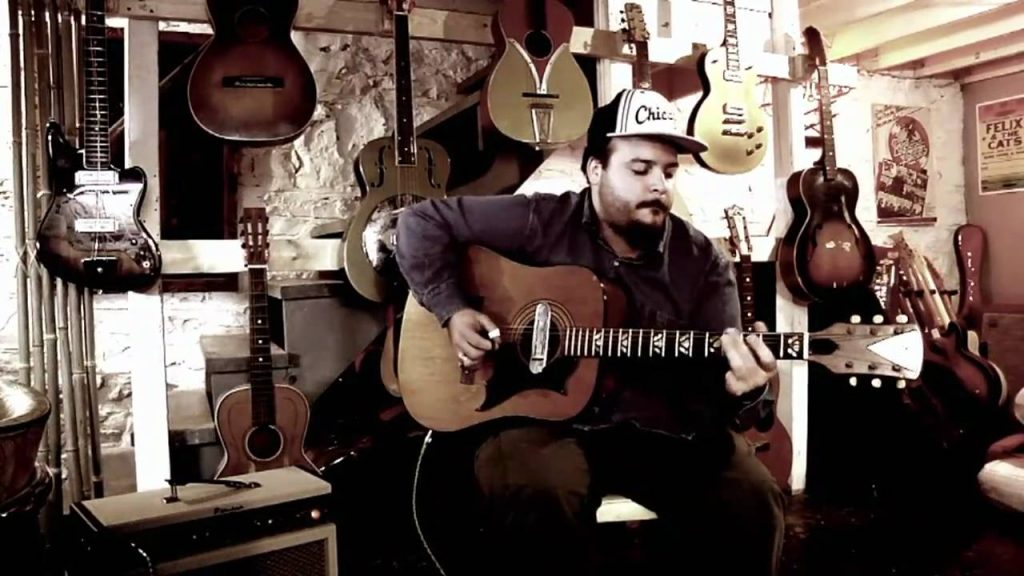
Carter has long been based in Chicago, where he continues to perform and write. But bringing Hill Country blues to the city hasn’t always been easy.
“The blues in Chicago is essentially a tourist industry,” Carter said. Venues often cater to audiences expecting the classic Chicago electric blues style made famous by Muddy Waters and Howlin’ Wolf.
Because of that, Carter said, bookers can be hesitant about music that sounds different. “They’ve got to appeal to a certain crowd that’s used to hearing certain things,” he explains. “They just don’t want something that seems weird.”
Still, Carter continues to carve out space for his sound. Recently he has been playing regularly at Karolinka Club near Midway Airport.
Playing with the Masters
Carter’s connection to Mississippi blues runs deeper than stylistic influence. Over the years he has spent time with several Hill Country legends, including T-Model Ford and Jimmy “Duck” Holmes.
“All those guys were super accessible,” Carter said. “That was the beauty of it — real accessible, full of hospitality. They weren’t the type of guys that tried to gatekeep what they did.”
Those experiences left a lasting impression on Carter as a musician.
Unfortunately, many of the figures who once gathered at Mississippi’s annual Juke Joint Festival have since passed away.
“When it first kicked off, there were a lot of really cool players there,” Carter said. “Most of them are no longer with us.”
The Changing Blues Landscape
Carter also sees shifts happening in the blues world today — particularly among younger musicians. “For a long time there were almost no young Black players,” he said. “Now there’s a lot.”
At the same time, Carter believes the blues has split into two cultural lanes. Traditional blues — the style tied to artists like B.B. King — largely attracts white audiences, while many Black listeners gravitate toward modern Southern soul blues artists like Pokey Bear and Sir Charles Jones.
“Blues branched off in two different directions,” Carter said. “The blues Black folks listen to now has more modern sounds — more R&B. If white people heard it, they might not even think of it as blues.”
New Music on the Horizon
In recent years Carter has collaborated with Dan Auerbach of The Black Keys, who released several Carter recordings on the compilation Tell Everybody. The partnership brought Carter to major stages, including South by Southwest and the Sundance Film Festival.
Now Carter is focused on creating new material. His upcoming album will be his third, following Midnight Dream (2008) and Until They Drag Me Down (2011).
“I’ve been getting real creative,” he said. “I’ve got a lot of ideas, a lot of things I’d like to do.”
For Carter, the motivation is simple.
“When I play music, I feel like a fish in water,” he said. “I can do all kinds of other work, but when I play music, I feel like I’m doing what I’m supposed to be doing.”
Looking ahead, Carter hopes to create a space where the music can evolve more freely. One of his long-term goals is to open his own blues club in Chicago — a venue where different strains of the tradition, including Hill Country blues, can thrive outside the expectations of the city’s tourist circuit.
“Man, I would love that,” Carter said.
Until then, Carter continues blending Bentonia’s haunting shadows with the hypnotic pulse of Hill Country blues — carving out a sound all his own.
