


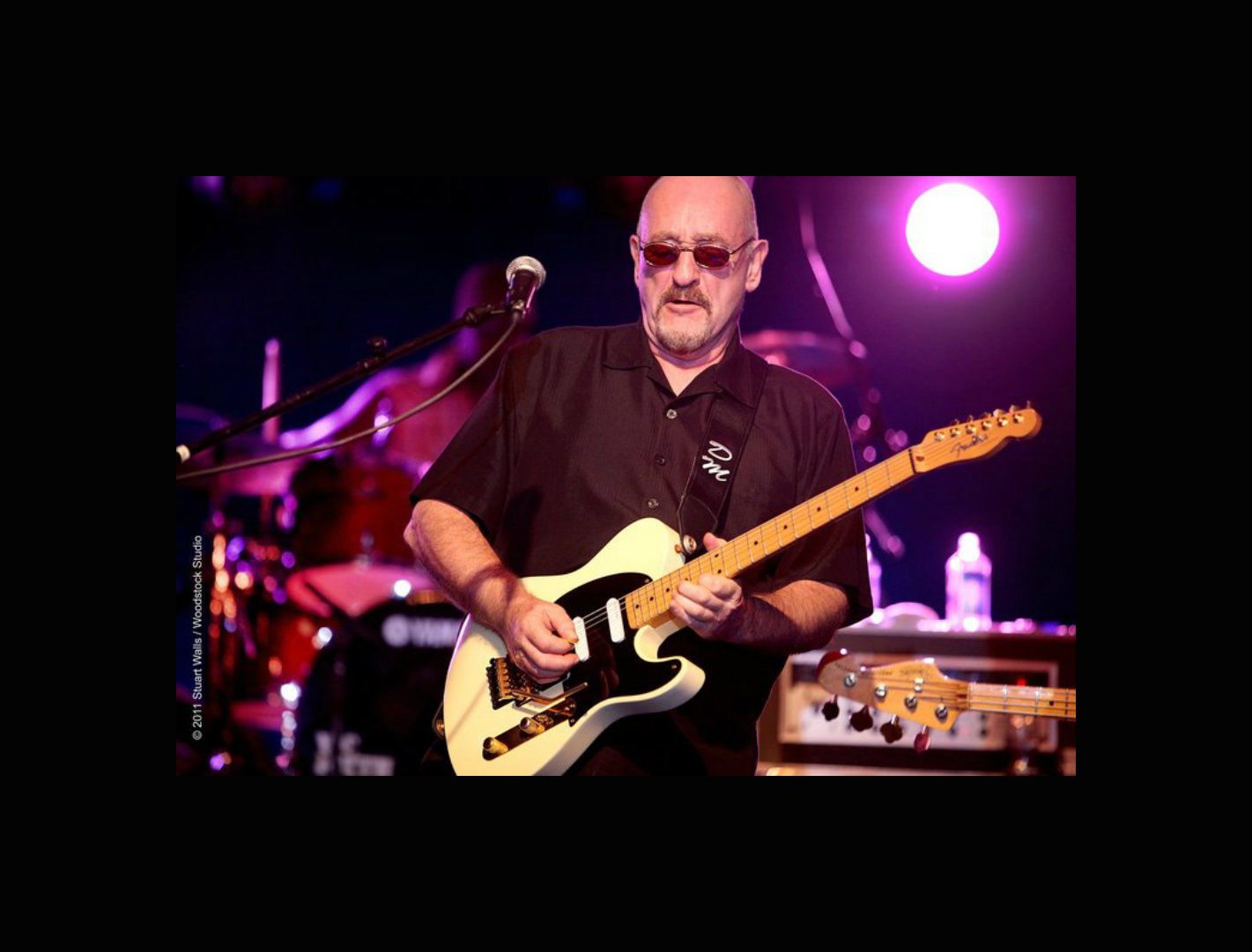
In conversation, Dave Mason spoke like a working musician first, still engaged with the day-to-day of it and more concerned with the next show than revisiting the past. “You better be somewhat flexible,” he once told me. “I’ve played all kinds of places, 300 people to 200,000. Basically, I treat it as another show. And the rest of it, they’re just life lessons.” This mindset took root early on, in his time with Traffic, and carried forward in the way he worked with others.
In late-’60s London, sessions often overlapped—part of what Mason described as a small, interconnected world: “We all used Olympic Studios… it was a very small community there.” A friendship with Brian Jones helped lead him into work with The Rolling Stones, part of a wider Olympic Studios scene where Stones, Hendrix, and Traffic all crossed paths through the same engineer.
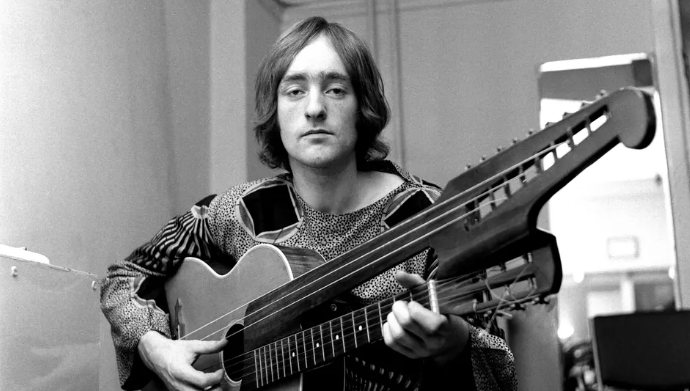
Mason met Gram Parsons during a Stones session around the recording of Beggars Banquet in 1968. The two became fast friends, and he convinced Mason to leave England and head to Los Angeles where he could introduce him to the music scene there.
His stories revealed just how easily history tended to unfold around him. “I met Jimi Hendrix in a club in London, a sort of semi-private club that a lot of us went to. He was sitting there, so I sat down and started talking to him. We were mutual fans; he was a fan of Traffic. Out of that, we stayed in touch and would meet occasionally. We went to his friend’s house, because they had an advance copy of John Wesley Harding. We went over there and listened to that, and I guess something piqued his interest on Dylan’s ‘All Along the Watchtower.’ And a few days later, we were in Olympic Studio — myself, he, and Mitch Mitchell laid down the track for his version.”
During his early years in America with Delaney & Bonnie, a live show brought George Harrison into the picture: “At one point, George Harrison came to a show, and we all ended up playing together. I showed him the little slide part… And then I read an article years later and Harrison had credited me with taking up the slide guitar. That led him into developing that signature slide that he was doing.” He also contributed to Harrison’s All Things Must Pass sessions.
Following Mason’s death on April 19 at the age of 79, a family post on his official Facebook page read, “After cooking an amazing dinner with his beloved wife Winifred, [Mason] sat down to take a nap with sweet Star (the maltese) at his feet…” “He passed away peacefully, in his favorite chair, surrounded by the beautiful Carson Valley that he loved so much. A storybook ending. On his own terms. Which is how he lived his life right up until the end.”
Steve Winwood paid tribute to his former bandmate. “We were deeply saddened to hear of Dave Mason’s passing,” Winwood writes on Instagram. “Dave was part of Traffic during its earliest chapter, and played an important role in shaping the band’s sound and identity during that time. His songwriting, musicianship and distinctive spirit helped create music that has lasted far beyond its era, and continues to mean so much to listeners around the world. Those years remain a special part of the band’s story, and Dave’s contribution to them is not forgotten. His place in that history will always be remembered, and through the music, his presence endures.”
Traffic was formed in 1967 by Mason, Winwood, Jim Capaldi, and Chris Wood. The group was inducted into the Rock & Roll Hall of Fame in 2004. With Mason’s passing, Winwood is now the only surviving member of the band; Capaldi died in 2005 and Wood in 1983.
For all the names orbiting his career, Mason’s songwriting came from a more personal place. “I try to mostly deal with timeless themes,” he shared. “They’re personal to me… and in some way, they’re going to be personal to other people.”
“We Just Disagree” remains a strong example of Mason’s delivery, even on material he didn’t write, its staying power grounded in emotional directness.
Even as the industry around him shifted, Mason remained clear-eyed about the changes. “There is no radio… It’s a disaster,” he said. “We’ve just become backdrop for selling products. There’s nobody home.” The idea of a radio song, a little world you could all join in with, belonged to another time.
“I have my own little studio at home I fool around in,” he said. “But as far as making albums and producing stuff, it’s just a waste of time.” And so he returned, again and again, to the stage, back to where it all started: making a connection with the audience. “As long as I can still stand in an upright position and sing and play, I’ll still be touring.”
Offstage, the same sense of purpose extended into his philanthropic work, including his involvement with Rock Our Vets, a small, volunteer-run organization supporting veterans. “Everything we get goes to where it’s supposed to go,” he said. “I’m very proud of what we do in our own little way.”
