


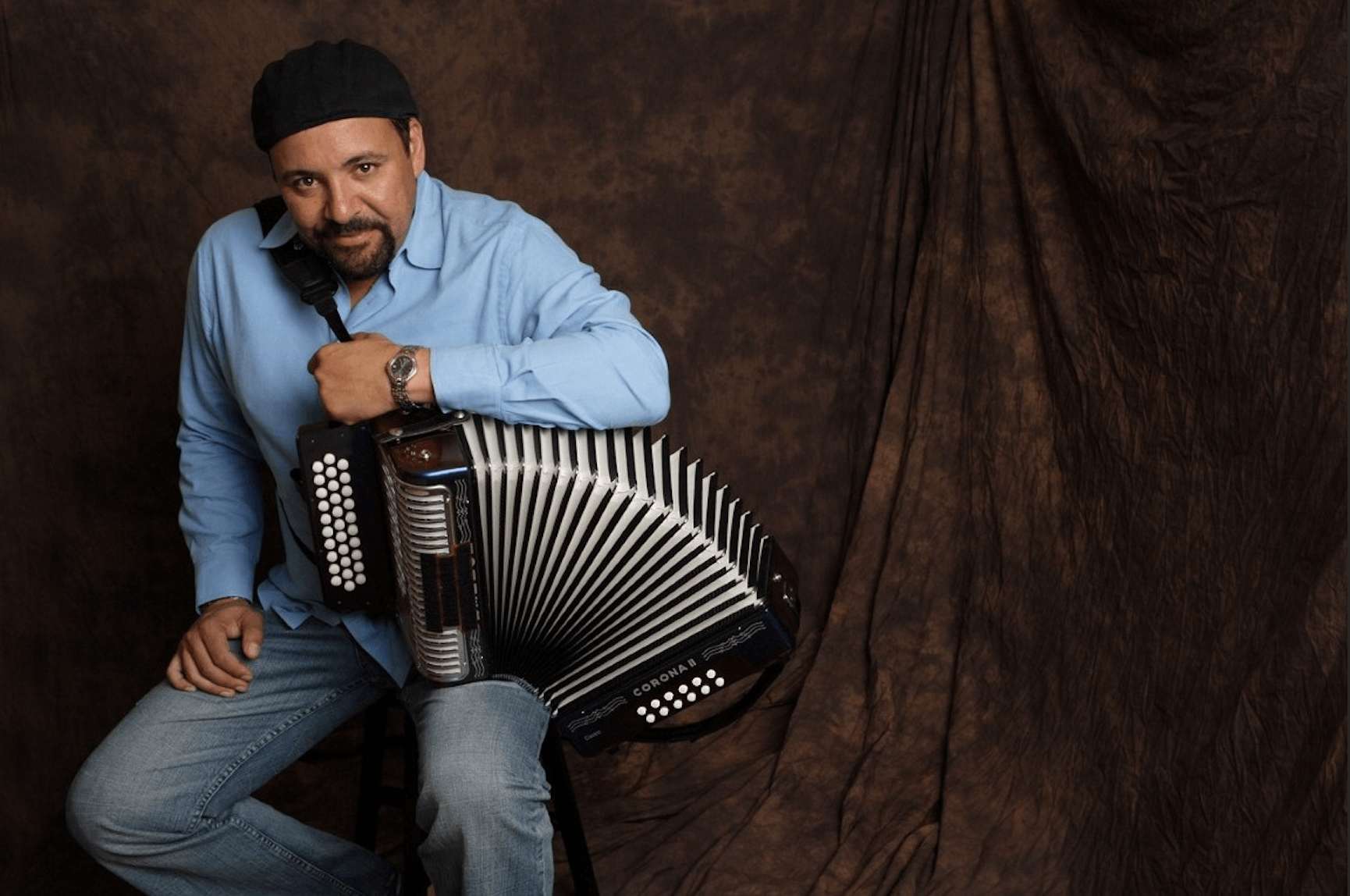
In a world where some still raise eyebrows at the idea that people of different racial backgrounds can come together to play, Terrance Simien and the Zydeco Experience emerged from Louisiana’s musical community, rich in diverse heritages.
“The origin of Creole music is the music of black and multicultural French speaking people known as the Creole,” says Terrance. “Some of my ancestors go back to the beginning of time because I have native American blood as well. I’m French, African, Spanish, native American, German, and Norwegian. That’s my DNA.”
Terrance writes original music that blends influences that dating back eight generations, and his band covers material written by artists as varied as Dylan and Paul Simon. “The tradition we have in our Creole Zydeco music has been going on since the beginning, Don, because if you research the music enough, you’ll see the most traditional thing about the music is that it evolved from the beginning from the songs – a style called the juré, clapping your hands, stomping your feet.
“It’s French, and then it evolved from the juré to styles of the accordion.” The accordion is the lead instrument he plays in the band. “The violins came in, then other instruments. Clifton Chenier (known as the King of Zydeco) in the late 1940s started using early rock and roll and blues using electric instruments. It wasn’t acoustical. So, that changed the sound, and the purpose of that was keeping relevant, keeping it real and alive.”
Terrance’s artistic palette is colorful, to say the least. “I try to just be honest to myself in what I write, and I don’t hold back. As long as I’m creating, and I’m Creole, and the music the way my ancestors did it, I’m staying true to it — as true to the roots as Clifton Chenier was whenever he was free to choose. So as long as you get the accordion and rubboard, you are part of the Creole legacy, and you have it right. There are five different kinds of accordion. You’ve got the single hole, the double hole, the triple hole, and the five hole.
“I play just two. I play the triple hole, and I play the single hole. But the bottom line is that whatever accordion you could get your hands on, you played it, and you played Zydeco music with it. That was pretty much the case. The older people in the music, they usually played whatever accordion was accessible to them and their music.”
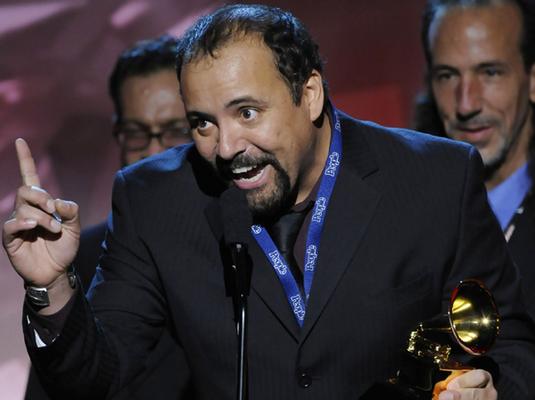
Zydeco is indigenous to Louisiana, but by the year 2008 it had become international. That was the year Terrance convinced the movers and shakers at the Grammys to make Zydeco one of the categories. “It took a long time. It was seven years of effort, but the process was that we had to show that between Zydeco and Cajun music our music was different, and that we were producing over 25 CDs a year. That was the requirement, and it took us seven years where we had to show them that it was happening and it goes to a vote. After we made our presentation, it went to a board of trustees, and a board of trustees voted it in unanimously. But it wasn’t easy.
“The best way to preserve it is to create something the people like. And by using the modern elements of the day, you’re not only preserving it for the people that like it, but the people that don’t know it. The younger people that are hearing it for the first time. It’s something they can connect with. I’m just following in that tradition, taking ownership of the music, and having free range because I am a Creole from the source. My family has been playing the music from eight generations back.”
Terrance has been touring the world for four decades and is currently on tour in the United States. The band plays my area on August 21st when they perform at Music Haven in Schenectady. New York’s Central Park. The sound is listener-friendly for blues and rock fans.
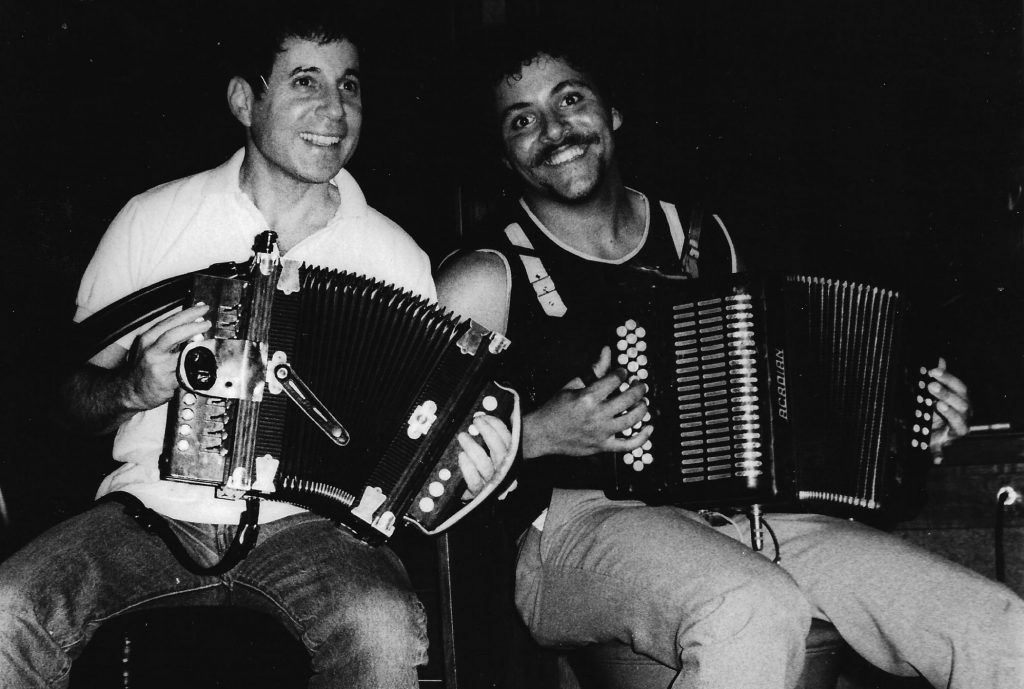
“I met Bob Dylan. I recorded with Paul Simon. And Bob Dylan and Paul Simon are two of my favorite artists. Also, John Delafose, who was Gino Delafose’s dad. John passed away a few years ago, and he was one of my influences. I got a chance to record with Rick Danko and Garth Hudson. Yeah, man, whatever felt good, that’s what inspired me.”
Upcoming Performances:
August 15, 2025
Levitt AMP Music Series
Woonsocket, RI
August 16, 2025
The Colonial Theatre
Bethlehem, NH
August 17, 2025
Music Haven | Central Park
Schenectady, NY
August 18, 2025
Stephen Talkhouse
Amagansett, NY
September 25, 2025
Lotus Music & Arts Festival
Bloomington, IN
September 26, 2025
Robert’s Westside
Forest Park, IL
September 27, 2025
OAKtoberfest
Oak Park
