


Finding the Hill Country Sound
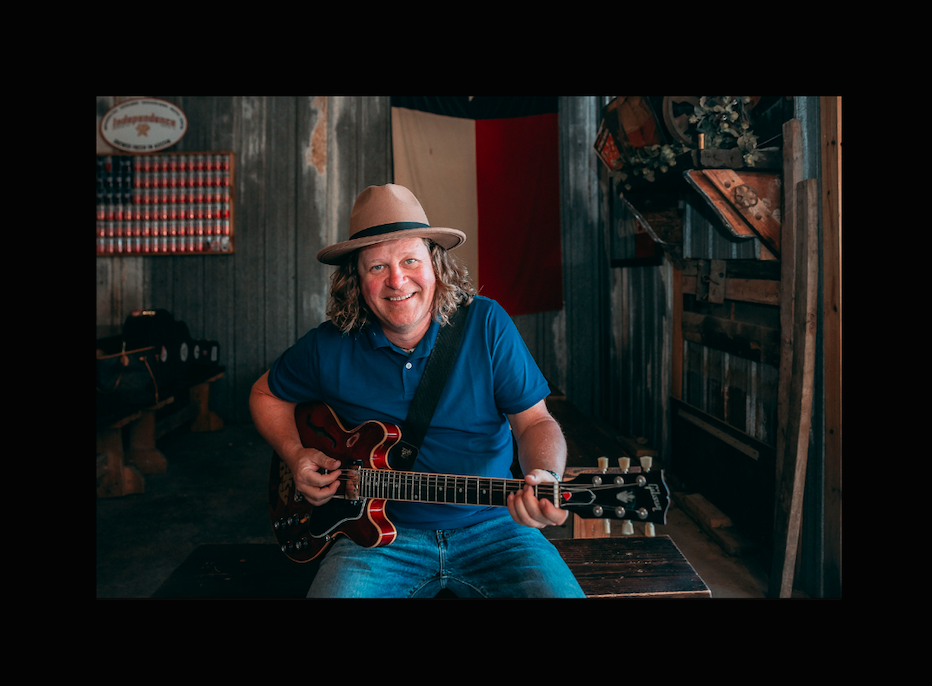
Janky, the veteran Hill Country blues guitarist and producer, grew up in Shreveport, Louisiana a few doors down from James Burton, the guitar player for Elvis. His older brother introduced him to rock bands like KISS, which at 15, blew his mind; “I had to play guitar. I just kind of go crazy with it. I was playing in bands within a couple of months.”
It was at 14 when Janky asked his father for a guitar. For Christmas, his father gave him the cheapest guitar he could find, likely from a J.C. Penney or Sears catalog. Lindsey was disappointed, but his father offered a deal: If he was still playing a year later, he could have any guitar he wanted. A year later, they went to Max’s Pawn Shop in Shreveport, where Lindsey chose a Laser, an inexpensive Stratocaster copy.
Finding RL Burnside’s music, and particularly his open tunings, opened a plethora of musical opportunities for an adolescent Janky, exploring several music styles. With a punk blues band, The 1969s, Janky brandished an amped up, punk version of Hill Country Blues. At a large event, Reverend K.M. Williams, a Dallas blues musician who specialized in Hill Country, requested the 1969s to open for his band.
Janky said he immediately latched on to Williams, a cigar box guitar player, and played bass for him for six years, producing six albums and travelling across the country. Williams became a mentor and taught Janky to play simply. His key advice was – “it’s all in your feet.”
“He said ‘Whatever your feet are going to do, they’re going to talk to you, and they’re going to keep you simple. Go listen to Hooker in Heat,’ He said, “Go listen to Side 4,” and that is just John Lee Hooker. And you can hear his feet in, in, in the room, because it’s just John Lee Hooker playing by himself.”
As part of his learning process and being able to play simply, Janky played bass for Williams for years, before eventually returning to the guitar.
RL Burnside remained one of Janky’s chief inspirations, even as he became ingrained as a key player in the North Mississippi Hill Country music community. Janky once told Duwayne Burnside that his father, RL, changed his life, and that when he heard “Po Black Mattie” in open G.
“It literally sent me like a rocket into a whole new world that was right in my wheelhouse as far as the way that I write music and the way that I feel. Because I believe that a lot of R.L.’s stuff is riff-based,” Janky said. “I’m a riff guy. When I write a riff, I ask myself, ‘If, if R.L. Burnside wrote this riff, would I like this riff? Is this something that gives the essence of, say, R.L. Burnside?’”
According to Janky, his unique style is even closer to that of Jessie Mae Hemphill, because they both often play in Open D.
Rhythm is essential in Hill Country, Janky said. Jessie Mae and RL employ a percussive style, with the right hand essentially playing drums on the guitar, he added. The beat follows whats called a gospel 1-2, a rhythm directly from the church, according to Janky. From top to bottom, he said it is a complex style, with many moving parts.
What Makes Hill Country Blues Different
Over the years, Hill Country has preserved its sound, Janky said.
“All the guys in Clarksdale, they moved to Chicago. And then all these hill country guys stayed in a vacuum over there in Holly Springs and Como and Clearwater,” Janky said. “They just stayed there, they just kept their music the same.”
For Janky, Hill Country blues lyrics and vibes center on good times. Cotton Patch Soul Blues, by contrast, are either harder times, or “making babies”.
“Lord, have mercy on me” is just brutal, you know? But it has more soul in it. Musically it’s extremely dark. A lot of stuff going on for Junior there, and it’s, it’s a really, really, really sad song,” Janky said. “Cotton patch soul blues is you’re in a dark, smoky juke joint, and you’re just kind of in a trance. You’re dancing, Junior’s got that trance on you. It’s pulled you in and you just sway to it. You feel it right down to your bone.”
Terry “Harmonica” Bean told Janky that when he grew up in Clarksdale Hill Country and Delta musicians would battle to see who could get the most musicians on the dance floor. Hands down, Hill Country won out every time, due to the gospel beat that makes you want to stand up in church and shout.
“There’s no better drug for that than that drum beat that drives hill country blues,” Janky said.
Junior Kimbrough’s brand of trance and shuffle-inducing soul blues goes best with lots of moonshine, Janky said. He added that Junior was likely loaded on a lot of his performances, impacting the changes in the music.
“On ‘Lord, Have Mercy on Me’, there’s a lot of crazy late changes going on in that song. And I think that Junior was probably lit on some moonshine,” Janky said. “But Kinney Kimbrough was an amazing enough drummer that he knew what his dad was going to do. And so that’s why all the changes are late.”
Janky said that dancing is a reflection of the music and a sign that the crowd is having fun. In Austin, Texas, as one of a few Hill Country Blues players, people respond to the music and dance, even though it is often their first exposure to Hill Country music.
While Janky may play occasional Chicago or Texas blues, “it doesn’t come alive” until he pulls out an open G guitar, and goes for a Hill Country gospel beat.
“Chicago blues is really, I don’t want to say watered down blues in our society and culture, but it it’s very formulaic. I mean, I-IV-V 12-bar blues. And you can’t count the millions of songs that are that formula,” Janky said. “Texas is still heavily rooted in Stevie Ray Vaughan. There are people that just try to be Stevie Ray Vaughan. It’s just 12-bar blues, man. It doesn’t get me excited at all.”
Janky said that it’s a misconception that Hill Country never leaves the one chord. In one RL Burnside song, he goes through a I-V-I progression, never hitting the four. If a bass player goes to the four, they’ve “wrecked the complete song,” Janky said. Another common practice is extending the one – deliberately prolonging the I chord beyond where you might normally expect it to change. Together with rhythm, Janky said these elements add subtle complexity to the genre.
Keeping the Blues Real
On top of four solo albums, most recently C.B.G. Throwdown (2022) with Cigar Box Guitars, Janky works as a producer, and has lent his services free of charge to record Reverend K Williams, E.J. Matthews, Robert Kimbrough, Peggie “Lady Trucker” Hemphill, and Little Joe Ayers, through his nonprofit, The Blues Fund. As a producer, Janky dives deep into the quality of recording, and described himself as a highly technical producer.
As a producer and engineer, Janky said he tries to steer musicians toward recording choices he knows will work, while ultimately leaving the decisions to them. He said his approach is “to cater to you as a musician” rather than assume he knows more than the artist.
As a musician, Janky said he pushes himself, but his goal is definitively not perfection. In fact, imperfection is the source of his nickname, “janky”.
“I’m pushing my ability, or lack of ability in one thing, to accomplish something that, that sounds janky. Nothing is perfect,” Janky said. “I don’t want music to be perfect. I want it to kind of feel the grittiness of it.”
Janky added the imperfections are part of what gives Hill Country blues its character. After a bass player criticized one recording as sounding “sloppy and drunk,” Janky defended the roughness, explaining that it was recorded live in a juke joint. The mistakes and imperfections, he said, give the music authenticity and feeling.
The Blues Fund financially and logistically helps blues artists. Recently, the fund put a Little Joe Ayers album out on streaming that was previously only available as a CD.
Janky said his work with Blues Fund grew out of his frustration with the financial barriers facing independent blues musicians. After years of doing the work for free, he began considering how to expand Blues Fund beyond Mississippi, potentially creating a network of people who could record musicians in other states. The organization also helps festivals with marketing, including posters, tickets and websites.
He said Blues Fund is increasingly focused on helping musicians and their families navigate royalties and music rights. Janky is seeking a lawyer to join the organization’s board, particularly because, he said, many musicians whose parents or other relatives were prominent performers receive no income from music that continues to be played.
The organization also provides more immediate assistance. When blues musicians die, Janky said, Blues Fund has helped their families with funeral expenses because many cannot afford to bury their loved ones. “We’ve lost some blues guys,” he said. “We help with funeral donations and stuff, because, to be honest, a lot of them can’t even — the family can’t afford to bury them.”
Janky said his broader goal is to preserve what he sees as authentic blues rather than simply support any musician working in the genre. He said he has little interest in promoting bands whose music sounds indistinguishable from thousands of others. “I just want to keep blues real, man,” he said.
He recalled helping Queen Ireta reclaim music she had recorded with her former husband. After their divorce, her ex-husband retained the music, leaving Ireta without recordings to sell. Janky helped her regain access to her music and produce CDs she could sell herself. For Janky, he said, it was a straightforward matter of making sure an artist could control and benefit from her own work.
“Somebody’s getting profit from something they did not create, and they’re not even part of the family. It’s a travesty,” Janky said.
Blues Fund helps facilitate sales of CDs. Robert Kimbrough still routinely sells out of CDs at juke joints. Janky said it is possible that money could be made in the future with vinyl, because it is selling, but the downside is that the upfront costs are expensive, and a musician like Kimbrough can’t afford them.
The State of the Juke Joint Today
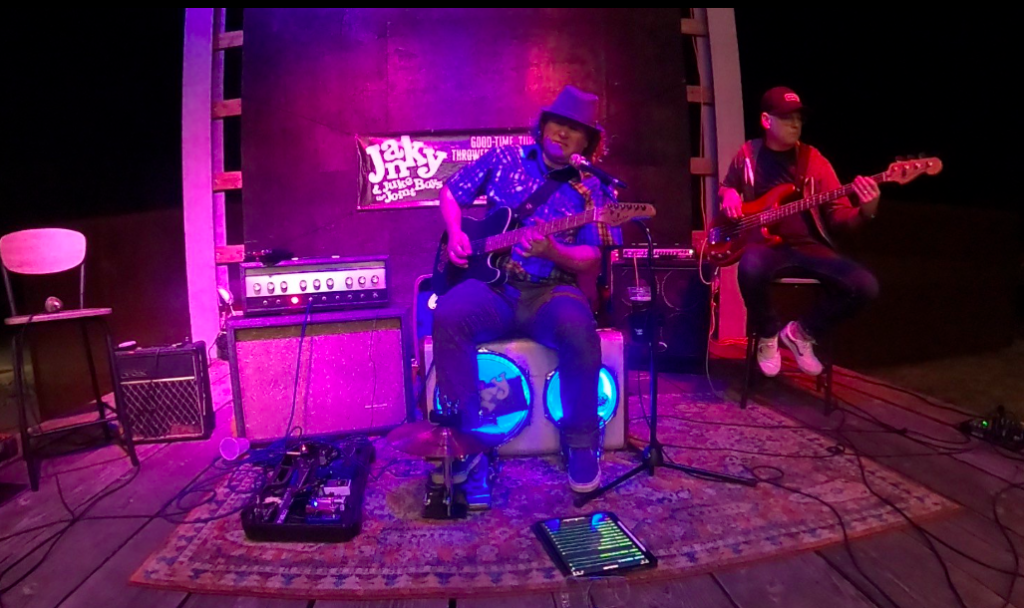
While the “true juke joint” has largely faded away, Janky said that Red’s in Clarksdale represents the most authentic modern juke joint. The club has no stage, dirty furniture, and serves beer out of a refrigerator. It’s a no frills joint focused on the music and the people.
One packed night at Red’s, Janky handed his guitar to Christone “Kingfish” Ingram as Terry Harmonica Bean played harp. In true juke joint fashion, multiple musicians came up and performed, including Duwayne Burnside, Robert Kimbrough, and Kinney Kimbrough.
“You can’t beat Red’s, man. It’s a big musician party, is all it is,” Janky said. “We’re juking. That means, that means we’re drinking moonshine and we’re playing songs. Anybody that can play is going to play on it. Like, “All Night Long” by Junior Kimbrough, one night we probably played that for 20 minutes.”
Among other young players Janky said he is impressed with and that he thinks will carry Hill Country Blues forward are Todd Roth, Cash’s Juke Joint, and Young Rell.
After recording Spit Cup’s Juke Joint, the debut album from Spit Cup and the Jukes released earlier this year, Janky said he is confident that lead guitarist Ryan Washington can carry the Cotton Patch Soul Blues tradition forward. Originally Washington simply covered Junior Kimbrough songs. Janky pushed him to start writing original material in the soul blues tradition, and that material formed the new LP.
“He’s literally just…Junior’s coming through his body,” Janky said. He’s continued that flame, man. He has continued it, without a doubt.”
Learning From the Old Masters
Janky said he learned much from his time with Reverend Williams playing a cigar box guitar playing RL Burnside and Robert Belfour tunes.
“You can’t really get away with much because you got 2 strings, you know? You got 2 strings and 2 notes on a Lobo [cigar box]. So you don’t even have frets,” Janky said. “I started really sponging off the way he played that, and then just how to work a room as a blues guy, that was a huge benefit, because he was so good at reading the crowd.”
Playing with the Rev. revolved around spontaneous improvisation. Harmonica player Jeff Stone relied on a system of hand symbols with Janky to figure out what key they were playing in.
“We never practiced once. We neve said, ‘We’re going to do this song.’ The harmonica player would look at me, and he’s like— ‘What key is he in?’ So I I had the task of figuring out what key he was in.”
There are some Junior Kimbrough songs that Janky will never perform.
“Some songs I won’t ever play live and sing. Either one, because I can’t sing as good as Junior Kimbrough does, or two, it’s just a spiritual thing that I don’t want to learn what he does. Because I just, I want to listen to it forever more and just listen to it.”
Janky played extensively with the late David Kimbrough, who he described as Junior Kimbrough meets Prince. What he remembered was a natural talent.
“Recording him and watching him play – the music, it just oozed out of him, and you felt that way. Nothing was pre-planned,” Janky said. “It was like, he didn’t even control it. It just happened out of him. And, and that’s next-level stuff there. You can’t replicate that.”
In playing Hill Country Blues, as the genre evolves, Janky said its critical that you can’t imitate the greats. Reverend Williams made songs so completely his own, tweaking lyrics, melody, and rhythm, that Janky often didn’t know that they were performing Junior Kimbrough or RL Burnside covers.
On his YouTube channel, Janky shows how to play the riffs in songs like “Po Black Mattie” and “Skinny Woman”, but he puts disclaimers that he is showing how he plays the songs, not how the original cats like RL played them. RL in himself was versatile, playing the same song in a multitude of ways across his career. “There’s no telling how many different ways he played a song.”
In readapting Hill Country songs, Janky goes through a reverse engineering process, to find the most dynamic, interesting parts of a song, and reconstructing around those elements. In one example, his “Mississippi Lady” is a straight pull from “Po Black Mattie,” using the same tuning and notes, but scrambled, with a different feel.
Becoming Part of the Family
Reverend Williams gave Janky his introduction to the Hill Country scene and he met Rosalind Wilcox early on, but he became fully immersed through collaborations with Robert Kimbrough. Janky produced several Robert Kimbrough LPs including I Been Fixed (2018), Pain Won’t Stop (2020) and Memories (2023). Together, Kimbrough and Janky have toured around the world, including Switzerland, and Janky considers Robert a great friend.
Janky said he is proud to have become like family to many musicians in the Hill Country scene. As a white musician, he said he has seen firsthand how music can bring people together across racial lines. While acknowledging the region’s history of segregation — including separate cemeteries they encountered while searching for R.L. Burnside’s grave — Janky said music remains a powerful force connecting people in the community.
“Racism and all that stuff, I don’t, I don’t understand it. Because we’ll go to Mississippi, and we’re family,” Janky said. “The Cotton Patch Soul Fest feels like a family reunion.”
After meeting Peggy Sue “Lady Trucker” Hemphill, Jessie Mae Hemphill’s cousin, at the Juke Joint Fest in Clarksdale, Janky now speaks with her two or three times a week over the phone.
Some of Janky’s best friends live in Mississippi. He said they are “family members based on the music that we love. I love these people genuinely, from the heart.”
With strong relationships sometimes comes tough love. One night when Janky was “pretty lit,” playing “Po Black Mattie” with Duwayne Burnside, he played in the wrong key. Duwayne walked over, moved his hand to the right key, and got on the mic, saying “I can fucking do that because he’s my brother.”
On other occasions, Janky lent Duwayne his guitar and amplifier. Once, Janky had a custom T-shirt made featuring R.L. Burnside and one of his favorite lines: “Love got the devil, but it won’t get me.” When Duwayne asked for the shirt, Janky gave it to him without hesitation. To this day, Duwayne says Janky “took the shirt off his back” for him.
Music as Something Bigger
Reverend KM Williams was not just a musical mentor; he was a spiritual mentor for Janky. At a time when Janky struggled with the idea that blues could be the Devil’s music, Williams assured him – “Being a, being a Christian, being a man of God and playing in a dark, in a bad seedy blues place… the light shines the brightest in the darkest places.”
Janky added that God created music, and that there will be no music in hell. He added that music is something that you can’t see, you can’t touch, but is part of the human body.
In a dystopian novel that he is in the process of writing, Janky describes music as a virus based on Tesla’s theory of resonance. In the book, music becomes a drug.
While he has not received a grammy nomination yet, Janky’s past two CDs were Grammy contenders. He said he hopes that such a nomination could shed light on Hill Country Blues.
Several blues festivals highlight Hill Country artists, with varying degrees of authenticity, Janky said. Among the purest, he listed the GOAT Picnic and the Hill Country Picnic. Janky played guitar with Robert Kimbrough at the Hill Country picnic, but has yet to play as a solo act.
After all the years, Janky stays inspired by the “rawness of RL Burnside,” and is proud to be a part of the musical community.
“I just love playing the scene. It’s an honor for me to play with a Kimbrough, a Hemphill, a Burnside,” Janky said. “There’s not a second that goes by where I am not consciously thinking, “This is off the chain. My mind is blown. I can’t believe it.”
