


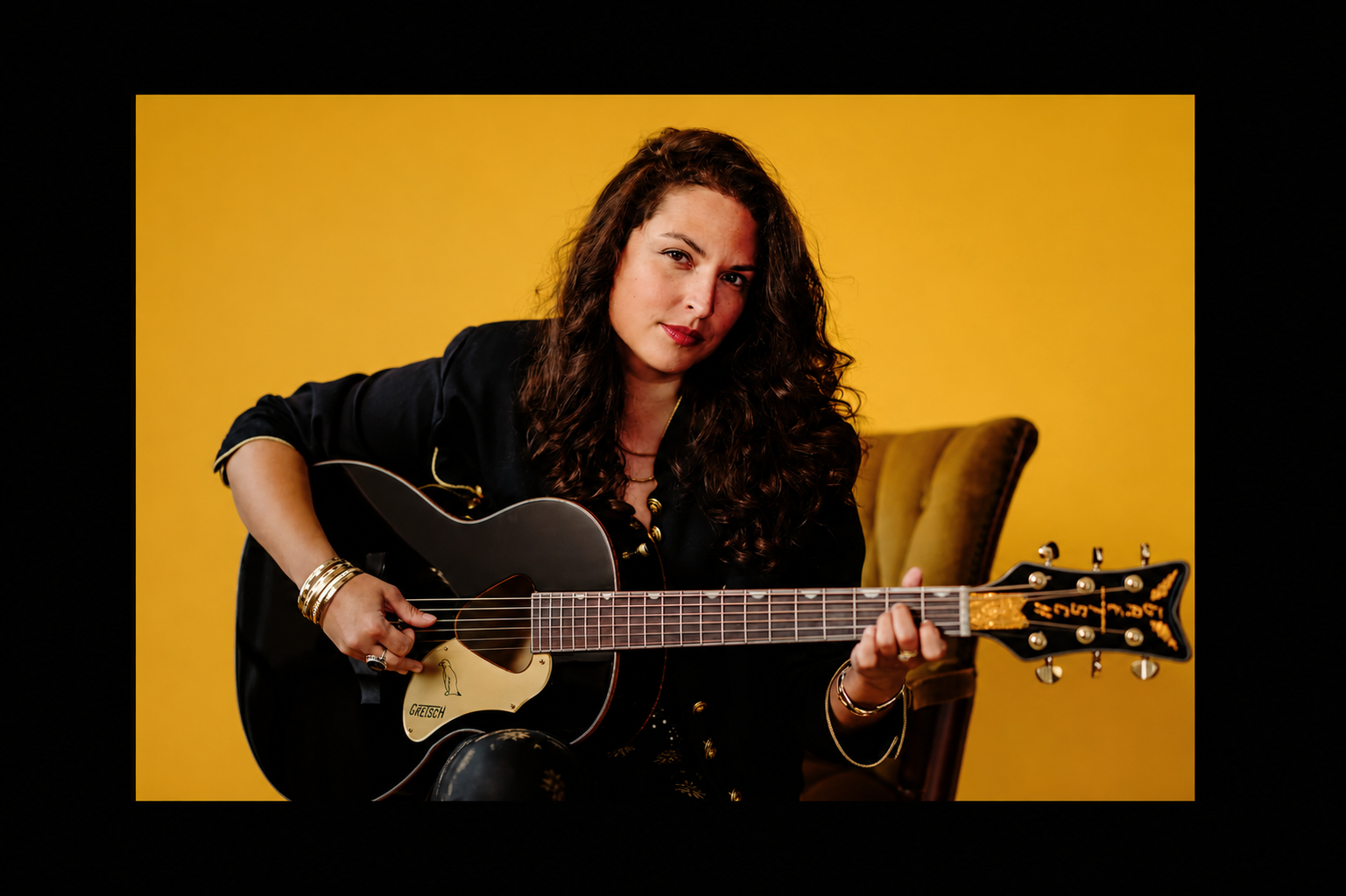
Danni Nicholls found herself doubting everything.
The British-born Americana singer-songwriter wondered whether she still had what it took. Has she already done her best work? Were the songs good enough? Was she brave enough to push herself creatively?
“[I worried] that I wasn’t good enough, that the songs weren’t good enough, that I couldn’t make a better album than I’d made before,” Nicholls said. “If you step away from something for a while and you’ve had some knocks along the way, you can forget how strong and resilient you are.”
Making Moves – A Cathartic Album
Those questions followed Nicholls as she began work on Making Moves, her fifth studio album, due June 26. Instead of confirming her fears, however, the record became something else entirely: a reminder of her resilience.
“It healed my relationship with myself,” Nicholls said.
The album arrives after a turbulent period in her life. In 2022, Nicholls left Bedford, England, for Nashville, Tennessee, fulfilling a long-held dream of immersing herself in the community that had shaped so much of the music she loved. The move inspired songs throughout the record, including “The Wreckage,” a meditation on uncertainty, intuition, and self-trust written while she was navigating the upheaval of relocating across the Atlantic.
“A lot of self-doubt was creeping in,” Nicholls said. “I started to second-guess my life choices.”
“The Wreckage” captures what she describes as a crossroads moment — “that in-between space” after a major life change when the future feels both full of possibility and terrifyingly uncertain. It’s a space full of potential, but it’s a really scary place,” she said. “You have to make a decision. Do I choose to lose myself, or do I choose to come back to what I know is true and right?”
While “The Wreckage” captures the uncertainty of starting over, other songs on the album explore different responses to upheaval. The single “Free Wheel” emerged from a fantasy Nicholls had long carried with her: abandoning possessions, responsibilities, and heartbreak in favor of absolute freedom.
“I’d always had this fantasy that I would love to just free myself of the shackles of stuff and consumerism and hit the road,” Nicholls said. “When you have a breakup and every single thing reminds you of it, you just want to get rid of it all.”
The song imagines what that liberation might look like. Though Nicholls jokes that she never actually sold everything she owned, moving to the United States forced her to come close. “I put it all in my mum’s garage,” she said. “That’s close enough.”
Themes of perseverance and renewal run throughout Making Moves; the songs were shaped not only by relocation, but also by heartbreak, grief, and a health scare that led to major surgery in 2025. Looking back, Nicholls is struck by how songs written years earlier unexpectedly became sources of comfort during difficult moments.
“I found myself in a romantic entanglement that was very revealing,” Nicholls said. “There was a lot of growth and hard lessons learned.Some of these songs that I’d written way before that really helped me through that. Songs of resilience and keeping on and coming back to yourself.”
The song “I’ll Carry On” originated during the uncertainty of the COVID-19 pandemic. Written over Zoom with a friend, the song became both a creative exercise and an emotional lifeline. Nicholls said the song was born from a difficult day during an uncertain period, but its message has continued to resonate long after lockdowns ended.
“We just used that song to get through what was a really hard time,” she said. “It’s a bottle of comfort and hope.” The album’s title ultimately became a reflection of the previous five years of her life, a period marked by major transitions, personal loss, and growth. Among those losses was the death of her grandmother, whose influence can still be heard throughout Nicholls’ music.
Raised on Country Records
Some of Nicholls’ earliest memories involve family gatherings soundtracked by classic country records from her Anglo-Indian grandmother’s collection. Patsy Cline, Connie Francis, Elvis Presley, and Merle Haggard spun in the background while relatives sang together from a family lyric book that has since been passed down to her.
“I still have that lyric book,” Nicholls said.
Her family’s connection to American music stretches back generations. Nicholls’ grandparents grew up in what is now Chennai, India, as part of the Anglo-Indian community. Through radio broadcasts that reached India, American country and popular music found its way into the family long before Nicholls was born.
That family history became the centerpiece of one of Nicholls’ most personal projects. In 2024, she released Under the Neem Plum Tree, an eight-song collection inspired by her Anglo-Indian heritage and the country songs that had soundtracked generations of her family. The album drew directly from a worn notebook of handwritten lyrics passed down by her grandmother, who had grown up in Madras, now Chennai, where American country music filtered across the airwaves through radio broadcasts and became woven into Anglo-Indian culture.
The project combined family favorites such as Patsy Cline’s “Crazy,” “Tennessee Waltz,” and Roy Orbison’s “Blue Bayou” with original compositions, including the title track, which recounts her grandparents’ journey from India to England.
Produced by Sarah Peacock and recorded with vintage microphones similar to those used by artists like Elvis Presley and Patsy Cline, the album embraced the warm, spacious sound of classic Nashville recordings. More than a covers project, it served as a musical bridge between continents and generations, tracing the roots of a lifelong connection to American music that would eventually carry Nicholls across the Atlantic to Nashville itself.
Long before Nashville entered the picture, the connection to American roots music originated. Nicholls traces her musical awakening to a childhood trip to Florida, where she encountered a jazz trio performing in a New Orleans-themed section of Disneyland.
“I remember thinking, ‘I want that life,'” she said. “I’d never really seen or heard music close up like that before. It just did something to me.”
She soon began learning saxophone before eventually inheriting a guitar at age 16, an instrument that would become central to her songwriting. Early influences included Carole King, Sheryl Crow, Eva Cassidy, Paul Simon, and Johnny Cash.
Nashville’s Americana Music Community
Today, Nashville itself has become one of her greatest influences.
“I’ve been so welcomed into the community here in East Nashville,” Nicholls said. “Every time I would come over during the last 15 years, I’d meet a new friend or be welcomed more into the fold until I missed it when I wasn’t here.”
The city’s songwriting culture continues to push her creatively. “I’m surrounded by some of the best songwriters I’ve ever heard,” she said. “When you’re in that environment, you have to pull yourself up to that. It’s helping me dig deeper and be braver with my songwriting.”
For someone who often felt like an outsider growing up, the move brought an unexpected sense of belonging. “I’ve always felt a bit like an outsider,” Nicholls said. “But I don’t feel like an outsider here. I feel like I found my tribe.”
For Nicholls, Americana has never been a marketing category so much as a musical home. Defining the genre, however, remains notoriously difficult. “It’s sort of an in-joke in the Americana community,” she said. “Nobody really knows. You know it when you know it.”
Broadly speaking, she sees Americana as a meeting point for multiple traditions: country, folk, blues, rock and other forms of American roots music. “It’s acoustic-driven and melodic-driven,” she said. “It pulls on lots of different American roots and styles. You can have the bluesier end of the spectrum, or you can have the folkier end.”
Though she grew up in England, Nicholls rejects the notion that she approaches the music as an outsider. “I’ve been immersed in the history of it for so long,” she said. “I’m just singing songs of life and humanness as much as the next Americana artist.”
An Ever Evolving Sound
Melted Morning, released in 2019, occupied a quieter, more introspective space than Making Moves. Produced by Jordan Brooke Hamlin, the record unfolded with sparse arrangements and an almost dreamlike atmosphere.
Nicholls said much of that mood emerged organically from both the material and the environment in which it was created. “The songs called for it,” she said. “And I trusted Jordan implicitly.” The sessions took place at Moxy Studio, a secluded recording space surrounded by dense woods. The setting left its mark on the record.
“There was a quiet that I wanted to permeate the album,” Nicholls said. “I wanted some of that space to enter in.” Produced by Sarah Peacock, Making Moves marks a significant sonic departure from 2019’s The Melted Morning. While that record was sparse, introspective, and steeped in late-night melancholy, Nicholls describes the new album as a “summer nostalgic synth Americana pop record.”
“Every time I make a record, I try to push my comfort zone,” Nicholls said. “I want every album to push me as an artist.” The sessions moved quickly. Working with an intuitive band that included guitarist and pedal steel player Joshua Grange, bassist Lex Price, and drummer Chris Benelli, Nicholls completed the core of the record in just 13 days.
“We had more fun in the studio than I’ve had on any other record,” she said. The album blends traditional Americana instrumentation with synthesizers, programmed textures, and a fuller, more expansive sound. Nicholls credits Peacock’s instincts as both a producer and songwriter for helping guide the project.
“Our brains are connected by Wi-Fi or something,” she joked. Nicholls said she does not have a singular formula she follows in her songwriting. Sometimes a melody emerges while she’s playing guitar. Other times, a title, lyric, or phrase arrives unexpectedly while she’s riding a bus or walking down the street.
“Sometimes it comes all together in ten minutes, and sometimes you get an idea and work on it for ten years,” she said. Nicholls’ lyrics are “pretty autobiographical” and she uses music to process her own feelings and life. On top of the musical evolution with Making Moves, Nicholls says the record reflects a growing confidence in her voice, both literally and artistically. “I can hear a confidence in it that I’m really glad to hear and excited to share,” she said.
Her confidence extends beyond the studio.
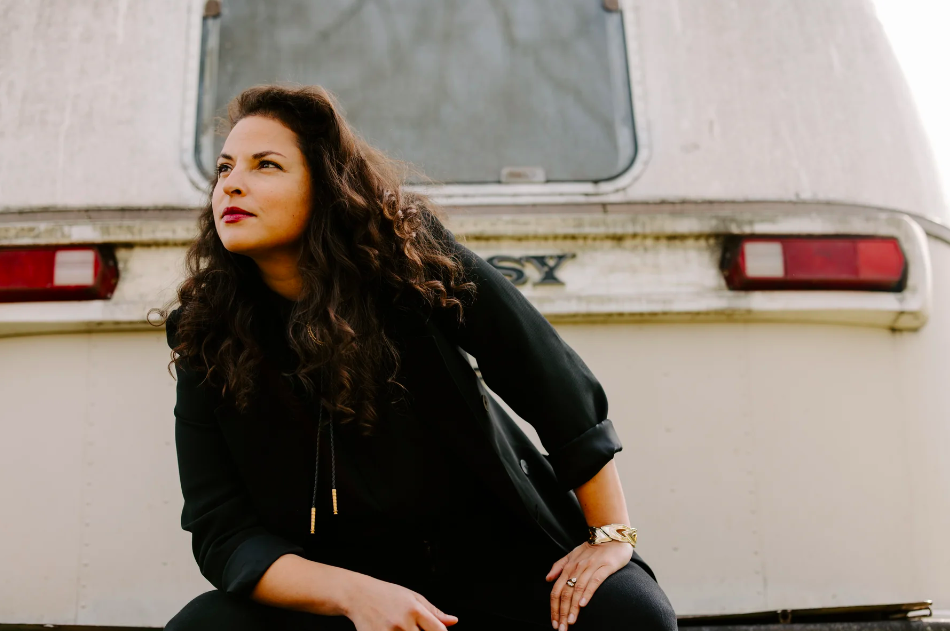
The Push for Queer Representation – “Living Authentically and Bravely”
As an openly lesbian artist in Americana music, Nicholls says representation matters deeply. Growing up, she rarely saw queer artists reflected in the music she loved. She discovered k.d. lang relatively late and points to Brandi Carlile as one of her most important inspirations.
“It wasn’t so easy to find those artists,” she said. “There just wasn’t so much representation.” Nicholls discovered K.D. Lang relatively late and points to Brandi Carlile, Allison Russell, Katy Pruitt and the Indigo Girls among the artists she admires today.
“I think representation really matters,” Nicholls said. “People in the LGBTQIA+ community need to be booked more and spotlighted more. It’s important to have representation so other people can see that we’re moving toward a more equal society.”
Nicholls hopes she can provide some of that visibility herself. “I’d love to be that,” she said when asked about serving as a role model for young queer fans. “Living authentically and bravely and truthfully. I write about the life that I know,” she said. “I’m not trying to mask or hide anything. I’m just trying to live my truth and then sing my truth too.”
Ultimately, that commitment to honesty lies at the heart of Making Moves. The album chronicles heartbreak, uncertainty, grief, recovery and reinvention, but its message is one of endurance.
Connection through Live Performance
While Making Moves was born in the studio, Nicholls said she values the connection of live performance, with crowds both large and small. Nicholls said it was an honor to open for Lucinda Williams and Sturgill Simpson during their respective UK tours. On the smaller side, playing an intimate set for 100 people in her hometown of Bedford, with family and friends, is “pure joy,” she said.
“I just show up as my authentic self,” she said. “If I show up as my full self and tell my stories and I’m not trying to be anyone else, people are at ease. Then they can be themselves.” One of Nicholls’ most memorable performances came at Denmark’s Tønder Festival, where she joined four other women songwriters for an in-the-round performance before thousands of listeners.
“Just standing up there with my guitar and my voice and these powerful women beside me,” she said, “it’s a feeling I’ll never forget.” If listeners take away one thing from Making Moves, Nicholls hopes it is this:
Trust yourself and remember that you’re way stronger than you probably give yourself credit for.
